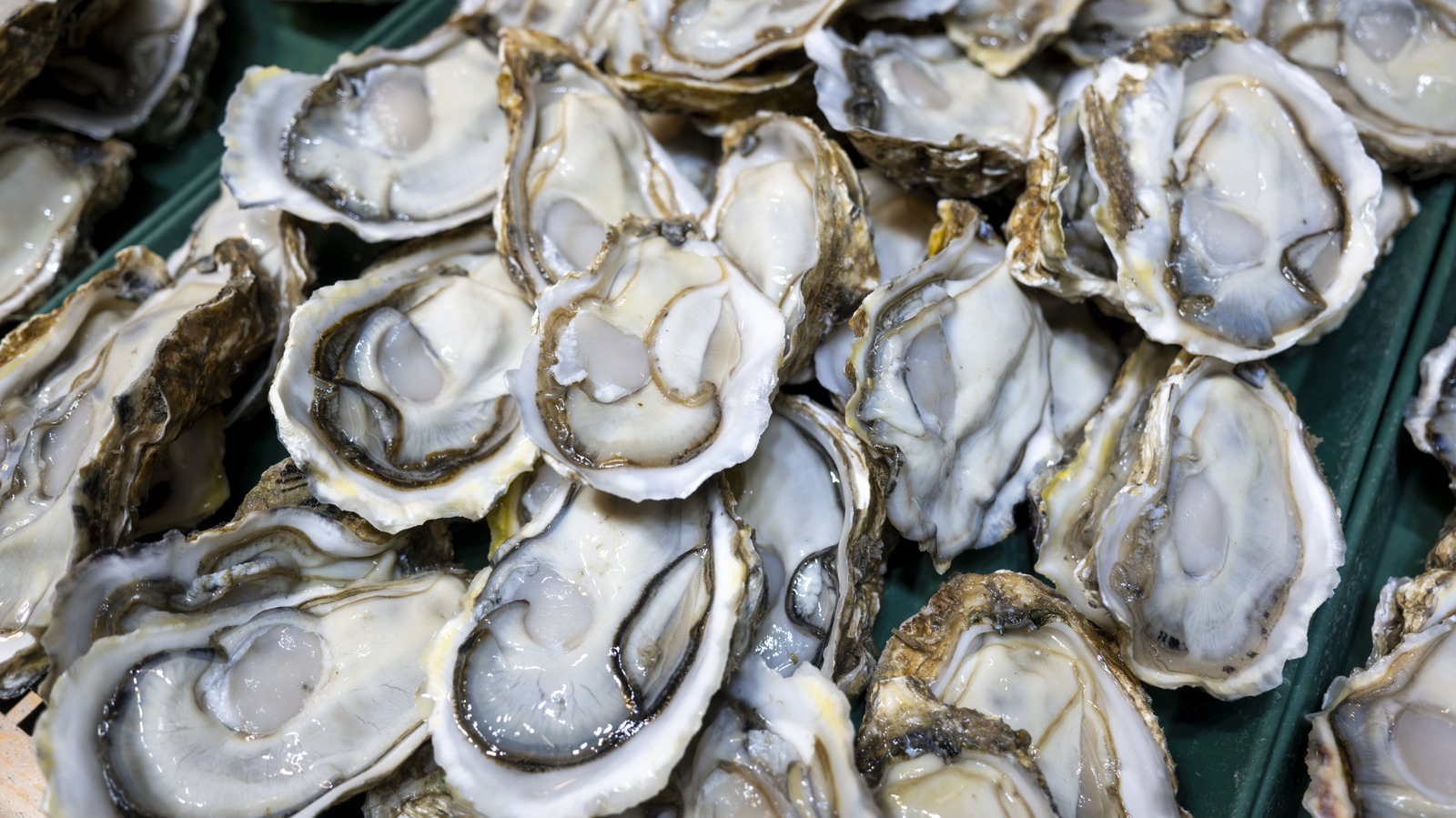
"Generally, East Coast oysters are brinier than West Coast oysters. Eastern oysters, raised either in the Atlantic Ocean or in its estuaries, live in a much saltier environment. West Coast oysters are mostly raised in protected bays, estuaries, and tidal rivers, where there is much less salt."
"This species morphs into hundreds of varieties depending on where it's grown and harvested. [...] Some very popular varieties of the Eastern oyster include Blue Points, Malpeques, Wellfleets, and Chincoteagues."
"Archaeologists have found billions of oyster shells buried at indigenous sites dating back over 1,000 years. While there are many different types of bivalves, there are really only two main species found in the United States: the Pacific (Crassostrea gigas or Magallena gigas) and the Eastern or Atlantic (Crassostrea virginica)."
Oysters have been consumed in North America for over 1,000 years, with archaeological evidence showing billions of shells at indigenous sites. Two primary species exist in the United States: Pacific oysters (Crassostrea gigas) and Eastern oysters (Crassostrea virginica). The main distinction between coasts is flavor, determined by environmental salinity. East Coast oysters, grown in the Atlantic Ocean and its estuaries, develop a brinier taste due to higher salt content. West Coast oysters, raised in protected bays and tidal rivers, have lower salinity and milder flavor profiles. While Ostrea edulis (European Flat or Belon) exists on the East Coast, it represents less than 1% of harvested oysters. Eastern oysters produce hundreds of varieties depending on growing location, with popular types including Blue Points, Malpeques, Wellfleets, and Chincoteagues.
#oyster-species-and-varieties #east-coast-vs-west-coast-oysters #oyster-flavor-and-salinity #american-oyster-history
Read at The Takeout
Unable to calculate read time
Collection
[
|
...
]