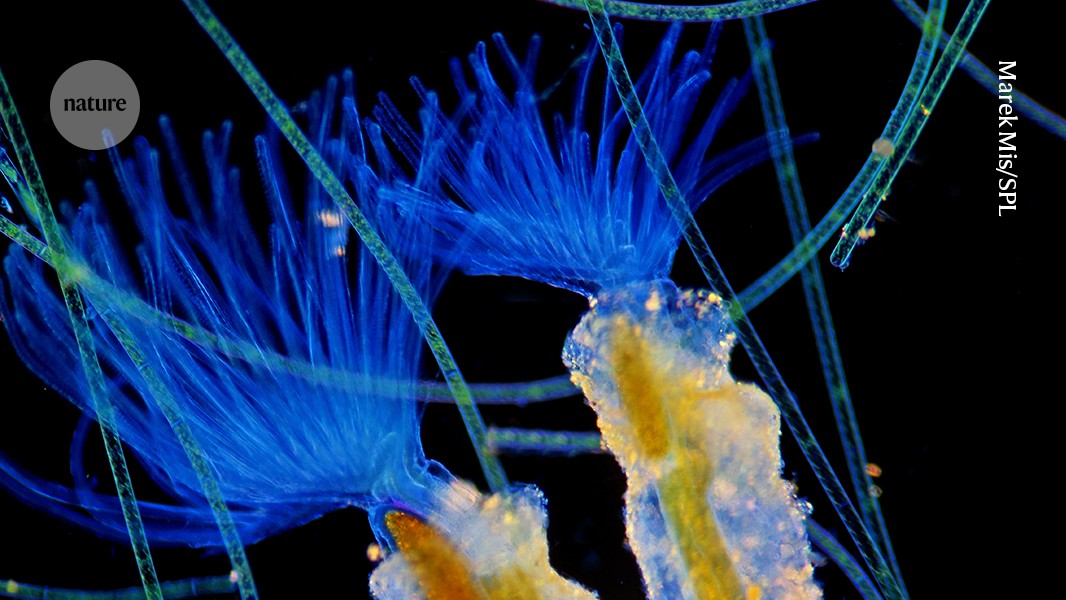
""The more I learned," writes marine ecologist Drew Harvell, "about the critters in the oceans without backbones-the corals, sponges, worms, jellyfish, clams, crabs, and octopuses that make up 99 percent of diversity in the oceans-the more awe I felt in seeing the marvellous adaptations they had for getting food, reproducing, and avoiding their killers in an environment spinning with an abundance of life.""
"The turning point of her career came while working on the remote Pacific shores of the Salish Sea, on the border between Canada and the United States. She witnessed that, when exposed to a predator, Bryozoa - creatures that resemble corals and are often referred to as 'moss animals' - grow "a forest of long, dense spines". In other words, they shift into a form that is "as different as another species" is."
"A tropical Atlantic fish, the bluehead wrasse ( Thalassoma bifasciatum), launches this fascinating book about sex. Females produce eggs and males make sperm. But if the group's largest male gets killed, a female takes over by rapidly altering its reproductive organs to become the main sperm producer."
Life on Earth began in the sea, and marine invertebrates emerged roughly 700 million years ago, predating vertebrates by about 200 million years. Marine invertebrates—corals, sponges, worms, jellyfish, clams, crabs, octopuses—make up about 99 percent of ocean diversity and show remarkable adaptations for feeding, reproduction, and defense. Some taxa can transform morphology in response to predators, for example Bryozoa that grow dense spines. Sponges produce bioactive compounds that have yielded pharmaceuticals. Climate change now threatens these taxa and their ecological roles, creating urgent conservation needs. Animal sex exhibits adaptive flexibility, exemplified by fish that rapidly change sex to assume reproductive roles.
Read at Nature
Unable to calculate read time
Collection
[
|
...
]