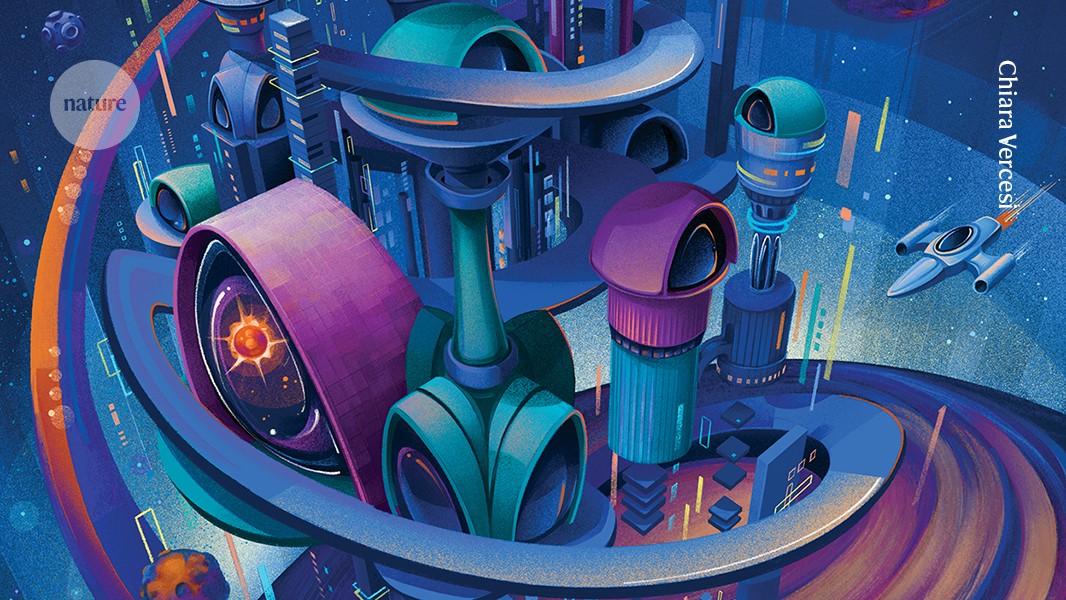
"So, with peer review suspended and Nature 's stated aim of discussing the "interpretation of topical and coming trends" firmly underlined, let's set the controls of our (stubbornly still undiscovered) time machine for 2050 and take a cautious peek outside. Prepare for technological leaps, solving the puzzle of dark matter and perhaps being able to study enough people to wave goodbye to many diseases."
"The Roman sage Marcus Aurelius said we should never let the future disturb us. But then he never had a conversation with the futurologist Nick Bostrom about the state of the world in 2050. "There's a good likelihood that by 2050, all scientific research will be done by superintelligent AI rather than human researchers," Bostrom said in an e-mail. "Some humans might do science as a hobby, but they wouldn't be making any useful contributions." Time to rethink your career options, Nature readers!"
By 2050 superintelligent AI will likely perform the majority of scientific research, relegating human researchers to hobbyist roles with minimal contributions. Global average temperatures are projected to exceed 2°C above pre-industrial levels by around 2040, amplifying climate-related impacts. Anticipated technological leaps may enable breakthroughs such as solving dark matter and conducting massive population studies that could eliminate many diseases. Rapid scientific automation, combined with environmental stressors, will reshape careers, public health, and resource allocation. Societal adaptation, ethics, and policy responses will be crucial to manage inequalities, mitigate risks, and harness opportunities arising from these converging trends.
Read at Nature
Unable to calculate read time
Collection
[
|
...
]