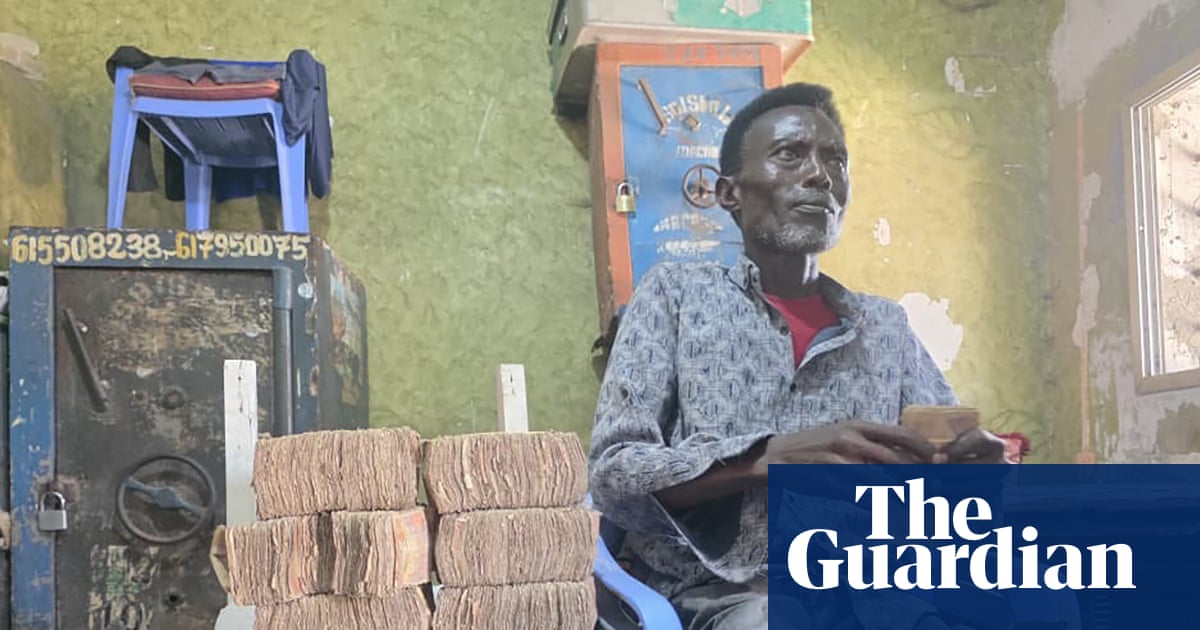
"As US troops withdrew from Somalia in the spring of 1994, a teenaged Muse Omar Jama began working as an exchange trader in Mogadishu's Bakara market. More than three decades later, he still does the same job, but wonders for how much longer. Jama, 49, sits in a plastic chair in the one-room office he shares with other traders. The auto-rickshaws speed by outside, but inside is quiet; the noise of bargaining has faded and the traders exchange few words between themselves. Their battered metal safes, filled with millions of Somali shillings, are closed and locked."
"Last month, fed up with greasy, ripped and aged banknotes, a handful of traders in Mogadishu decided they would no longer accept them. Soon businesses, shops and even bus drivers were following suit, and the decision quickly spread to regions outside the capital. Millions are going to suffer. More families will be pushed into poverty. The impact on prices was immediate, pushing up everyday expenses such as groceries, medicines and public transport. A small bag of powdered milk, for example, more than doubled in price."
"Amid global food price rises and Somalia's ongoing drought, poor people are bearing the brunt of the effects of an economy that is becoming completely dollarised. Somalia is one of the most remittance-dependent countries in the world. The diaspora sends billions annually primarily in US dollars. These remittances flow into the economy via informal money-transfer operators, known as hawala in Arabic. The heavy presence of international bodies in Somalia such as the UN, aid organisations, foreign forces and security firms has further reinforced the use of US dollars."
"Somalia has not printed any banknotes since 1991, when the then government of Siad Barre was overthrown, the central bank ceased to operate, and the country gained the infamous title of failed state."
A trader in Mogadishu has worked in the Bakara market for decades, but the value of Somali shillings has collapsed after traders stopped accepting greasy, ripped, and aged banknotes. The refusal spread from a small group to businesses, shops, and bus drivers, and it quickly affected regions beyond the capital. Prices rose immediately for groceries, medicines, and public transport, with items like powdered milk more than doubling in cost. The effects fall hardest on poor families amid drought and global food price increases. Somalia’s economy is heavily dollarised because the country has not printed banknotes since 1991, and remittances sent in US dollars flow through hawala networks and are reinforced by the presence of international organisations and foreign security and aid actors.
Read at www.theguardian.com
Unable to calculate read time
Collection
[
|
...
]