Trump accused Kurdish groups in Iraq, Turkey, and Syria of withholding weapons intended for Iranian demonstrators. He said the United States sent guns to protesters through Kurdish intermediaries and that Kurdish forces kept the weapons. He later expressed disappointment, claiming Washington sent guns with ammunition that were supposed to be delivered but were not. Kurdish sources from multiple factions denied receiving any weapons from the United States. Iranian Kurdish political and militant organizations also rejected the claims, describing them as logistically impossible and politically harmful. Fariba Mohammadi characterized the allegations as psychological warfare and said such weapons never reached Kurdish parties or forces, framing the renewed claims as political pressure rather than on-the-ground reality.
"Trump said it would be “wonderful” if Iranian Kurdish forces based across the border in Iraq launched attacks against the Islamic clerical regime in Tehran. The following month, Trump told Fox News that the United States had tried to send weapons to protesters inside Iran through Kurdish intermediaries. “We sent guns to the protesters, a lot of them,” Trump said. “And I think the Kurds took the guns.” In May, he said he was “very disappointed in the Kurds,” adding that Washington had sent “some guns with ammunition, and they were supposed to be delivered, but they kept it.”"
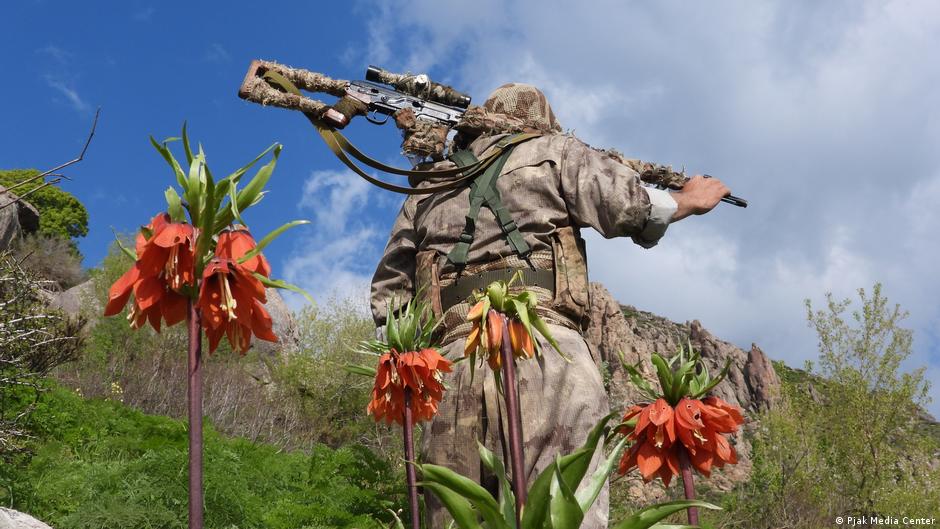
"DW has spoken to sources on condition of anonymity from several Kurdish factions in Iraq, Turkey and Syria, who all categorically denied receiving any weapons from the US. Iranian Kurdish leaders deny keeping US weapons. In Iran, Kurdish political parties, including the Free Life Party of Kurdistan (PJAK), an armed militant group, have similarly rejected the White House's narrative. The leadership of these organizations views Trump's statements as both logistically impossible and politically damaging."
"Fariba Mohammadi, Deputy Secretary-General of the Komala Party of Iranian Kurdistan, described the allegations as pure “psychological warfare.” She said such weapons have never reached Kurdish political parties or forces, emphasizing that the resurgence of these claims is best analyzed within the framework of political pressure in regional equations, rather than the reality on the ground. Echoing this stance, Adib Vatandoust, a Central Committee member of Komala (Communist Party of Iran), said h"
Read at www.dw.com
Unable to calculate read time
Collection
[
|
...
]