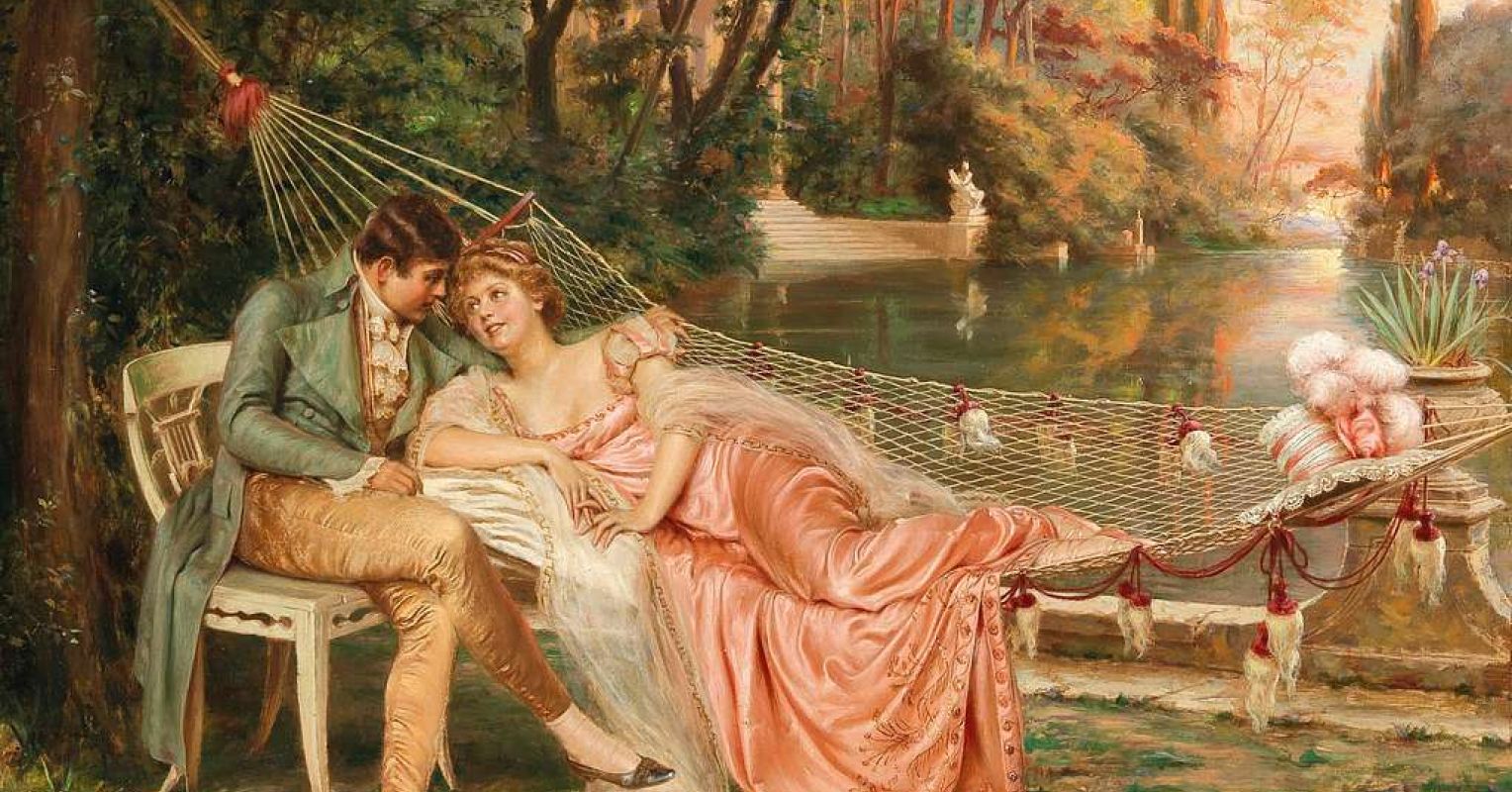
"Valentine's Day is a timely reminder of some common misapprehensions about love that psychological research seeks to resolve. For example, despite all the focus in mainstream and social media on desirable looks, the behaviour of flirting might be more vital than realised. After all, it effectively signals that someone is specifically interested in pursuing intimacy with a particular person. Yet flirting doesn't occur in a vacuum;"
"The authors of this study, titled "I saw him first: Competitive nonverbal flirting among women, the tactics used and their perceived effectiveness," point out that beyond flirting being deployed to entice others amorously, those in relationships still often flirt with others, the tactic here being to encourage jealousy, to reveal how much a partner really cares. Flirting also induces added passion within a committed relationship."
"And it is not just a signal for sex. For example, a narcissist may tease with no intention of sleeping with the target, but merely to validate their sense of attractiveness. So flirting has multiple uses. Beyond fun and increasing self-esteem, it can also be a vital manipulation, improving access to significant material goods and services, so it would appear a vibrant life skill."
Flirting functions as a specific signal of interest that can influence mate attraction and intrasexual competition. Effective female flirting to attract a male conveys erotic availability, while tactics to deter a female competitor emphasize implying a committed tie to the target male. People in relationships often flirt with others to provoke jealousy and to test how much a partner cares, and flirting can also increase passion within committed partnerships. Flirting can be used instrumentally for ego validation, social influence, or to gain material benefits. Principles from evolutionary psychology were used as the analytical framework, though evolutionary psychology remains controversial.
Read at Psychology Today
Unable to calculate read time
Collection
[
|
...
]