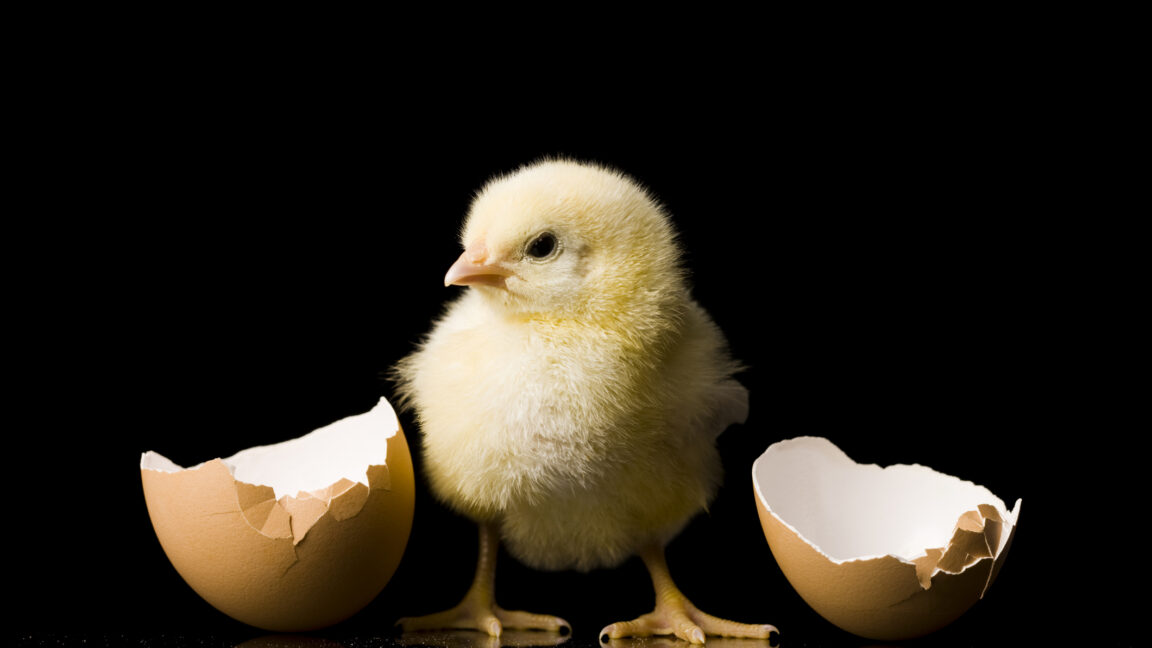
"Does "bouba" sound round to you? How about "maluma"? Neither are real words, but we've known for decades that people who hear them tend to associate them with round objects. There have been plenty of ideas put forward about why that would be the case, and most of them have turned out to be wrong. Now, in perhaps the weirdest bit of evidence to date, researchers have found that even newly hatched chickens seem to associate "bouba" with round shapes."
"One of the initial ideas to explain it was similarity to actual words (either phonetically or via the characters used to spell them), but then studies with speakers of different languages and alphabets showed that it is likely a general human tendency. The association also showed up in infants as young as 4 months old, well before they master speaking or spelling."
The bouba/kiki effect links rounded shapes with sounds like "bouba" and spiky shapes with sounds like "kiki." Associations appear across languages and alphabets and emerge in human infants as young as four months, before speech or spelling. Attempts to find the effect in other primates did not succeed, suggesting limits to its distribution among mammals. Newly hatched chickens, one to three days old and fully mobile, associate the sound "bouba" with round shapes. The presence of the effect in birds implies cross-species perceptual mapping and raises the possibility of non-primate evolutionary or sensorimotor roots for sound–shape correspondences.
Read at Ars Technica
Unable to calculate read time
Collection
[
|
...
]