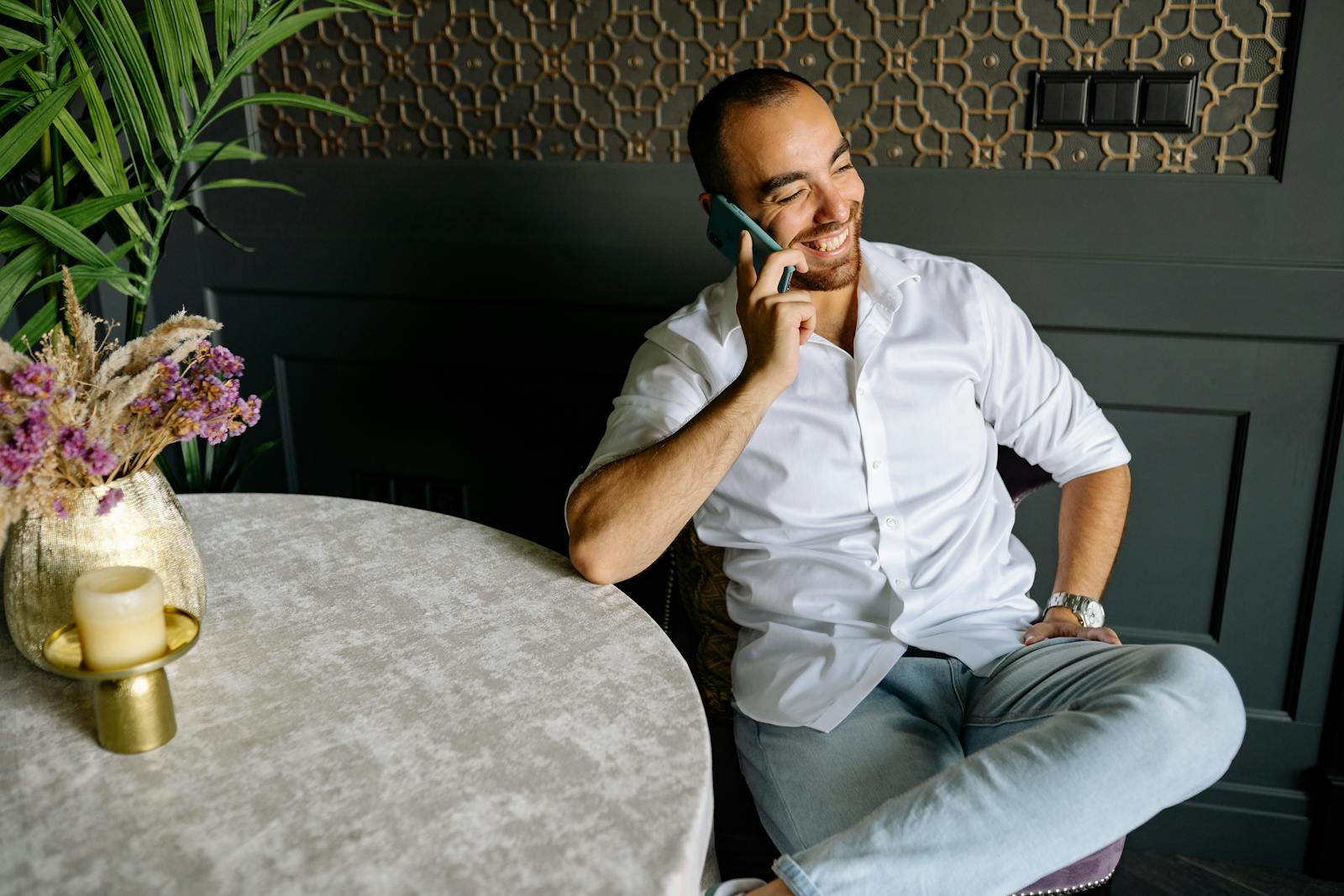
"The pattern shows up early. It tends to be built in childhood, often in homes where an adult's emotional state was unpredictable enough that children learned to monitor it, anticipate it, and respond to it before being asked. The instinct doesn't go away when those children grow up. It just finds a new place to live."
Face-down phones on restaurant tables are often read as good manners, signaling that the screen will not distract and that the meal deserves attention. For some people, the gesture is purely etiquette. For others, it functions as a small barricade that helps them stop being on call for the evening without explaining why they were reachable in the first place. Smartphone anxiety is often framed as addiction, but a deeper cause can be prior conditioning to feel responsible for whoever might be reaching. This pattern can begin in childhood when adults’ emotional states are unpredictable, leading children to monitor and anticipate needs. As adults, the phone’s light and name trigger a reflexive sense of urgency and obligation.
Read at Silicon Canals
Unable to calculate read time
Collection
[
|
...
]