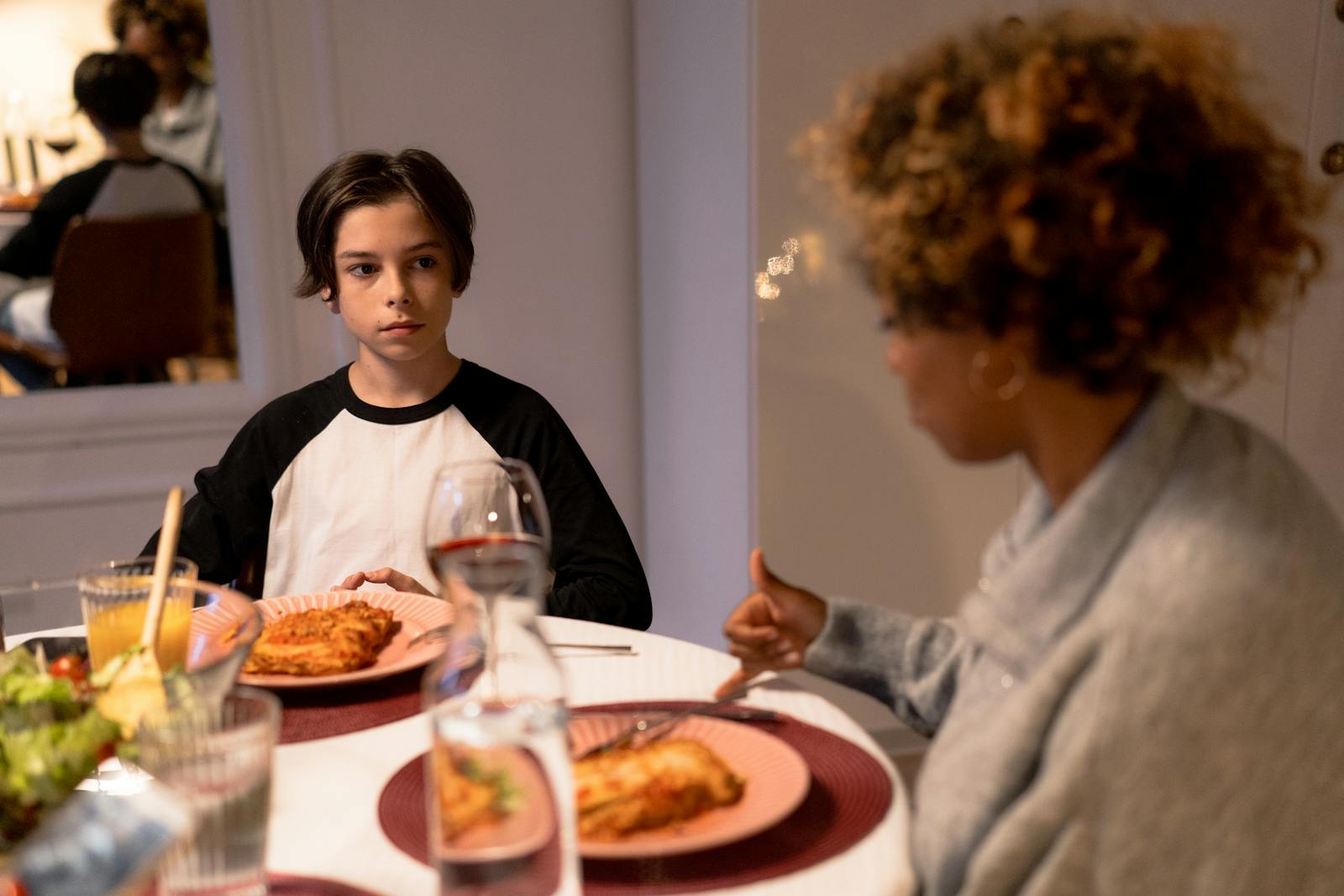
"Watch a group of people land on a long pause in conversation, and you can usually sort them within seconds. Some shift, joke, fill the air with anything. One person does not move. They sit calmly through fifteen, twenty, thirty seconds of nothing, and they look comfortable doing it. The polite reading is that this person is socially confident, secure, maybe even a little intimidating in their composure."
"For some people, the ability to sit through a long silence without flinching was learned in a house where silences were not neutral. They were a forecast. A warning. The thirty seconds before something happened. And the child who lived through enough of those silences often figured out that filling them with chatter, questions, or apologies only ever sped up whatever was coming."
"Self-help culture treats comfort with silence as a marker of high self-esteem. The confident communicator, the executive coaching cliché, the meditation-app calm. Stay quiet, hold the room, watch others reveal themselves first. That framing is sometimes accurate. It is also sometimes a flattering mistranslation of a survival strategy."
"In homes where moods rotate unpredictably, silence is rarely just an absence of words. It is a pressure system. A parent stewing at the dinner table. A stepfather staring at the television without blinking. A mother who has stopped responding to questions an hour ago and whose face has gone somewhere the child cannot follow. Children in those rooms learn fast."
Silence in conversation can quickly reveal social dynamics. Some people remain still during long pauses and appear confident, secure, or intimidating. Others learned to tolerate silence in homes where silence carried meaning rather than neutrality. In those settings, silence functioned as a forecast and warning, signaling that something was about to happen. Filling the pause with chatter, questions, or apologies often made outcomes worse. Conventional self-help framing treats calmness with silence as high self-esteem, but that can misread survival behavior. In unpredictable mood environments, silence becomes a pressure system, teaching children that speaking during tense pauses is riskier than staying quiet.
Read at Silicon Canals
Unable to calculate read time
Collection
[
|
...
]