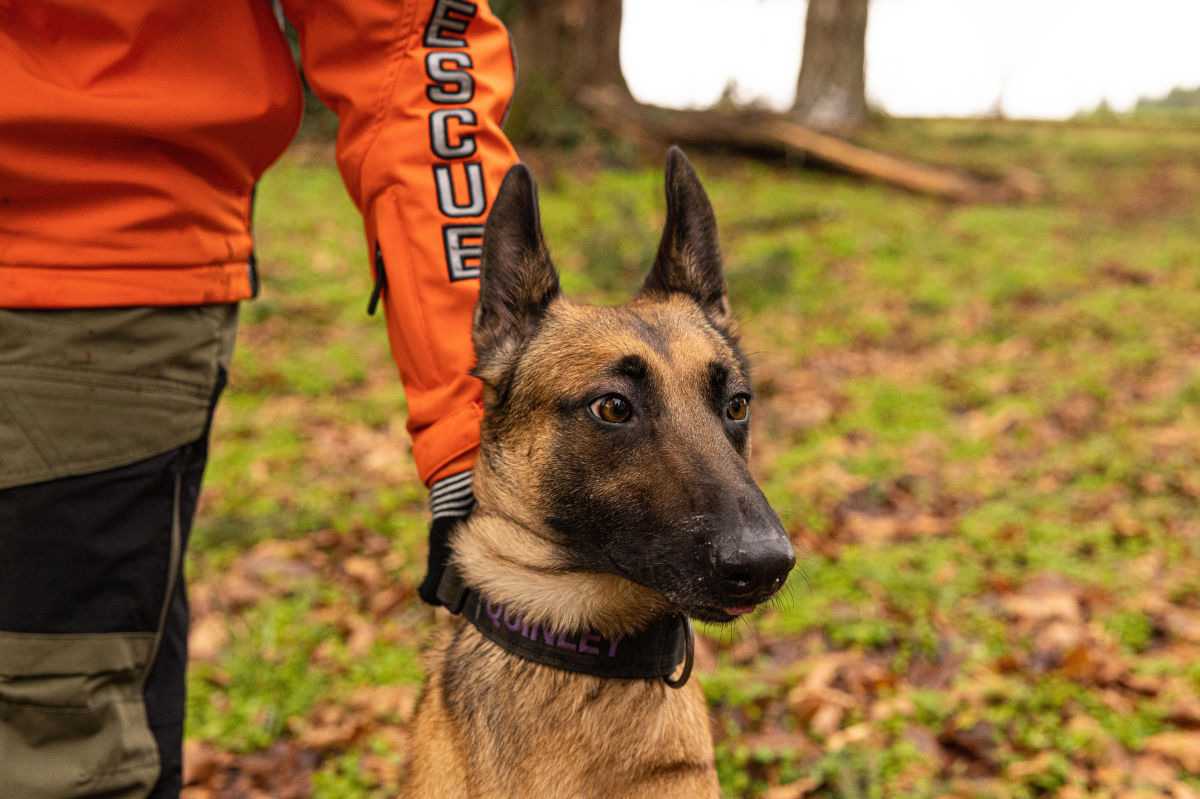
"Whenever Moriah Berthrong receives a new batch of placentas, she gets creative. She buries them, tosses them in fields, hangs them from trees. She immerses them in water. She burns them. She rubs them on towels and then runs those towels through the washing machine. She hides them in closets and in abandoned cars. She once encased a placenta in a concrete brick. Sometimes she ages them first-the better to train her dogs to find human remains."
"During a September training session, Berthrong, in black utility pants and thick-soled boots, walks with her dog, Ember, onto a large, fenced field in front of her home in Oregon City. The day before, amid the divots and dirt mounds left by gophers, Berthrong buried three placentas. Now Ember, an 8-year-old Nova Scotia duck tolling retriever-known casually as a toller-waits patiently, her shiny copper coat rippling in the breeze."
Moriah Berthrong trains human-remains detection dogs using real placentas concealed in varied ways—buried, hung, immersed, burned, hidden, encased, or aged—to simulate decomposition and challenging scent profiles. Dogs learn to locate remains through staged field exercises and reward-based alerts. Ember, an 8-year-old Nova Scotia duck tolling retriever, demonstrates scent-tracking and alert behaviors during training. Volunteer teams with Clackamas County Search & Rescue deploy dogs to missing-persons searches, homicide investigations, cold cases, and disaster recovery. Searches cover forests, derelict structures, waterways, and other difficult terrain. The work requires handling difficult emotional situations and preparing dogs for realistic, unpredictable conditions.
Read at Portland Monthly
Unable to calculate read time
Collection
[
|
...
]