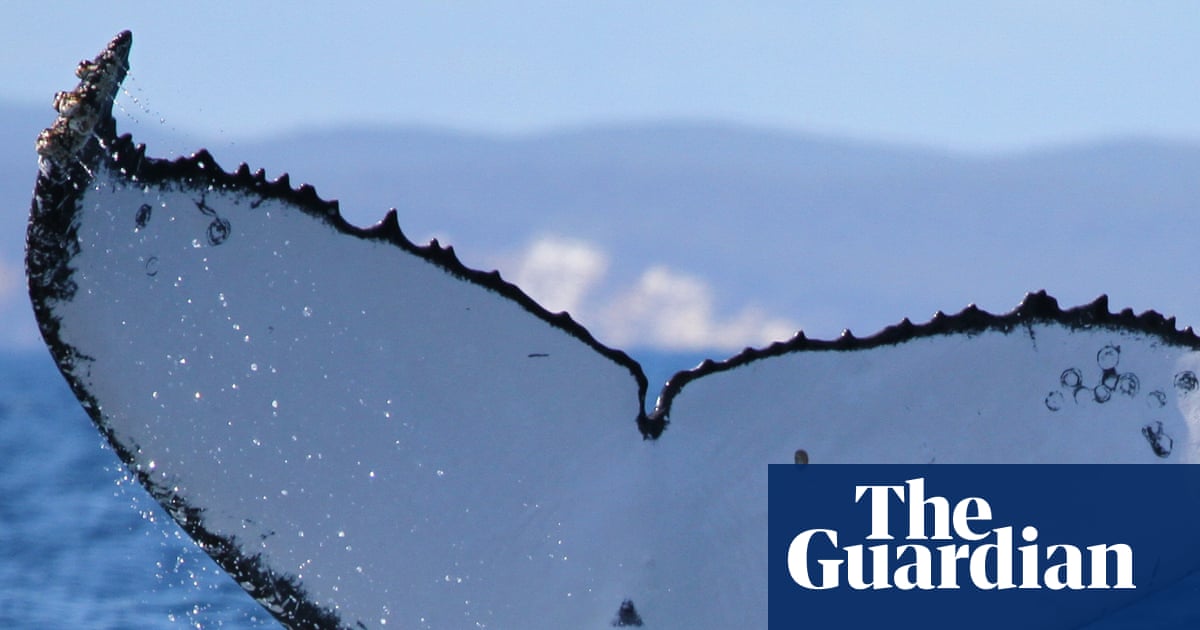
"A humpback whale has made a 15,000km journey from Brazil to Australia, marking what researchers believe is the longest distance ever documented between sightings of an individual humpback. The whale was first photographed in 2003 at the Abrolhos Bank, Brazil's main humpback whale nursery, off the coast of the north-eastern state of Bahia. In September 2025, it was spotted again in Hervey Bay off the Queensland coast, representing a travel distance of about 15,100km."
"Stephanie Stack, a PhD candidate at Griffith University and co-author of new research published in Royal Society Open Science, said it was extraordinary to photograph a whale that's gone this distance it has never happened before. This particular whale had not been sighted for 22 years, which is really remarkable in and of itself, Stack said."
"The whale was detected in a repository of photos on the platform Happywhale, to which researchers and citizen scientists can contribute whale sightings. The photographs allow individual animals to be identified by their flukes the underside of their tails. A whale fluke is unique to each humpback whale, very similar to the way fingerprints are unique to humans, Stack said. Flukes are identifiable through their shape, patterns of black and white pigmentation, and distinctive features such as scars."
"Happywhale platform, co-founded by study co-author and Southern Cross University whale biologist Ted Cheeseman, uses an AI algorithm to identify matches, akin to facial recognition in humans. Another whale was photographed in Hervey Bay in 2007 and seen again in the same area in 2013. Six years later, it was spotted off the coast of Sao Paulo. The distance between these two breeding grounds is about 14,200km."
A humpback whale made a 15,000km journey from Brazil to Australia, with researchers documenting the longest distance between sightings of a single individual. The whale was first photographed in 2003 at Abrolhos Bank, a major humpback nursery off Bahia, Brazil. In September 2025, it was spotted in Hervey Bay, Queensland, Australia, after not being seen for 22 years. Identification relied on unique fluke markings, including black-and-white pigmentation patterns and scars, which function like fingerprints. Researchers used the Happywhale platform, where citizen scientists and researchers upload photos and an AI algorithm matches flukes. Additional sightings show other long-distance movements between Brazil and Australia breeding areas.
Read at www.theguardian.com
Unable to calculate read time
Collection
[
|
...
]