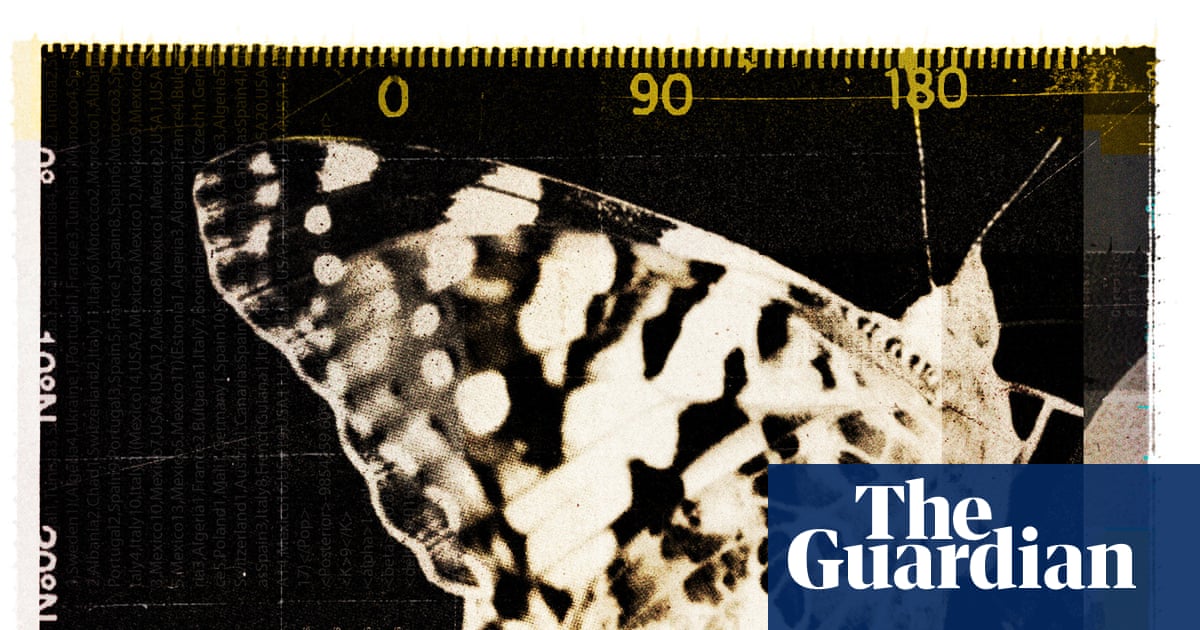
"Up to 500 butterflies were fluttering past them every hour through the 2,200m-high Puerto de Bujaruelo mountain pass on the French-Spanish border. By mid-afternoon dragonflies were skimming through, outnumbering the butterflies by 10 to one. The spaces between were filled with thousands of tiny flies. That day became the first record of fly migration in Europe."
"Today, we know that insects—many of which have wings smaller than a human fingernail—are among the planet's most prolific migrants, with trillions travelling large distances every year, including over deserts, mountain ranges and even crossing oceans."
"The findings, published in Nature Communications in 2024, represent the first direct proof that any insect had crossed the Atlantic. Although the discovery was exceptional, it's likely it happens quite often, says Talavera."
Insect migration was first documented in 1950 when ornithologists observed massive numbers of butterflies, dragonflies, and flies migrating through a Pyrenees mountain pass. This discovery launched decades of research revealing that insects are among Earth's most prolific migrants, traveling vast distances despite their tiny size. A landmark 2024 study provided the first direct proof that painted lady butterflies crossed the Atlantic Ocean, a journey previously thought impossible. The research involved reconstructing the butterflies' route using biologists, geneticists, and atmospheric scientists. Scientists believe such transoceanic insect migrations likely occur frequently, fundamentally expanding understanding of insect capabilities and global migration patterns.
#insect-migration #butterfly-behavior #transoceanic-travel #animal-movement-patterns #scientific-discovery
Read at www.theguardian.com
Unable to calculate read time
Collection
[
|
...
]