"If the star is sufficiently massive, this will cause the near-instantaneous onset of oxygen fusion, releasing a massive burst of energy. That energy is thought to be enough to completely destroy the star without leaving a remnant black hole behind."
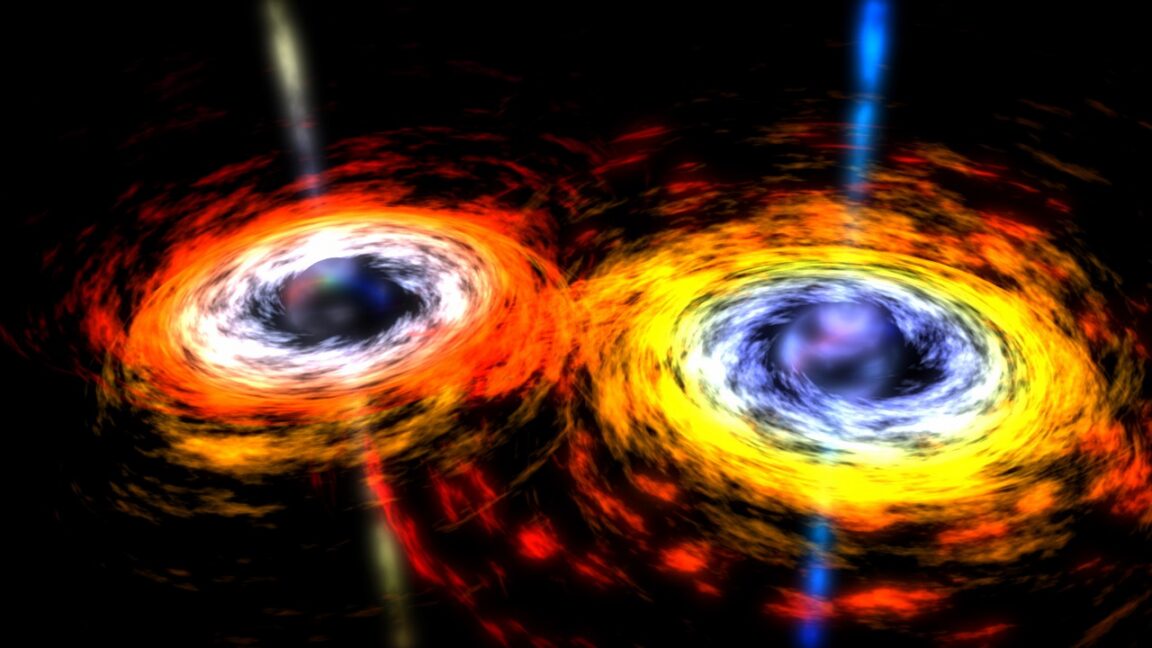
"The problem is that several of the mergers we've seen involve black holes that seem to have merged previously. So they're big enough to be above the cutoff where pair-instability should have blocked the formation of a black hole, but they might have gotten that hefty by swallowing another black hole."
"Any black hole mergers are likely to take place within a structure filled with lots of high-mass stars, such as a globular cluster. But the merger itself tends to impart a lot of energy to the resulting black hole, which could potentially kick it out of the cluster."
Massive stars may experience oxygen fusion, resulting in significant energy release that can destroy the star entirely or leave a smaller remnant. Observational confirmation of pair-instability events is challenging, as distinguishing them from typical stellar explosions remains unclear. Black hole mergers complicate the understanding of mass limits, with some black holes appearing to exceed the pair-instability threshold due to previous mergers. Various merger scenarios exist, including first-generation and second-generation black holes, with the dynamics of these mergers affecting their outcomes and rarity.
Read at Ars Technica
Unable to calculate read time
Collection
[
|
...
]