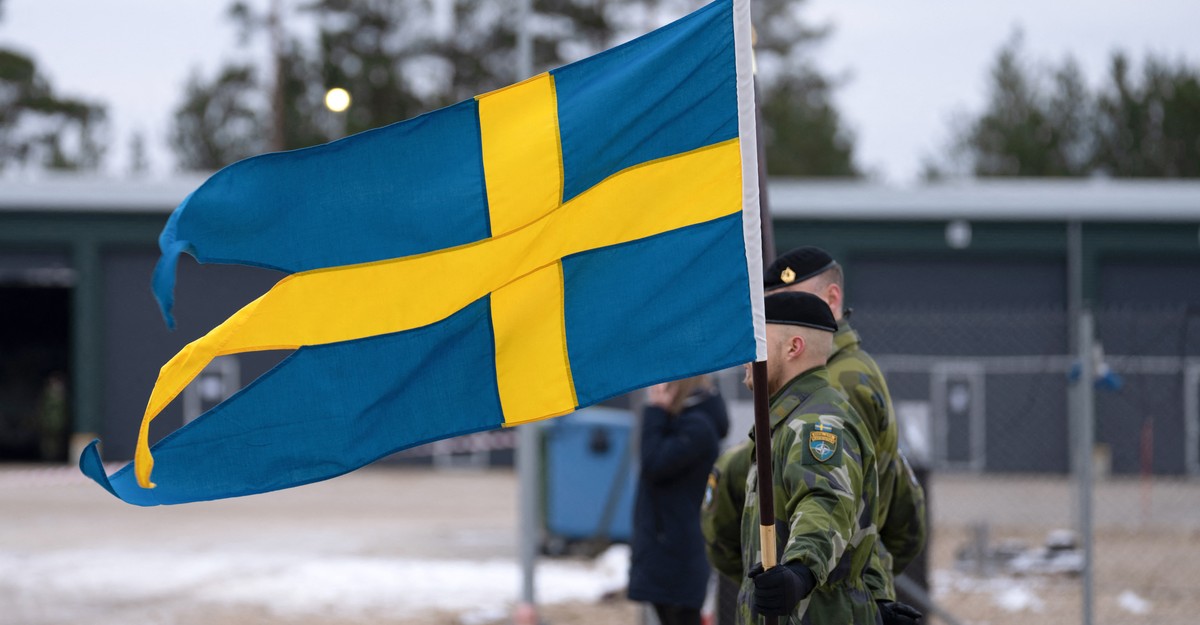
"Kristersson is one of the hundreds of politicians, diplomats, security officials, and arms dealers gathering at the Munich Security Conference this weekend to consider the end of a period of unrivaled American power. In the new era, European leaders are not only promising to take more responsibility for the conventional defense of their continent; they're also beginning to talk about an expanded nuclear deterrent of their own."
"Sweden hasn't gone into battle since 1814, staying neutral through two world wars. It had one of Europe's most prominent and politically potent anti-nuclear movements in the 1970s and '80s. And it joined NATO only two years ago, prompted by Russia's full-scale invasion of Ukraine. So it was noteworthy when Kristersson acknowledged having preliminary conversations with Europe's nuclear-armed powers in an interview with Sweden's public broadcaster last month."
After World War II, Sweden developed a nuclear-weapons program to deter a feared Soviet invasion but abandoned it in the 1960s under pressure from the United States. For decades Sweden relied on an American security guarantee while maintaining neutrality and a strong anti-nuclear movement. The recent Russian invasion of Ukraine prompted Sweden to join NATO two years ago. Sweden is now participating in NATO nuclear planning for the first time and engaging in discussions with Britain’s and France’s nuclear institutions as European leaders consider a larger nuclear role. Hundreds of policymakers are meeting at the Munich Security Conference to weigh reduced American dominance and explore strengthened conventional and nuclear deterrence arrangements in Europe.
Read at The Atlantic
Unable to calculate read time
Collection
[
|
...
]