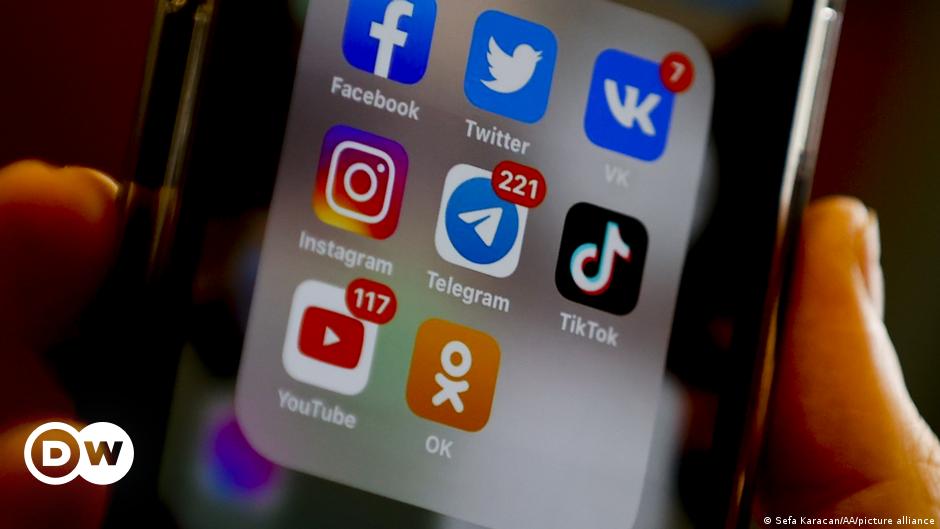
"Russia's internet regulator Roskomnadzor has removed "youtube.com" from its DNS (Domain Name System) servers. If a user tries to access the site directly without a VPN (Virtual Private Network), their router can no longer assign the address to its IP address. This means that You Tube is no longer accessible in Russia. The WhatsApp domain has also disappeared from Roskomnadzor's servers."
"If DNS servers are like the internet's phone book, IP addresses are numbers assigned to computers, smartphones and routers to make them accessible and identifiable. To view this video please enable JavaScript, and consider upgrading to a web browser that supports HTML5 video A VPN creates an encrypted connection between a user's device and a server, allowing the user to bypass geo-blocking and surf anonymously."
"NDNS: Alternative internet directory The DNS servers of Roskomnadzor should actually be referred to as NDNS, or the National Domain Name System, according to internet censorship expert Michael Klimarev, who posted this on the Telegram channel zatelecom. He said the software and hardware system had been introduced in Russia alongside the Sovereign Internet Law. "It is an alternative 'internet directory' that Russian telecommunications providers must use," he explained. He added that according to the law, Russian providers are not allowed to use international domain reg"
Roskomnadzor removed youtube.com and the WhatsApp domain from its DNS servers, preventing routers in Russia from resolving those addresses. Users without a VPN cannot assign those site names to IP addresses and therefore cannot access the services directly. The government has also targeted Telegram, and analysts interpret the moves as part of a broader crackdown on platforms. DNS functions like a phone book while IP addresses identify devices. A VPN creates an encrypted connection to a remote server, permitting users to bypass geo-blocking. A DW survey found 46% used VPNs for YouTube and 24% reported problems despite using VPNs. Roskomnadzor's system operates as an NDNS under the Sovereign Internet Law, requiring Russian providers to use it rather than international domain registries.
Read at www.dw.com
Unable to calculate read time
Collection
[
|
...
]