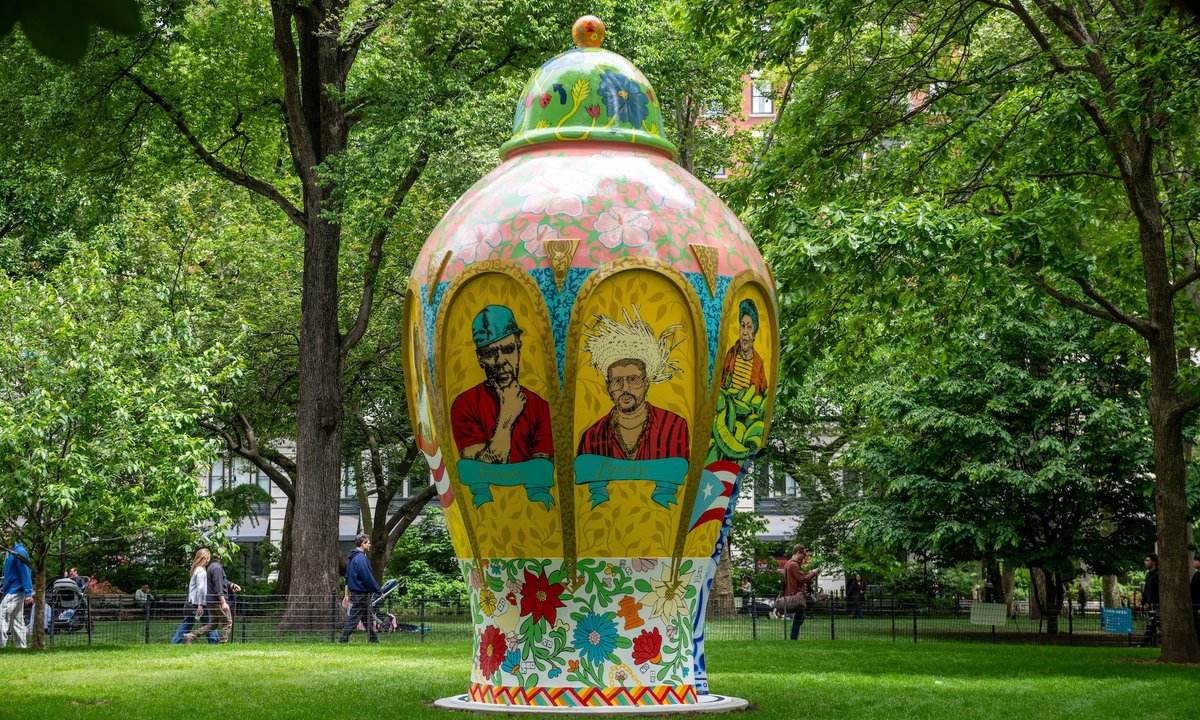
A 20-foot-tall urn in Madison Square Park features panels with portraits of prominent Puerto Rican and related figures, including Bad Bunny, Sonia Sotomayor, Lin-Manuel Miranda, Roberto Clemente, and others. The urn also includes Gilberto and Maribel Lugo, parents of artist Roberto Lugo, linking the work to family history and Puerto Rican overcoming after enslavement and colonization. The ceramic urn, Capicú de Cariño (I Heard It Both Ways) (2026), blends graffiti, hip-hop, and historical decorative-arts iconography. Visitors can walk through a passageway and pose in “215,” referencing Philadelphia’s area code. The exhibition adds planters made from car tires with Puerto Rican native plants and includes hand-painted domino tables near the reflecting pool.
"“We come from a history of being enslaved and being colonised, and this installation is a visual representation of Puerto Rican overcoming,” Lugo said during an opening event on 20 May. “Without my mother and father, I wouldn't have gotten to this point.”"
"Best known for his ceramic works that meld iconography from graffiti, hip-hop culture and historical decorative-arts traditions from Europe and Asia, Lugo has created the monumental urn, Capicú de Cariño (I Heard It Both Ways) (2026) for the Madison Square Park Conservancy's latest exhibition commission, Alfarero del Barrio (Village Potter)."
"In addition to the portraits on its exterior, Capicú de Cariño features a passageway that visitors can walk through and pose in-the “215” on its ceiling refers to the area code of Lugo's hometown of Philadelphia-adding an interactive element to the work. As part of the exhibition, Lugo also installed several planters made from car tyres that hold plants native to Puerto Rico and four hand-painted domino tables around the park's reflecting pool."
"“For me, art is a celebration, and it is for the viewer to interpret and engage with, and take what they can from it,” Lugo said. “Art creates a sense of empathy and"
Read at The Art Newspaper - International art news and events
Unable to calculate read time
Collection
[
|
...
]