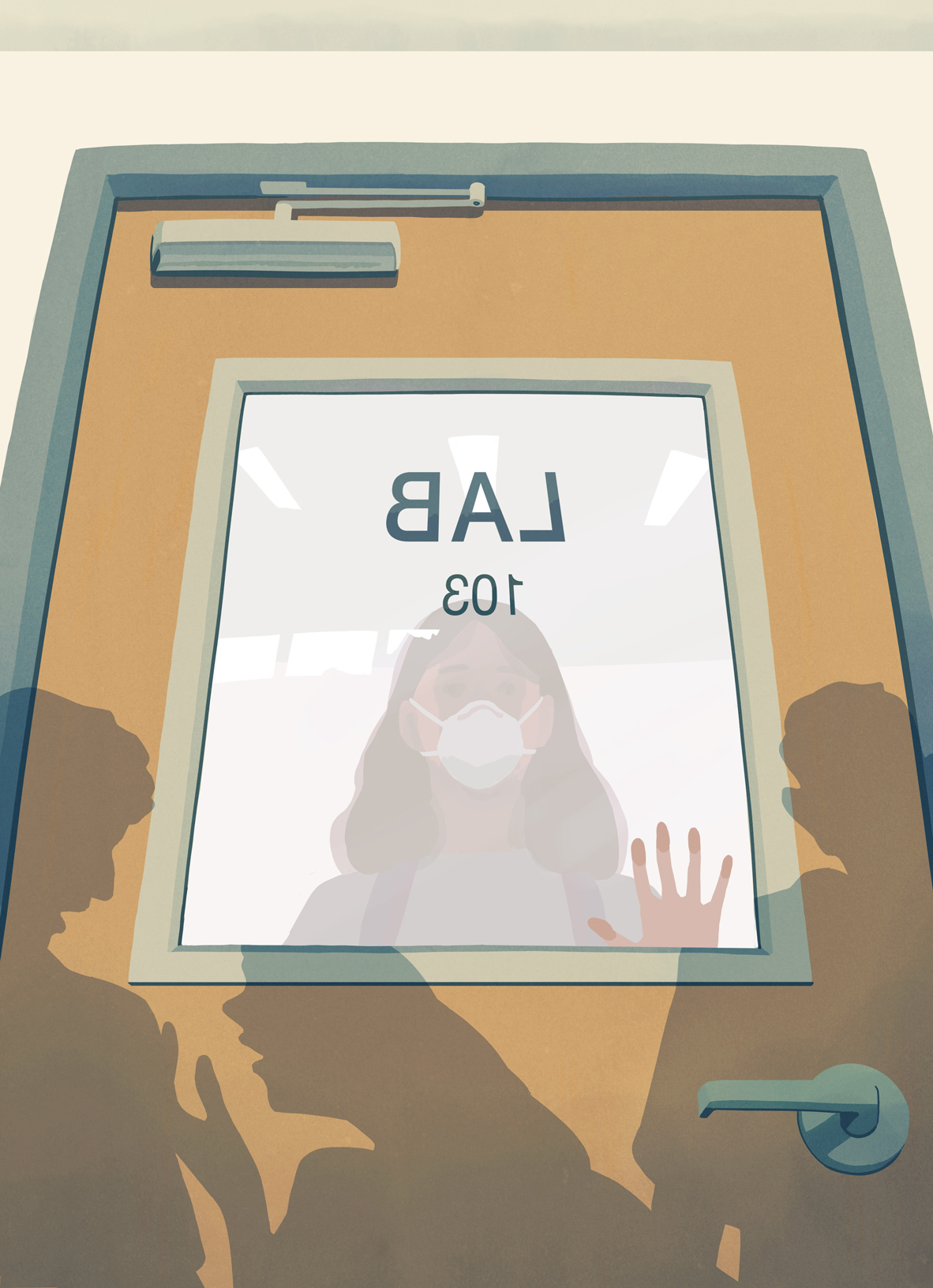
"N AOMI HAD ALWAYS hated school, so much so that she cried for hours when school breaks ended. She hadn't always considered herself disabled, though. Sure, she'd felt lucky to have discovered her autism and learning disabilities relatively early-and to have started getting accommodations in junior high-given that most autistic women aren't diagnosed until adulthood, if at all. But until her second semester of university, Naomi hadn't realized how much autism impacted her life. Then, just before semester's end, COVID-19 crashed in."
"Before lockdown, Naomi had been planning to skip classes for a couple of weeks because she felt herself hurtling into autistic burnout. The phenomenon looks different to every person affected by it, but for her, it includes stress responses like difficulty maintaining personal hygiene, being almost too exhausted to leave bed, nausea, lack of interest in life, and brain fog."
"When her Toronto university moved online, Naomi initially felt happy. Excited, even. (I'm not using Naomi's real name nor that of the university.) The sudden freedom from the intense sensory overload of campus brought a realization: she had been ignoring the effects of her disabilities throughout her education, suppressing and hiding her autism-what autistic people call "masking"-to fit into neurotypical classrooms. "I didn't realize how stressed I was," she says, "and how much I was overexerting myself all the time." Previously, it'd never occurred to Naomi to request remote-learning accommodation, nor had her university's accessibility adviser ever suggested it. In lockdown, Naomi grasped that it was crucial for her survival. She saw what she describes as "a window into: Things can be dif"
Naomi hated school and often cried when breaks ended. She was diagnosed with autism and learning disabilities in childhood and received accommodations in junior high. She masked to conform to neurotypical classrooms and did not fully appreciate how much autism affected her until her second semester of university. Approaching autistic burnout, she planned to skip classes. When the university moved online during COVID-19, reduced sensory overload revealed chronic stress, exhaustion, and the impacts of masking. Remote learning exposed the need for accommodations that had not been suggested, and Naomi recognized remote learning as crucial to her survival and wellbeing.
Read at The Walrus
Unable to calculate read time
Collection
[
|
...
]