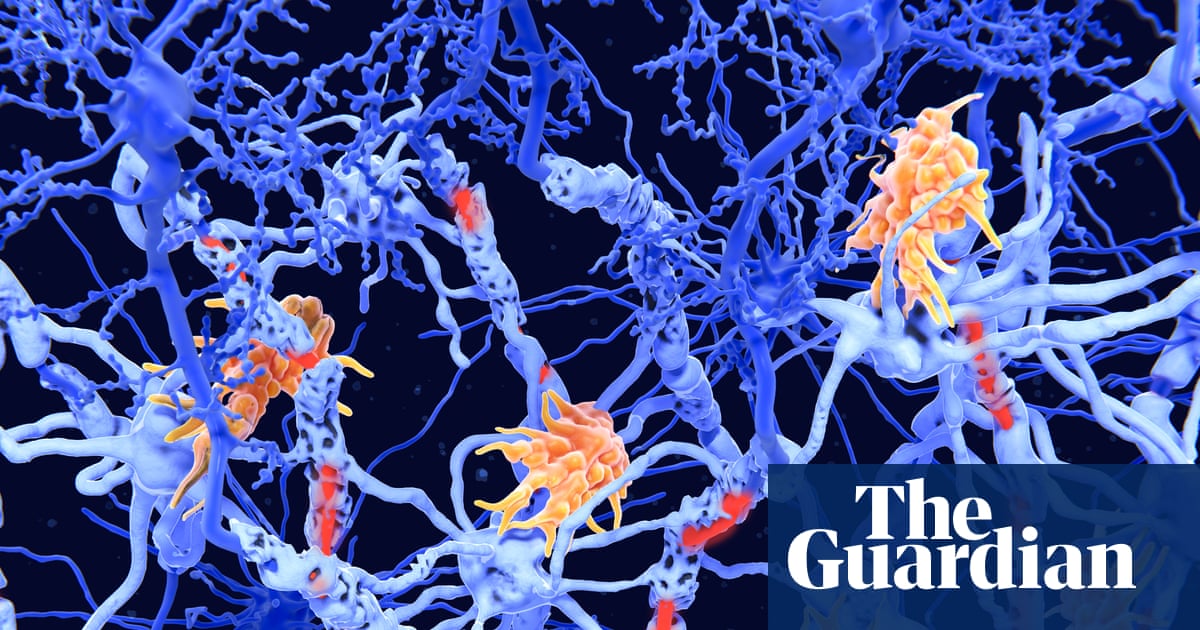
"Now, scientists have detected two new biological strands of MS using AI, a simple blood test and MRI scans. Experts said the exciting breakthrough could revolutionise treatment of the disease worldwide. In research involving 600 patients, led by University College London (UCL) and Queen Square Analytics, researchers looked at blood levels of a special protein called serum neurofilament light chain (sNfL)."
"The results, published in medical journal Brain, revealed two distinct types of MS: early sNfL and late sNfL. In the first subtype, patients had high levels of sNfL early on in the disease, with visible damage in a part of the brain called the corpus callosum. They also developed brain lesions quickly. This type appears to be more aggressive and active, scientists said."
"In the second subtype, patients showed brain shrinkage in areas like the limbic cortex and deep grey matter before sNfL levels went up. This type seems to be slower, with overt damage occurring later. Researchers say the breakthrough will enable doctors to more precisely understand which patients are at higher risk of different complications, paving the way for more personalised care."
A machine learning model (SuStaIn) combined serum neurofilament light chain (sNfL) blood levels and MRI scans from 600 patients to identify two biological subtypes of multiple sclerosis. The early sNfL subtype shows high sNfL early, corpus callosum damage and rapid lesion development, indicating a more aggressive, active disease course. The late sNfL subtype exhibits early atrophy in the limbic cortex and deep grey matter before sNfL rises, suggesting slower progression with later overt damage. Classification by these subtypes enables more precise risk stratification and paves the way for personalised treatment decisions and improved outcomes.
Read at www.theguardian.com
Unable to calculate read time
Collection
[
|
...
]