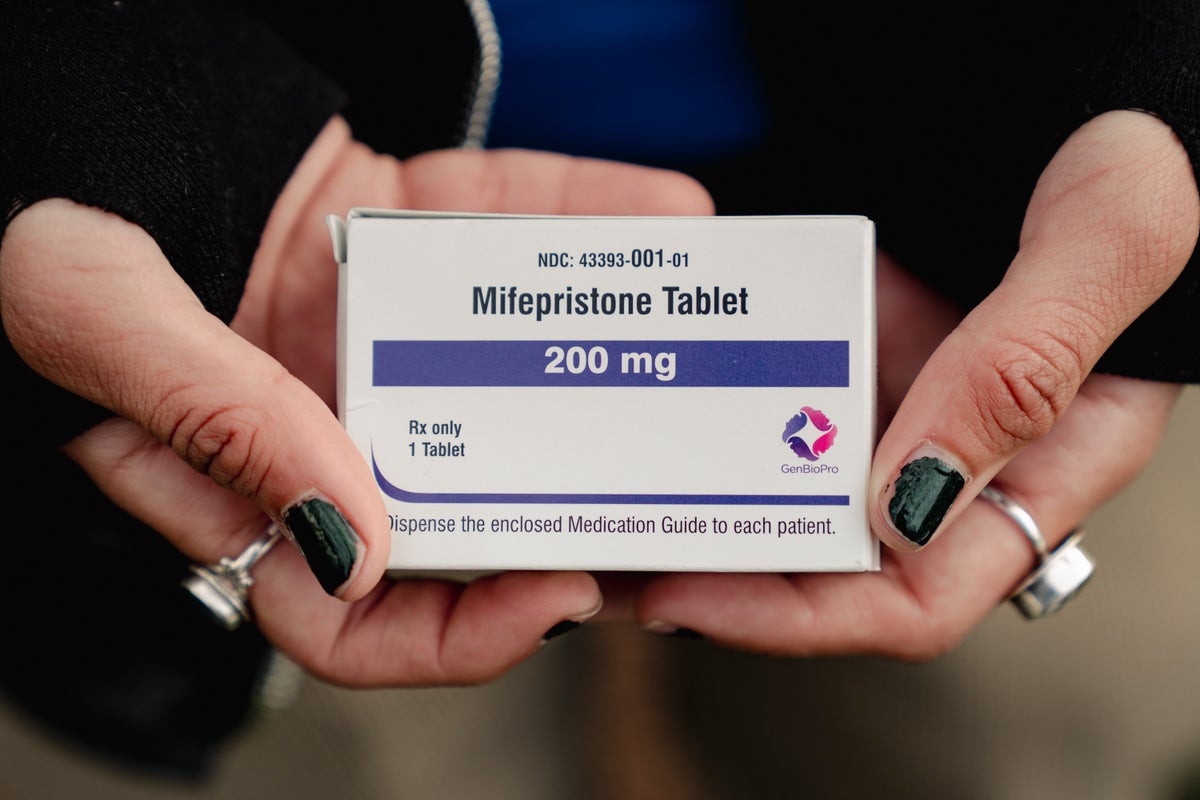
U.S. courts have repeatedly revoked and reinstated telehealth access to mifepristone, leaving the drug available without an in-office appointment for now. After Dobbs v. Jackson Women’s Health Organization overturned Roe v. Wade, antiabortion efforts have targeted mifepristone by claiming it is unsafe despite evidence to the contrary. Mifepristone, approved in the U.S. in 2000, is used with misoprostol up to 10 weeks of pregnancy. Scientific evidence shows the combination is safe and effective whether provided through telehealth or in person. More than a quarter of U.S. abortions rely on virtually prescribed mifepristone. If telehealth access is removed, in-person care would be harder to obtain and more inconvenient, and some patients and providers may shift to misoprostol-only regimens that can lead to more complications.
"After a tense few weeks during which U.S. courts twice revoked and reinstated telehealth access to the abortion pill mifepristone, the drug remains available without an in-office appointmentfor now. But doctors and policy experts worry that uncertainty and any future rollback in access will make things harder for people seeking to end a pregnancy and place added pressure on the health care system."
"Since 2022, when the Supreme Court's ruling in Dobbs v. Jackson Women's Health Organization overturned the right to abortion enshrined in Roe v. Wade, antiabortion proponents have focused on mifepristone. They claim, despite a wealth of evidence to the contrary, that the drug is unsafe. First approved in the U.S. in 2000, mifepristone is currently used here in combination with the drug misoprostol up to 10 weeks into a pregnancy."
"Overwhelming scientific evidence shows that mifepristone is safe and effective, whether the drug is dispensed via telehealth or at an in-person doctor's visit. It is incredibly safe; it is one of the most well-studied drugs in reproductive health care, says Tejasvi Gowda, an obstetrician-gynecologist in Maryland who is also a fellow at Physicians for Reproductive Health, a nonprofit advocacy group."
"Just more than a quarter of all U.S. abortions currently rely on mifepristone that is prescribed virtually. If the telehealth option is taken away, providers and patients will face tough choices, experts say. In-person care will be much harder to access for some people and inconvenient for the rest. Other patients and providers will likely switch to misoprostol-only abortion, a regimen used before mifepristone's approval in 2000 that is still safe and effective but could cause more complications than the combination regimen."
#telehealth #medication-abortion #mifepristone #dobbs-v-jackson-womens-health-organization #reproductive-healthcare-access
Read at www.scientificamerican.com
Unable to calculate read time
Collection
[
|
...
]