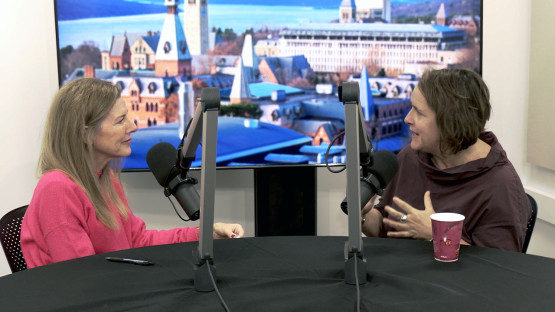
"I got into this work in 2007, 2008. I was living in the UK and the BBC asked me to do some research with them, and at the time, the BBC maybe had about three hoaxes a year. And at the time we're like, oh, it's a problem. And of course now they, you know, they get hoaxed three times a second. I mean, it's just the environment has changed to such a degree. And as I'm sure we'll talk about, it has been growing. But then you throw AI into the mix and it's now, it's on steroids."
"So you're right that the number of people who deliberately create false information to cause harm is actually relatively small. And if we as individual people on social media didn't constantly click the share button, we wouldn't have the problem. But so much of the issue that we have with our information environment depends on user behavior."
Misinformation has become a critical global problem, evolving from occasional hoaxes to constant threats amplified by social media and artificial intelligence. While deliberate creators of false information represent a relatively small group, the widespread sharing of misleading content by individual users significantly amplifies its reach and impact. Cultural fragmentation and algorithmic distribution systems enable misinformation to spread rapidly across platforms. The problem has grown exponentially since 2007, transforming from manageable incidents to a pervasive challenge affecting governments, technology companies, and media organizations. Understanding misinformation dynamics is essential for developing effective countermeasures.
Read at Cornell Chronicle
Unable to calculate read time
Collection
[
|
...
]