"There was nothing else really to do. So if you weren't curling you'd go hang out at the curling rink. It's a community thing. It's like everyone gets together."
"It's just embedded in the fabric of Canada. Canadians have a real identity with what curling is and what it stands for. It's a gracious sport where people are being polite. They shake hands before and after the game."
"The curling rink was just a really good place to be in Canada. And still is. It just really suits the culture."
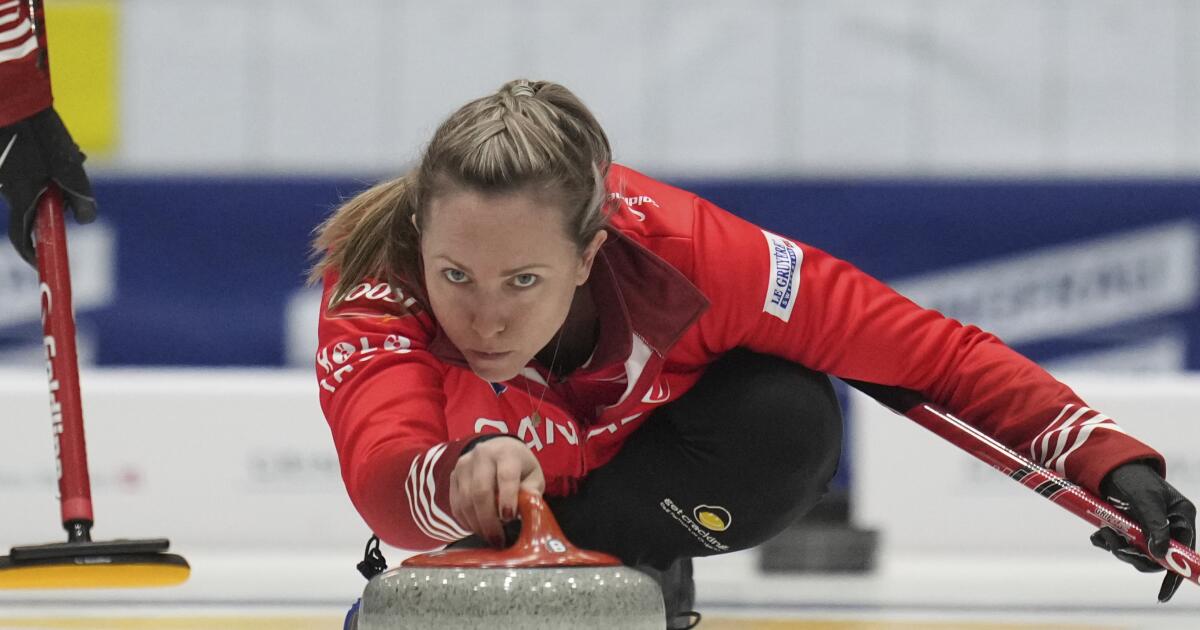
Curling functions as a central community activity in many Canadian towns, often serving as a social hub where people gather. More than 2.3 million Canadians participate annually, roughly one in 18, and television audiences exceeded 11 million in 2024. Participation levels in Canada are about 100 times those in the United States. The sport emphasizes politeness and sportsmanship, with practices like shaking hands before and after games. Teams slide 44-pound granite stones along a 150-foot sheet of ice toward a target called the house, and players sweep with brooms to influence stone speed and trajectory. A round ends after each team throws eight stones, and Olympic matches consist of 10 ends.
Read at Los Angeles Times
Unable to calculate read time
Collection
[
|
...
]