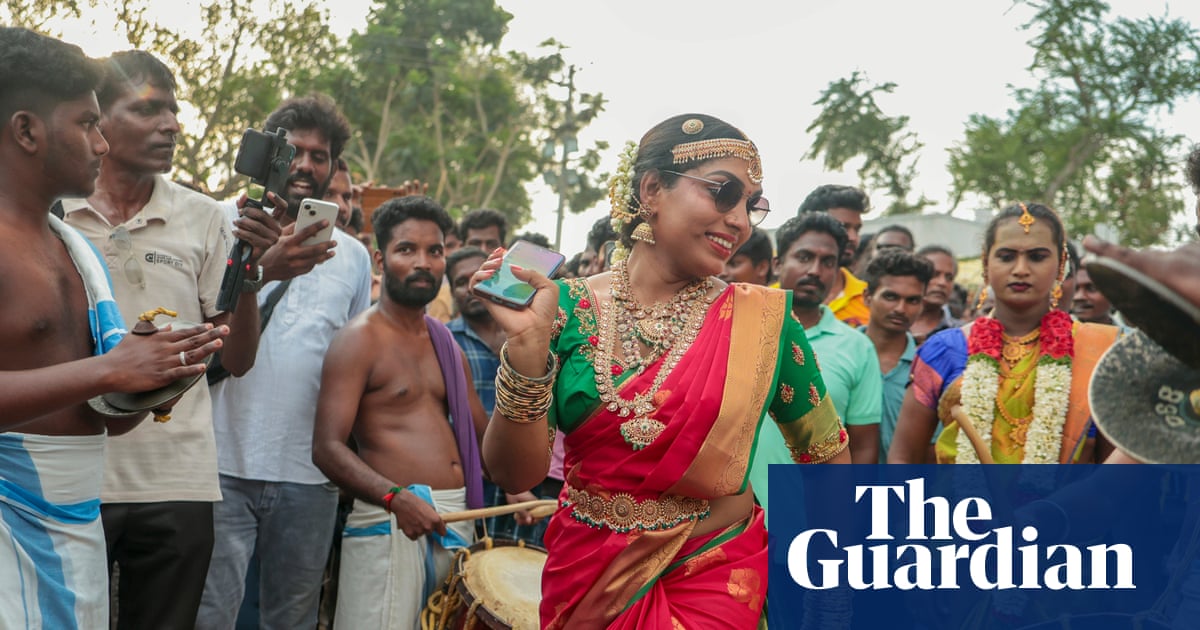
"The annual festival centres on the Koothandavar Temple and the story of Aravan, a figure from the Mahabharata, one of India's most revered epic poems. According to the story, Aravan agrees to be sacrificed before a decisive battle, but asks for one final wish: to be married before he dies. When no woman is willing to wed a man fated to die the next day, the god Krishna assumes the female form of Mohini to fulfil his desire."
"By morning, Aravan is sacrificed, and Mohini, now widowed, mourns him her grief forming the core of the festival that unfolds each year in Koovagam. This retelling has come to hold deep significance for trans women, who come to Koovagam to marry Aravan on the penultimate day of the festival. The next morning, the mourning is re-enacted: bangles are broken; vermilion powder wiped from hair partings; and white saris donned as they grieve his death."
"Devotees wear a sacred thread or thali (mangalasutra) dyed in turmeric that symbolises the marriage between transgender women and Aravan. Jasmine garlands are worn in participants' hair to signify their status as brides'"
Koovagam in southern Tamil Nadu hosts a distinctive festival drawing more than 100,000 people for nearly 18 days. Transgender women arrive in bright silk saris and gold jewellery, with hair oiled and braided with flowers. The festival centers on the Koothandavar Temple and the Mahabharata figure Aravan, who agrees to be sacrificed before a decisive battle and asks to be married before he dies. Krishna assumes the female form Mohini to fulfill the wish, and Aravan is sacrificed by morning while Mohini mourns his death. Trans women reenact the mourning on the penultimate and final days, breaking bangles, wiping vermilion, and wearing white saris. Sacred threads dyed in turmeric symbolize marriage between transgender women and Aravan.
Read at www.theguardian.com
Unable to calculate read time
Collection
[
|
...
]