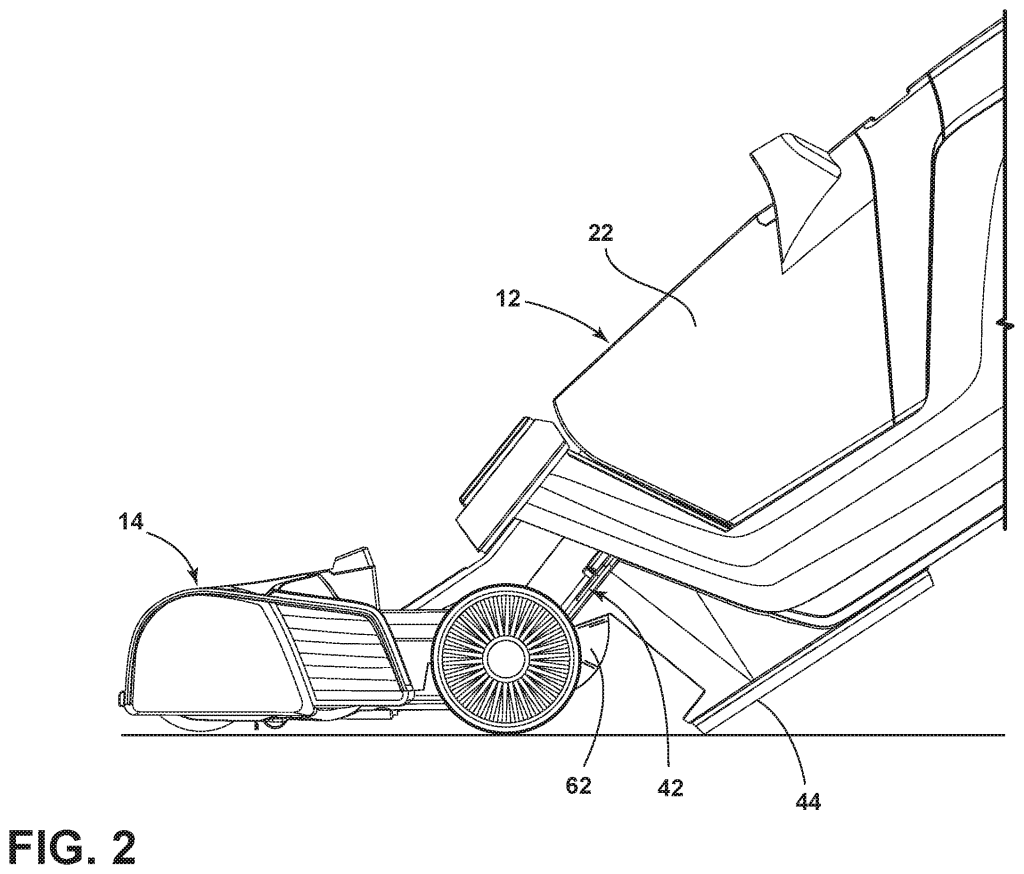
"When a patent holder wins a Section 337 investigation at the International Trade Commission, the victory comes with a caveat: a limited exclusion order bars the specific infringing products, not whatever the respondent ships next. A sophisticated respondent facing an exclusion order (or anticipating one) will redesign."
"Bissell's patent includes a caveat - that the battery charging circuit "is disabled by the actuation of the self-cleaning mode input control and remains disabled during the unattended automatic cleanout cycle." U.S. Patent No. 11,076,735. After Bissell filed its Section 337 complaint against Chinese manufacturer Tineco in March 2022, Tineco rewrote the code for its accused Floor One S3 and S5 Pro devices."
"The redesigned firmware altered the timing of the 120-second cleanout cycle so that the battery charging circuit activates twice during the cycle, briefly at the outset and again toward the middle, rather than staying off throughout. This is a easy technical work-around - the momentary charging is a meaningless addition that avoids literal infringement. This case looks to me to be the exact situation that doctrine of equivalents was designed to address, but the ITC rejected the the equivalents argument."
"Ultimately, the ITC found Tineco's original products infringed, entered a limited exclusion order against them. But, it found no infringement as to the redesigned ones. On appeal, the Federal Circuit affirmed everything."
A limited exclusion order in a Section 337 investigation prevents importation of the specific infringing products rather than all future products a respondent might ship. When redesign is needed, respondents may implement firmware or software updates instead of major engineering changes. A wet/dry floor cleaner that flushes its brushroll when docked included a patent requirement that a battery charging circuit is disabled during a self-cleaning mode and remains disabled throughout an unattended automatic cleanout cycle. After a complaint, the accused devices received rewritten firmware that changed the timing of the cleanout cycle so the battery charging circuit activated briefly twice during the cycle. This timing change avoided literal infringement, and the redesigned products were found non-infringing. The Federal Circuit affirmed the ITC’s findings and outcomes.
Read at Patently-O
Unable to calculate read time
Collection
[
|
...
]