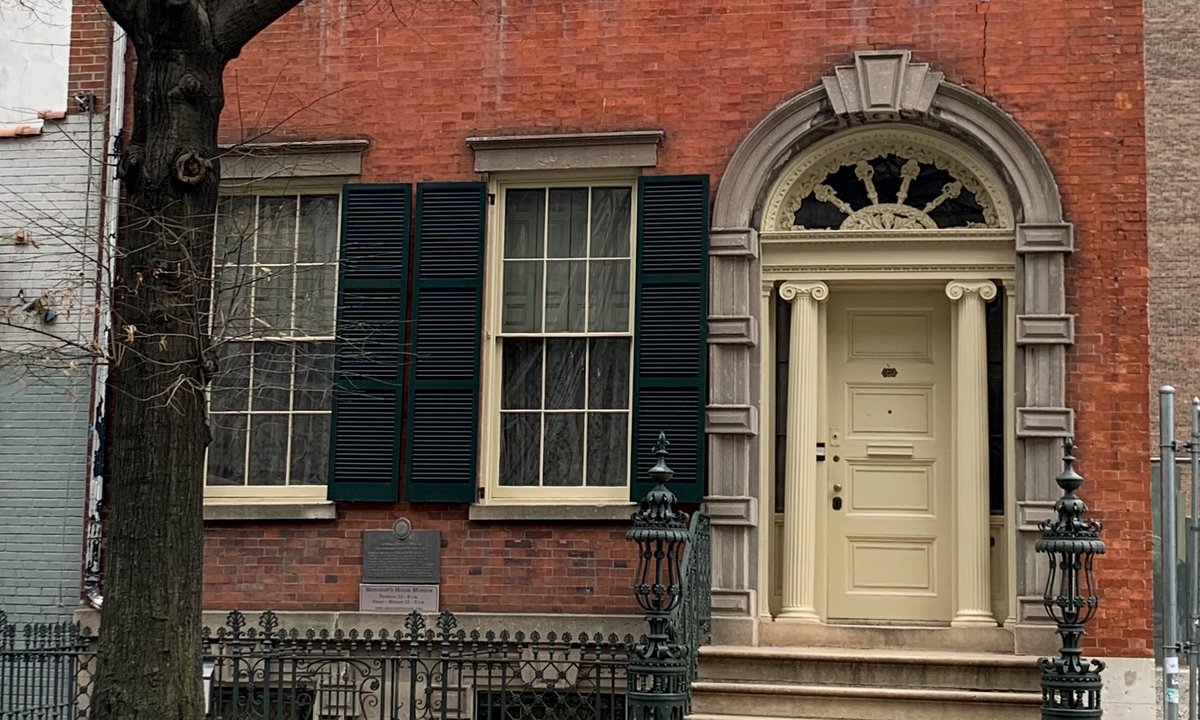
"The vertical passageway, about two feet square, connects a basement pantry and second-floor bedrooms at the Merchant's House Museum -a brick rowhouse on East 4th Street built in 1832 for a prosperous hatter Joseph Brewster, and his wife, Susanna. Since the 1930s, the house has been open to the public. Only recently have the Brewsters been identified as fervent abolitionists, part of a network of Northerners who helped Black people escape from Southern enslavers via scattered safehouses known collectively as the Underground Railroad. Black fugitives could access the Brewsters' Manhattan refuge via a hatch in a corridor's built-in dresser."
"This cramped waystation is "really carefully crafted", Emily Hill-Wright, the museum's director of operations, tells The Art Newspaper. Along the chute's interior, wooden slats serve as a rough ladder. In the rowhouse's first-floor parlours, lavishly ornamented with floral plasterwork, the Brewsters' guests would not have suspected that a hideaway lurked behind bulges in the walls."
"Hardly any other purpose-built Underground Railroad bolt-holes survive. Even fewer are in publicly accessible buildings. Eric K. Washington, a scholar specialising in the history of Black New Yorkers, says the find at the Merchant's House is not only exceedingly rare but also fascinatingly "incorporated into the architectural plans"."
"Archival digging in the past few years has revealed that the Brewsters supported abolition despite risks of ostracism, arrest or assault. Many of their fellow New Yorkers, economically dependent on cheap goods made by captive labour in the South, were pro-slavery. The couple helped lead racially integrated Presbyterian congregations, and Joseph signed antislavery petitions."
A two-foot-square vertical passageway inside the Merchant’s House Museum connects a basement pantry to second-floor bedrooms. The chute links to a hatch in a corridor’s built-in dresser, allowing Black fugitives to reach a Manhattan refuge. The Brewsters, Joseph and Susanna, were identified as fervent abolitionists and part of a Northern network of safehouses supporting escape from Southern enslavers. The chute’s interior uses wooden slats as a rough ladder, and its location behind wall bulges concealed its purpose from guests. Purpose-built Underground Railroad bolt-holes are extremely rare, especially in publicly accessible buildings, and the chute was incorporated into the architectural plans. The structure now faces threats that endanger its preservation.
Read at The Art Newspaper - International art news and events
Unable to calculate read time
Collection
[
|
...
]