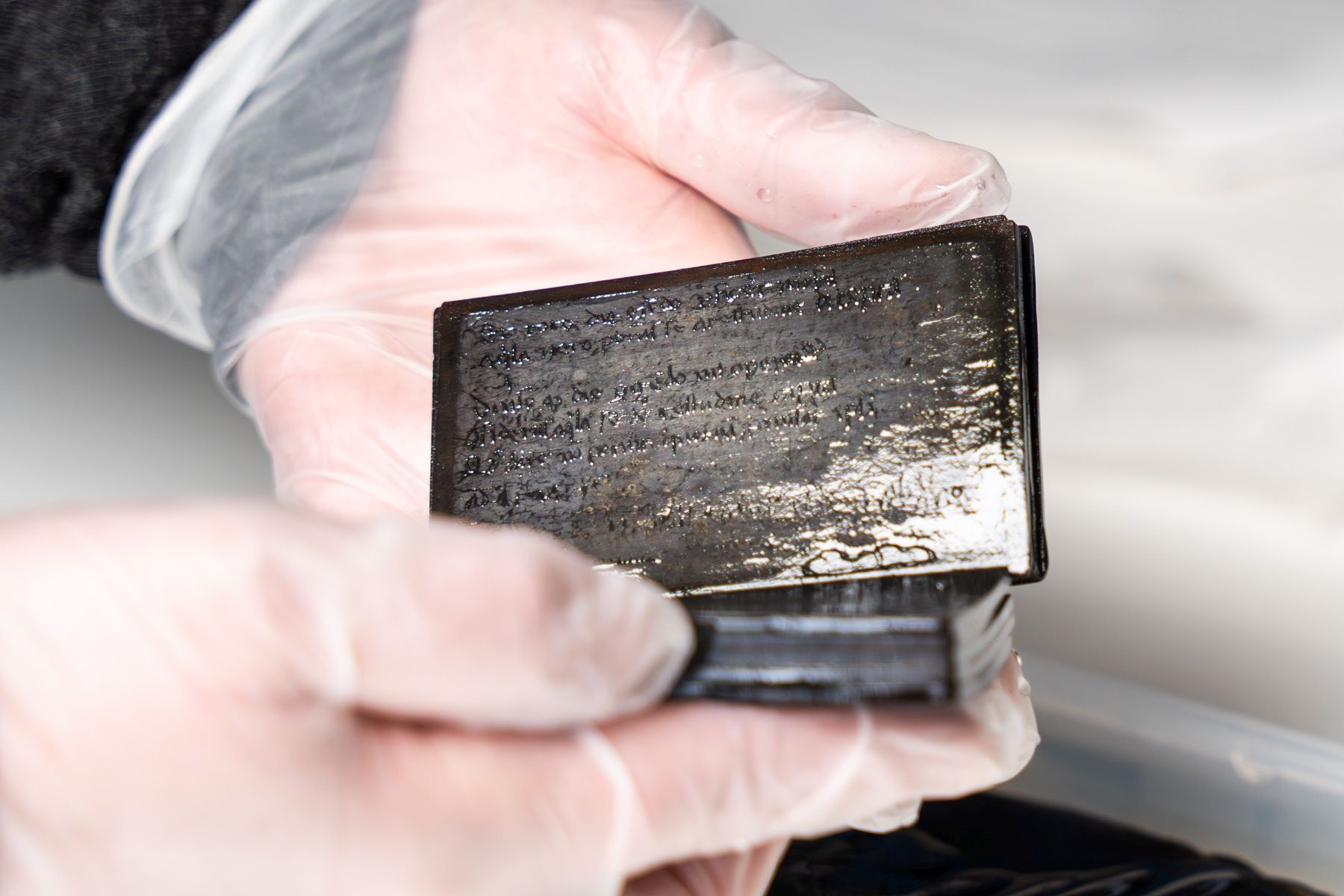
Archaeologists in Paderborn, western Germany, recovered a remarkably well-preserved medieval notebook from a latrine uncovered during construction of a new city administration building. The notebook dates to roughly the 13th and 14th centuries and is made of wooden tablets coated in wax, enclosed in a leather binding decorated with embossed lily motifs. It measures about 10 by 7.5 centimeters and contains ten pages, with eight pages written on both sides. The Latin text appears to come from a single hand and runs in two directions depending on how the book was held, suggesting informal use for quick notes. The writing was scratched into wax with a stylus and could be erased and reused. Researchers suspect it may have belonged to a merchant who recorded transactions and personal thoughts.
"Archaeologists in Germany have uncovered a rare medieval notebook from a latrine in the city of Paderborn, offering what researchers hope will become an extraordinary glimpse into everyday life in the 13th and 14th centuries. The remarkably well-preserved object, made of leather, wood, and wax, may once have belonged to a wealthy merchant who used it to record transactions and personal notes. The discovery was made during excavations connected to the construction of a new city administration building in Paderborn, a city in western Germany."
"The notebook dates from roughly 700 to 800 years ago. Measuring just 10 by 7.5 centimetres, it consists of wooden tablets coated in wax and enclosed within a leather binding decorated with embossed lily motifs. Medieval writers used a stylus to scratch text into the wax surface, and the writing could later be erased and reused. The notebook contains ten pages, eight of them written on both sides."
"According to the archaeologists, the text was written in Latin and appears to come from a single hand. The script runs in two directions, depending on how the book was held, suggesting that it was used informally for quick notes. Dr. Sveva Gai believes the notebook may have belonged to a merchant. “Who wrote the book and what purpose did it serve?” she asked."
"“Initial assumptions suggest that a Paderborn merchant may have been the author, jotting down business transactions and recording his thoughts in note form.” Archaeologists working under the supervision of the Westphalia-Lippe Regional Association (LWL) recovered the notebook from one of five medieval latrines uncovered at the site. “This is the only such find in all of North Rhine-Westphalia,” said Dr. Barbara Rüschoff-Parzinger, LWL's Head of Cultural Affairs."
#medieval-archaeology #wax-tablet-notebooks #paderborn #13th-14th-century-daily-life #latin-manuscripts
Read at Medievalists.net
Unable to calculate read time
Collection
[
|
...
]