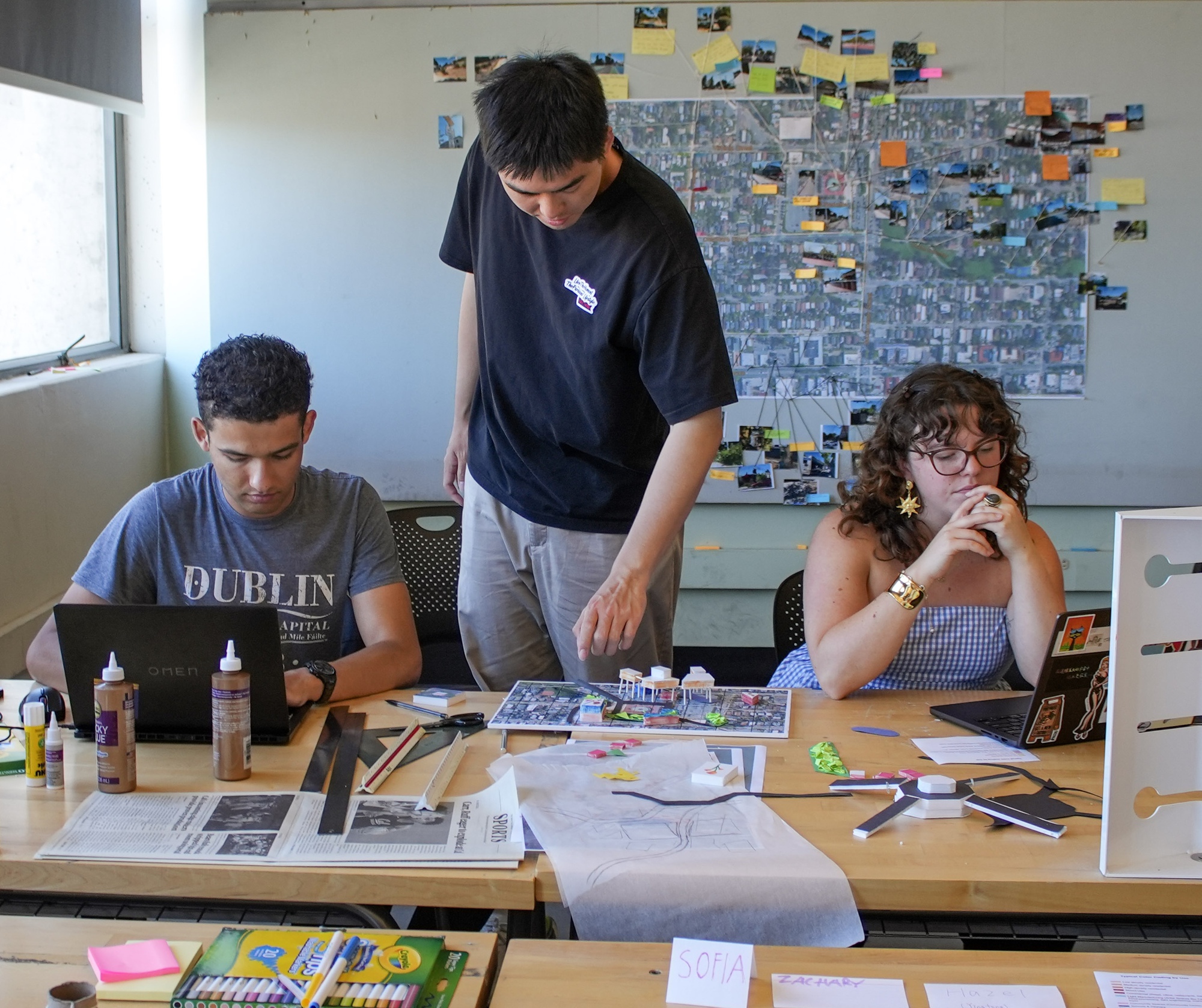
"Each summer, the University of California, Berkeley's College of Environmental Design (CED) becomes an intensive laboratory for architectural, landscape, and urban exploration. Through two complementary programs-Design + Innovation for Sustainable Cities (DISC) and the Summer Institutes-Berkeley offers an immersive curriculum grounded in disciplinary rigor, intentional exchange, and a shared institutional culture. Together, these programs reflect CED's long-standing multidisciplinary structure, with architecture, landscape architecture, city planning, and urban design thriving and collaborating under one roof."
"Across all summer programs, successful students earn college credit at the nation's top public university, build a high-quality portfolio for graduate school or professional applications, and gain fundamental skills in design and planning. Whether participants are exploring design for the first time or building on prior experience, the summer programs emphasize both skill-building and critical thinking within a collaborative academic environment."
Berkeley's College of Environmental Design offers intensive summer programs that unite architecture, landscape architecture, city planning, and urban design in a shared multidisciplinary environment. Programs include DISC and Summer Institutes that provide immersive curricula emphasizing disciplinary rigor, intentional exchange, and institutional culture. Students work in mixed teams across disciplines such as engineering, policy, history, and the arts to address multiscalar urban sustainability challenges. Participants earn college credit, develop high-quality portfolios, and gain foundational design and planning skills. The programs prioritize skill-building, critical thinking, communication across expertise, negotiation of priorities, and collaborative synthesis of diverse approaches.
Read at ArchDaily
Unable to calculate read time
Collection
[
|
...
]