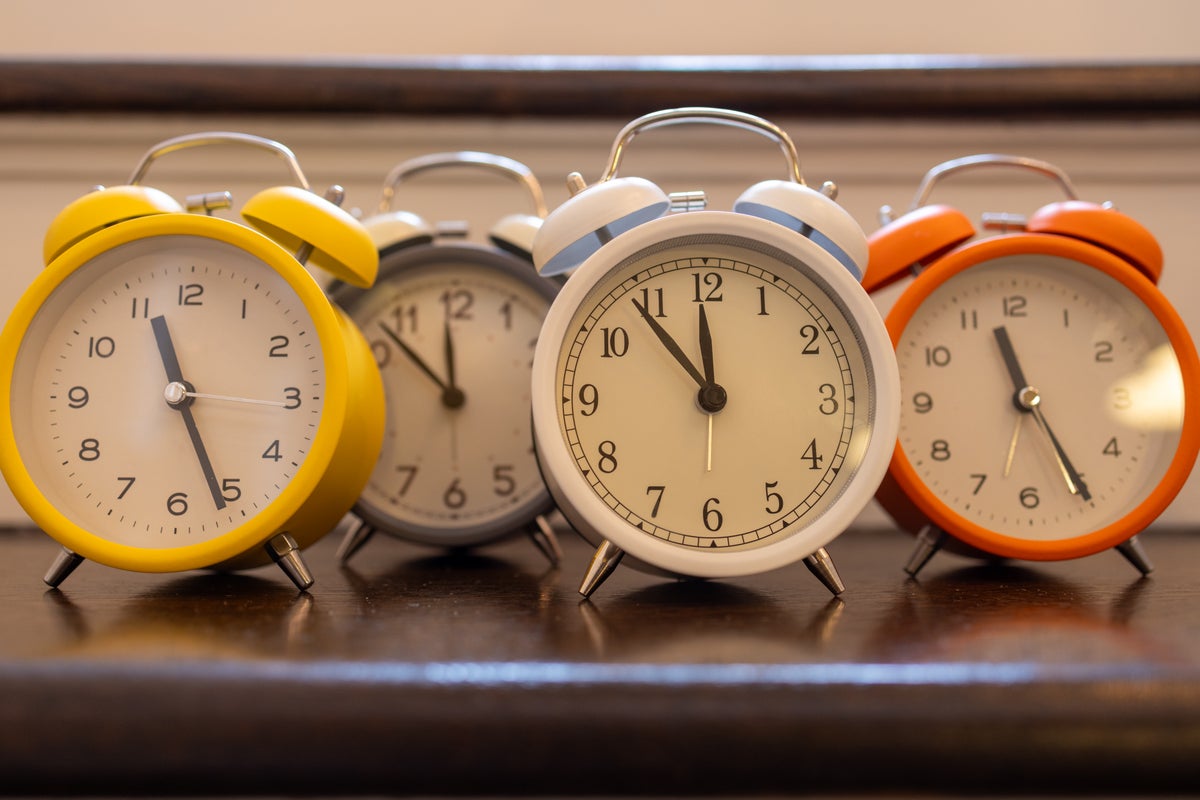
"The whole time we're on daylight saving time, we're misaligning our environment with our bodies, Manoogian says. It's not the one-hour shift that makes everyone feel bad. It's this chronic disruption that makes us worse versions of ourselves."
"Jet lag is a good way to think about daylight saving time, says Manoogian. We don't just lose an hour of sleep; our circadian system is also thrown out of whack. The circadian system refers to the body's suite of clocks—every cell with DNA has a clock, and each of these clocks feeds back into one another."
Daylight saving time negatively impacts health through continuous circadian disruption rather than just the one-hour sleep loss. Emily Manoogian, a circadian biology researcher, explains that the entire duration spent on daylight saving time creates a chronic misalignment between environmental time and the body's internal clocks. Every cell contains a biological clock that coordinates with others, and the brain uses light and sensory cues to regulate sleep, eating, and other behaviors. While experts recommend gradually shifting daily schedules before the time change, this approach isn't feasible for everyone. The experience resembles jet lag, affecting individuals differently based on their ability to adapt to circadian disruption.
#circadian-rhythm-disruption #daylight-saving-time-health-effects #biological-clocks #sleep-and-wellness
Read at www.scientificamerican.com
Unable to calculate read time
Collection
[
|
...
]