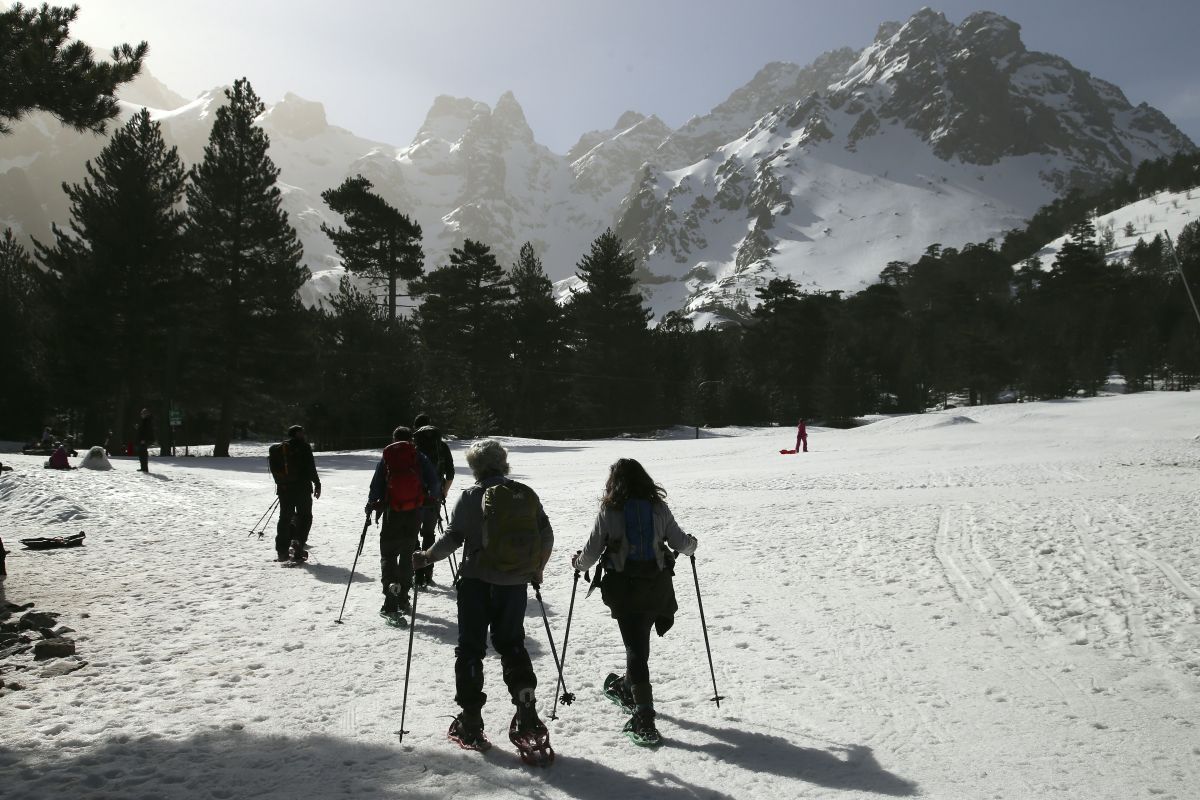
"Human beings and snowshoes go way back: archaeologists have found relics of crude frame snowshoes in the glaciers of the Italian Dolomites, dated to 3800 BC. We've long used various forms of the footwear to "float" atop the snow instead of trudge through it. For millennia, this ability was critical for survival; indigenous peoples, fur trappers, dog sledders and lumberjacks - moving through northern climates from Finland to Colorado - used the webbed attachments to conserve energy, complete tasks and even chase down enemies"
"Snowshoeing is a bonanza for all of the above yet offers an added element: moving through the snow (even when floating atop it) is an excellent challenge for the body. The snows creates resistance, which amplifies the effort needed - and the muscles engaged - for each step. You have to adopt a wider stance (to accommodate the shoes' larger surface area) and lift your legs higher, which gets the quads, glutes and hamstrings firing. This will up your heart rate, in kind."
Archaeological evidence shows crude frame snowshoes existed in the Italian Dolomites as early as 3800 BC. Snowshoes increase surface area to let people float atop snow, conserving energy and enabling travel across snowy terrain. Indigenous peoples, trappers, dog sledders and lumberjacks used them for survival, tasks and pursuit in northern climates. Snowshoeing challenges the body by creating resistance that increases effort, requiring a wider stance and higher leg lift that activates quads, glutes and hamstrings and raises heart rate. A 60-minute session can burn roughly 450 to 1,000 calories, comparable to jogging or cycling. Snowshoeing also encourages outdoor activity that can counter winter isolation and low mood.
Read at InsideHook
Unable to calculate read time
Collection
[
|
...
]