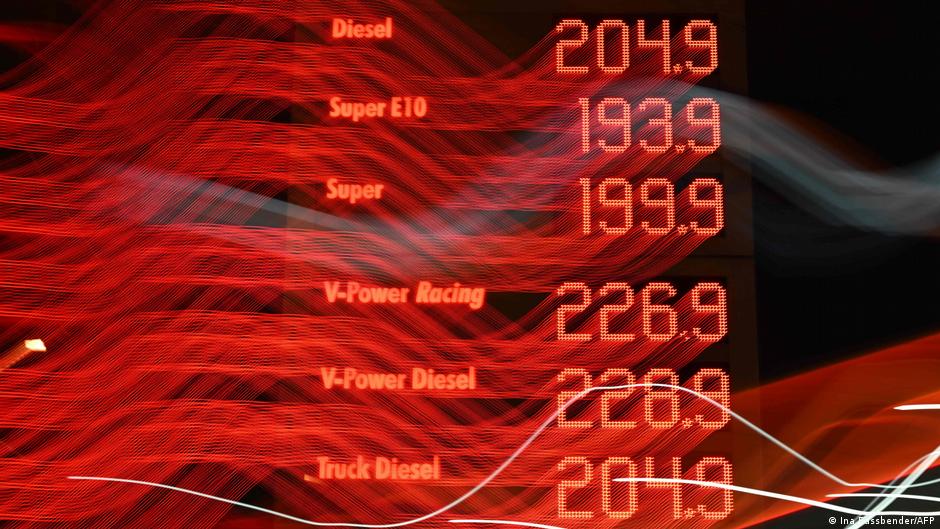
"Iran is no longer allowing ships to pass through its coastal waters. The Strait of Hormuz, the bottleneck in the Persian Gulf through which 20% of the global oil trade passes every day, is now effectively blocked. After the attack, the price of oil immediately rose sharply."
"Increased energy prices not only impact households but also industry, resulting in higher production costs. Energy-intensive sectors are particularly affected, such as chemicals, steel, glass and paper, but the automotive and mechanical engineering industries are feeling the effects as well."
"Veronika Grimm, one of five experts who advise the German government on economic matters, warns of rising inflation and additional investment uncertainty. 'We must prepare ourselves for a prolonged period of increased uncertainty,' the professor told the Redaktionsnetzwerk."
Following US and Israeli attacks on Iran, Iran blocked the Strait of Hormuz, a critical chokepoint for 20% of global daily oil trade. Oil prices surged immediately, with German gasoline prices reaching €2.50 per liter and diesel averaging over €2.00, representing a €0.30 increase. Iran's drone attacks on Qatari LNG facilities halted production, further pressuring energy markets. Although Germany sources most gas via Norwegian pipelines with diversified supply chains, European wholesale prices reflect global supply-demand dynamics. Rising energy costs impact households and energy-intensive industries including chemicals, steel, glass, paper, automotive, and mechanical engineering. German economists warn of increased inflation and investment uncertainty during this prolonged global crisis period.
Read at www.dw.com
Unable to calculate read time
Collection
[
|
...
]