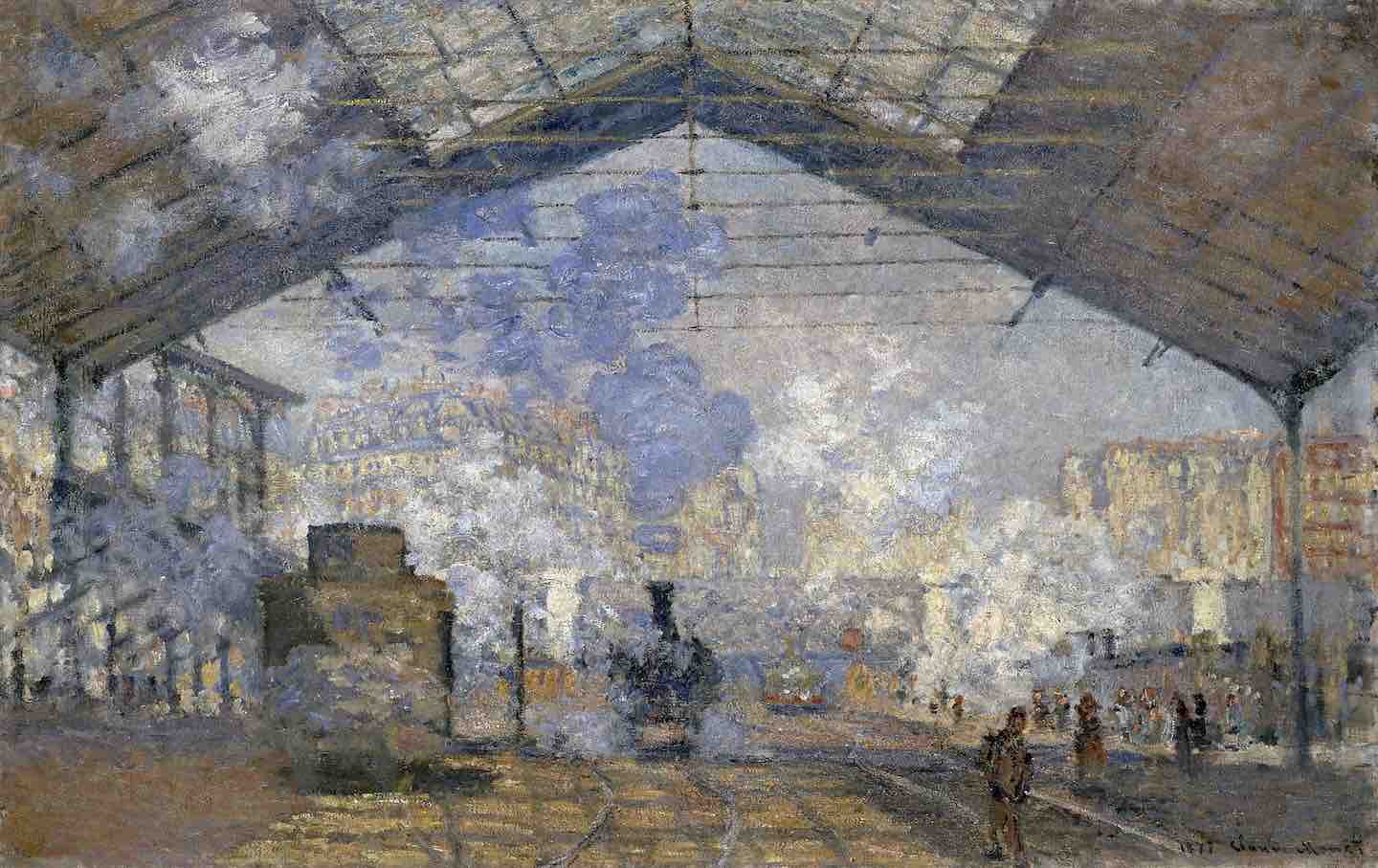
A runaway train in a late-19th-century novel embodies industrial modernity’s power and danger, advancing toward the future regardless of harm. Railways accelerated migration from countryside to city and intensified cultural and social anxieties about machines. In Europe, trains remain central to daily life, with far more annual rail travel in France than in America. Railways function as both infrastructure and political battleground, tied to social democracy and national identity. In France, the state-owned SNCF is deeply present in public life, and recurring strikes over wages and pensions disrupt commerce. Railway workers lead labor-rights struggles while also facing resentment from commuters and employers who view their demands as inconvenient.
"At the end of Émile Zola's 1890 novel La Bête humaine, a runaway train careens through the night, an "escaped monster" of astonishing force that advances toward "the future in spite of all, heedless of the blood that might be spilt." Zola's was one of the first novels to seriously consider the social and cultural ramifications of the train, which had yanked Europe into the industrial age and facilitated a great migration of workers from the country to the city."
"With this had come profound anxiety about the perils of modernity, incarnate in the hulking machines now roaring across the continent. What Zola saw in the train remains relevant: If anything, we have only become more apprehensive about our reliance on unfeeling technology-and the possibility that we might lose something of ourselves in the headlong race toward an optimized future."
"In Europe, the railway still reigns as a mode of transport: More than twice as many people in France alone travel by train each year as in America. But this is more than just evidence of a well-maintained intranational infrastructure. The railways that crisscross the continent are seen as a birthright and a site of contestation for the fragile social democracy that knits together much of Europe."
"Persistent battles over wages and pensions lead to regular railway strikes-as much a part of the annual calendar as Paris Saint-Germain matches-that snarl the country's matrices of commerce. Railway workers (or cheminots) are leading figures in the perennial struggle for workers' rights, but also objects of misplaced ire: deemed tyrannical by the disgruntled commuters and scheming bosses for whom their demands for dignity are merely inconvenient."
Read at The Nation
Unable to calculate read time
Collection
[
|
...
]