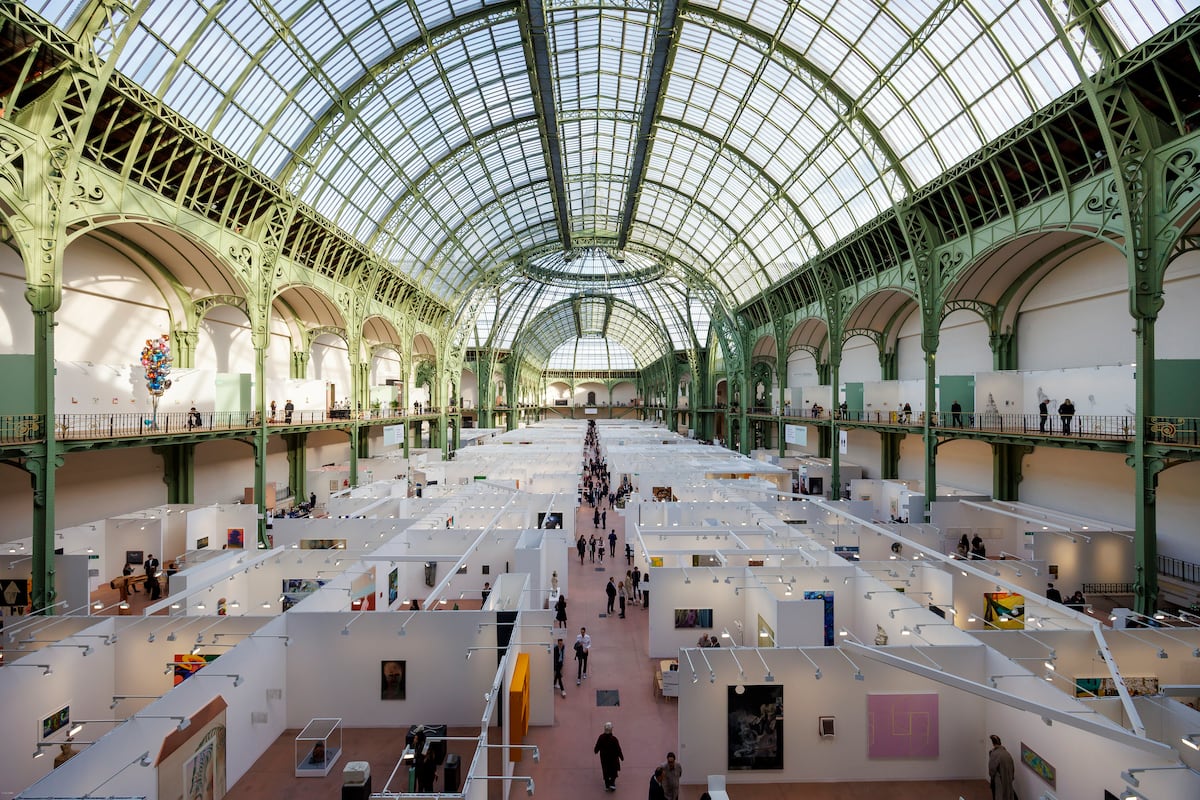
"Something is stirring in the cultural sector of Paris, which is experiencing a resurgence as an art capital thanks to a new prominence of private enterprise. Over the past few months, the city's cultural ecosystem has entered a new phase, undoubtedly more vibrant than in recent decades. But it is also more oriented towards art as a form of luxury, increasingly distant from the public model that once dominated the French capital."
"Several milestones in recent months demonstrate this. First, the multimillion-euro results of Art Basel Paris, a branch of the famous fair held every June in Switzerland that sold 90 million worth of artworks in just the first four hours. Then came the inauguration of the new Cartier Foundation headquarters opposite the Louvre, in a former antiques center transformed by Jean Nouvel."
"Some doors open, but others close. For example, the Centre Pompidou, which has just closed to begin renovations that will last until 2030. The old FIAC art fair, which brought together French galleries at the Grand Palais since the 1970s, has been replaced by the Swiss giant Art Basel, which already organizes professional events in Basel, Miami, Hong Kong and Qatar, in addition to Paris."
Paris is experiencing a renewed prominence as an art capital driven by private enterprise and international events. Major commercial successes, such as Art Basel Paris’s multimillion-euro sales, and new private institutions, including the Cartier Foundation’s moved and redesigned headquarters, signal a more spectacular, globalized cultural landscape. Several public institutions and longtime national fairs have been displaced or temporarily closed, including the Centre Pompidou’s long renovation and FIAC’s replacement by Art Basel. The new museum-scale facilities prioritize large collections, flexible exhibition systems, and proximity to high-spending tourists, raising concerns about culture becoming a financial asset rather than a public resource.
Read at english.elpais.com
Unable to calculate read time
Collection
[
|
...
]