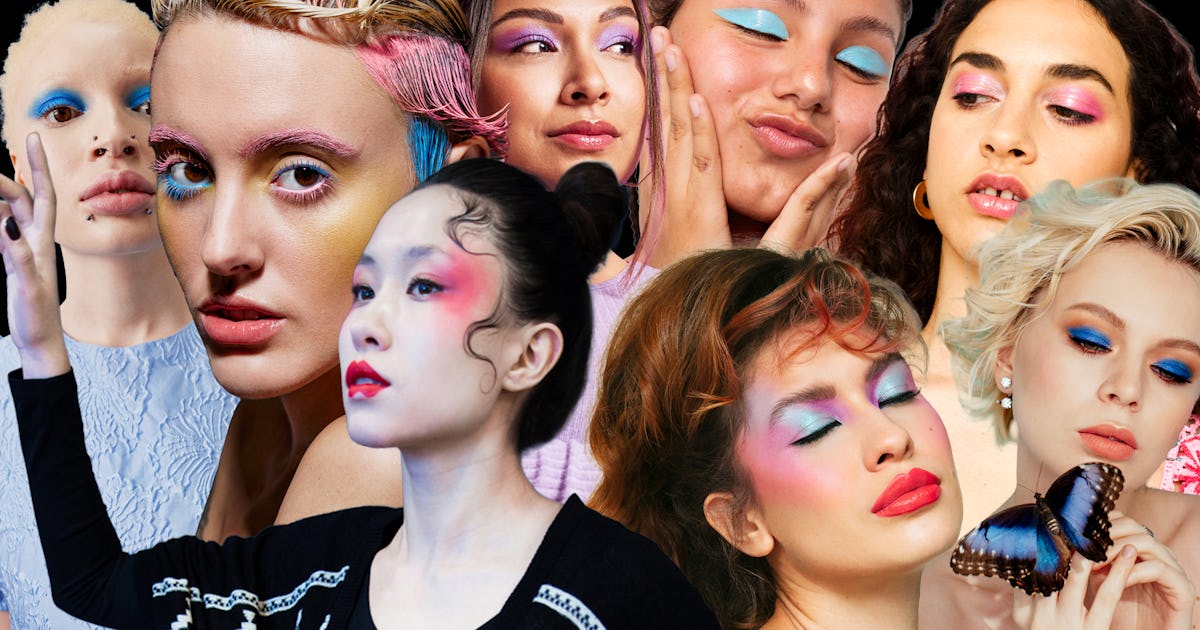
"Every micro-trend is swiftly dubbed ("Italian summer nails" or some such), and the most elaborate looks are often confined to the wearer's own home - all dolled up and nowhere to go. But before some of today's beauty influencers were born (the late '80s and '90s, let's say), full beats were meant to be flaunted in public. In those years, no group burned brighter than the club kids, whose visual rebellion through makeup signaled a sense of freedom against the somber backdrop of the AIDS epidemic."
"Some recurring archetypes? Straight guys in frilly blouses with eyeliner, looking a little like pirates. Their girlish counterparts, exuberantly glamorous, with pinned-up curls and heavy rouge like "a shipwrecked Marie Antoinette," Barber says. Debbie Harry disciples with peroxide-bleached hair and coal-black eyeshadow. And, of course, gender benders - "we owned the term," Barber says - with white-powdered faces, New Wave neon accent colors, and blush swept up to the temples, drag-queen style."
Makeup culture has grown algorithmic through platforms like YouTube and TikTok, producing micro-trends and elaborate looks often worn only at home. In the late 1980s and 1990s, club kids used bold, public makeup as visual rebellion and a means of freedom during the AIDS epidemic. Recurring archetypes included men in eyeliner, exuberantly glamorous women, Debbie Harry–inspired looks, and gender-bending, New Wave styles with white powder and neon accents. The club-kid aesthetic prized a raw, amateurish quality, contrasting with today’s airbrushed "clean girl" aesthetic. A gritty, DIY impulse—smudged liner, blurred lips, skinny brows—is reemerging as a response to restrictive social moments.
Read at Bustle
Unable to calculate read time
Collection
[
|
...
]