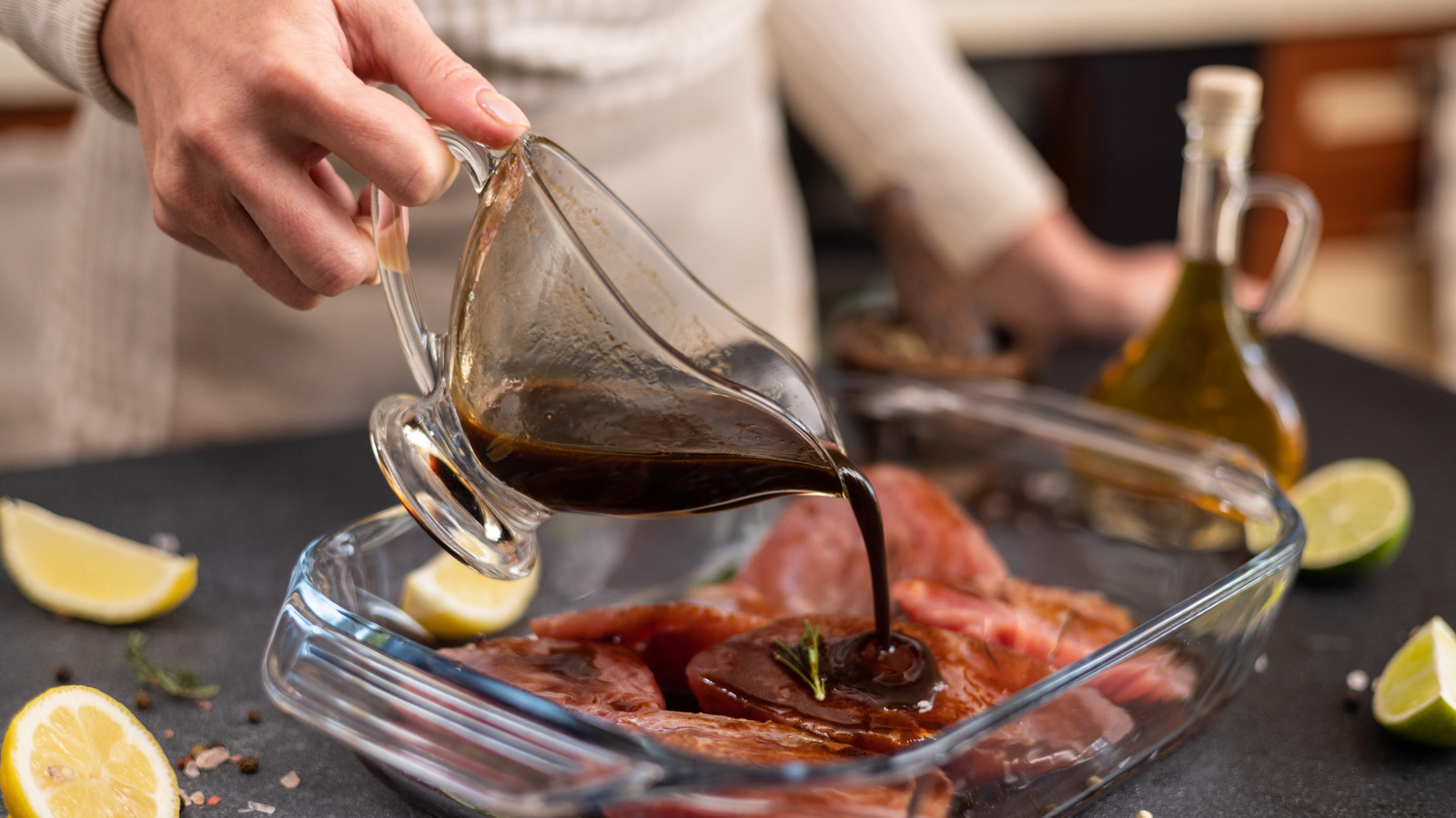
"Most marinades contain acidic and salty ingredients, which interact with the metal and cause your food to taste off-putting. While there aren't any inherent health risks associated with marinating food in foil, you want to avoid doing so as not to impart any strange flavors on your protein."
"Glass, while heavy, won't interact with any of the ingredients inside it. This means you won't have to worry about the taste changing or a particularly dark marinade permanently discoloring your container. It's also nonporous, meaning that, when you marinate meat in the fridge overnight in it, you won't have to worry about it tasting like day-old Chinese food."
"Unlike glass, plastic tends to hold on to bacteria, biofilm, and food residue. Even if you clean it well, any sort of bacteria left on the raw meat may camp out in the scratches and grooves, posing risk of contracting a foodborne illnesses such as Salmonella or E. coli."
Marinating meat requires selecting the appropriate vessel to preserve flavor and food safety. Aluminum foil should be avoided because acidic and salty marinade components interact with the metal, negatively affecting taste. Glass containers offer superior alternatives, as they remain inert with marinade ingredients, prevent flavor transfer from other foods, and resist staining from dark marinades. Plastic containers are problematic for marinating raw meat because they harbor bacteria, biofilm, and food residue in scratches and grooves, increasing foodborne illness risks like Salmonella and E. coli contamination. Glass's nonporous surface and chemical inertness make it the optimal choice for safe, flavorful meat marination.
Read at Tasting Table
Unable to calculate read time
Collection
[
|
...
]