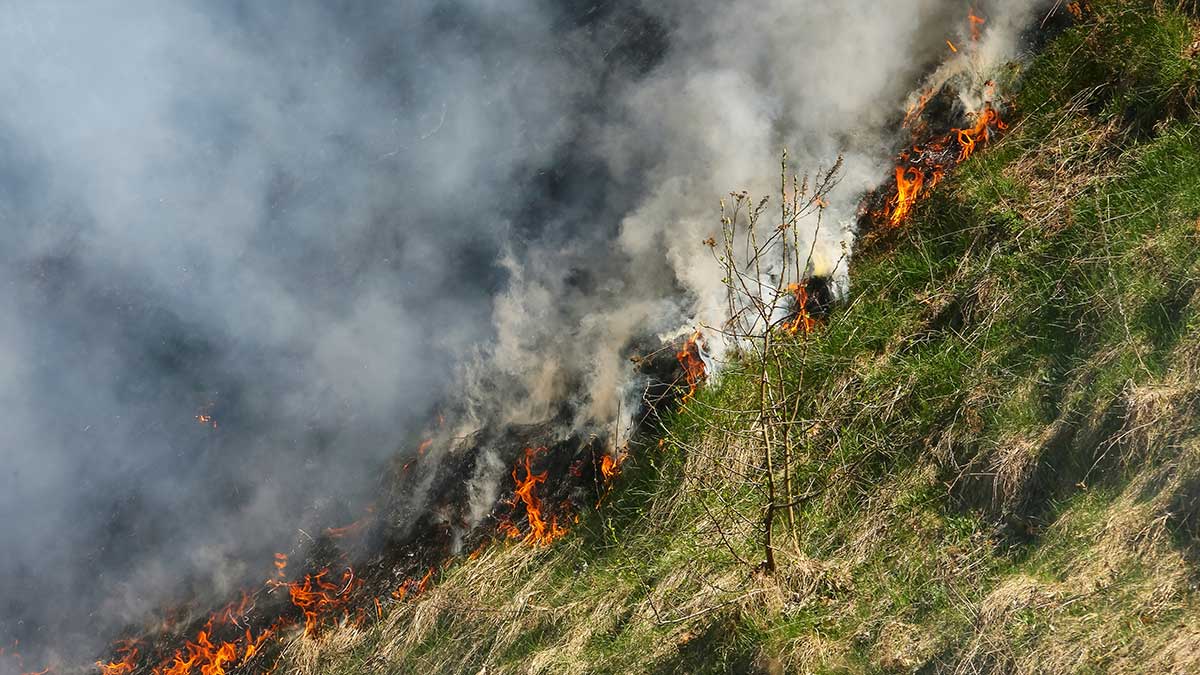
"More than 25,000 square miles of the U.S. Great Basin, an area nearly twelve times the size of Yellowstone, has flipped from native sagebrush to invasive annual grassland over the past three decades, much of it without ever burning. The change is amplifying the Western fire season. Researchers using satellite data found that fire is no longer required to convert these landscapes; once the grasses arrive, the fire follows."
"Wildfire science has long focused on forests, but the dominant fuel type driving change in the American West today is not timber. It is grass, particularly fine, dry, non-native annual grass that cures by early summer and carries flame between shrubs that would otherwise be too widely spaced to burn together."
"Cheatgrass greens up earlier than native bunchgrasses, drawing down soil moisture and nutrients before native species start to grow. It then dies in early summer, leaving a continuous, dry, highly ignitable mat across landscapes that historically had patchy fuels and infrequent fires. The Bureau of Land Management found that areas invaded by cheatgrass ( Bromus tectorum) are roughly twice as likely to burn as uninvaded land, and that cheatgrass now dominates or is a meaningful component of vegetation on roughly 52 million acres of the Intermountain West, up from roughly 31.5 million acres mapped in 2000 using satellite imagery."
"The story of climate change and grass is, increasingly, a story about what burns, when, and how often. Grasses occupy a unique position in our climate. They are everywhere - pastures, lawns, prairies, savannas, roadsides - and they are easy to overlook precisely because they are so familiar. However, the world's grasses are responding to warmer temperatures, shifting precipitation, and rising atmospheric carbon dioxide in ways that are reshaping ecosystems and fire regimes from the Mojave Desert to the slopes above the fire-scorched community of Lahaina in Hawaii."
More than 25,000 square miles of the U.S. Great Basin have shifted from native sagebrush to invasive annual grassland over three decades, much of it without burning. Satellite-based research indicates that fire is no longer required for conversion; once grasses establish, fire follows. Grasses respond to warmer temperatures, changing precipitation, and rising atmospheric carbon dioxide, reshaping ecosystems and fire regimes from deserts to areas affected by major wildfires. In the American West, the dominant changing fuel is fine, dry, non-native annual grass that cures early and carries flame between shrubs. Cheatgrass greens up earlier, depletes soil moisture and nutrients, dies by early summer, and leaves continuous dry fuel that is highly ignitable. Invasion increases burn likelihood and cheatgrass now covers or contributes to vegetation across tens of millions of acres in the Intermountain West.
#invasive-annual-grasses #great-basin-ecosystem-change #wildfire-regime #cheatgrass-bromus-tectorum #climate-change
Read at Earth911
Unable to calculate read time
Collection
[
|
...
]