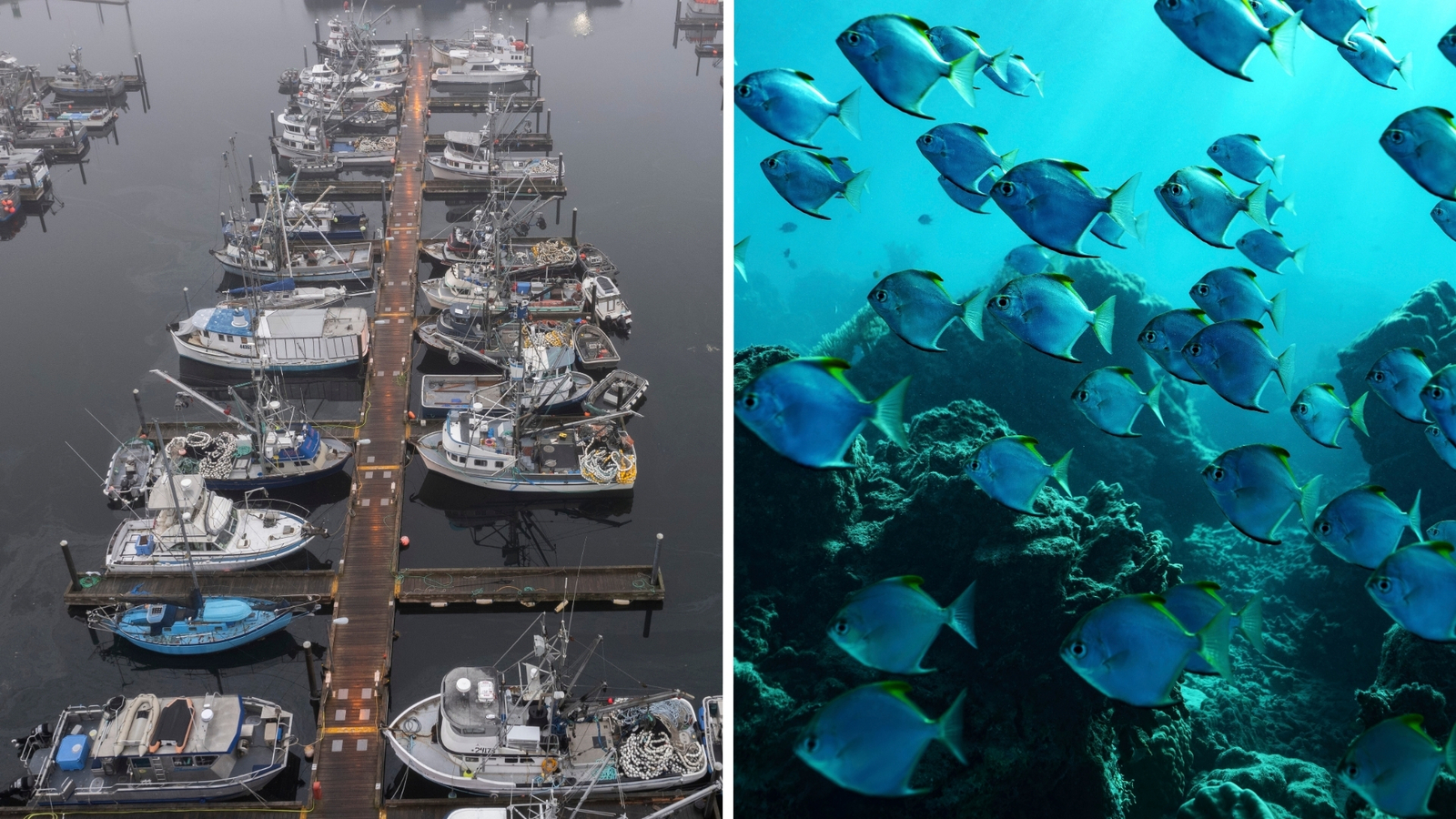
"What we do is we take all the GPS positions of all the boats in the world. You're talking about a database of 100 or well over 100 bazillion, 100 billion, GPS positions. And we use machine learning to determine what types of boat they are, what they're doing, if they're fishing boats, when they're fishing."
"Millions of gigabytes of satellite imagery to and apply AI to that to detect vessels and then determine which vessels are broadcasting which ones or not, to come up with that larger picture of where activity on the ocean is happening."
Tracking fish populations is challenging because they live underwater and are difficult to observe directly. Global Fishing Watch addresses this by tracking fishing vessels instead, using Automatic Identification System (AIS) transponder data required on large vessels for collision prevention. The organization combines GPS position data from over 100 billion data points with machine learning to identify vessel types and fishing activities. When vessels disable their transponders, the organization uses satellite imagery and artificial intelligence to detect them. This multi-layered approach creates a detailed global picture of ocean fishing activity, with data made publicly available to improve understanding of fishing fleet movements and fish population dynamics.
#fish-population-tracking #artificial-intelligence #fishing-fleet-monitoring #ocean-data-technology #global-fishing-watch
Read at ABC7 San Francisco
Unable to calculate read time
Collection
[
|
...
]