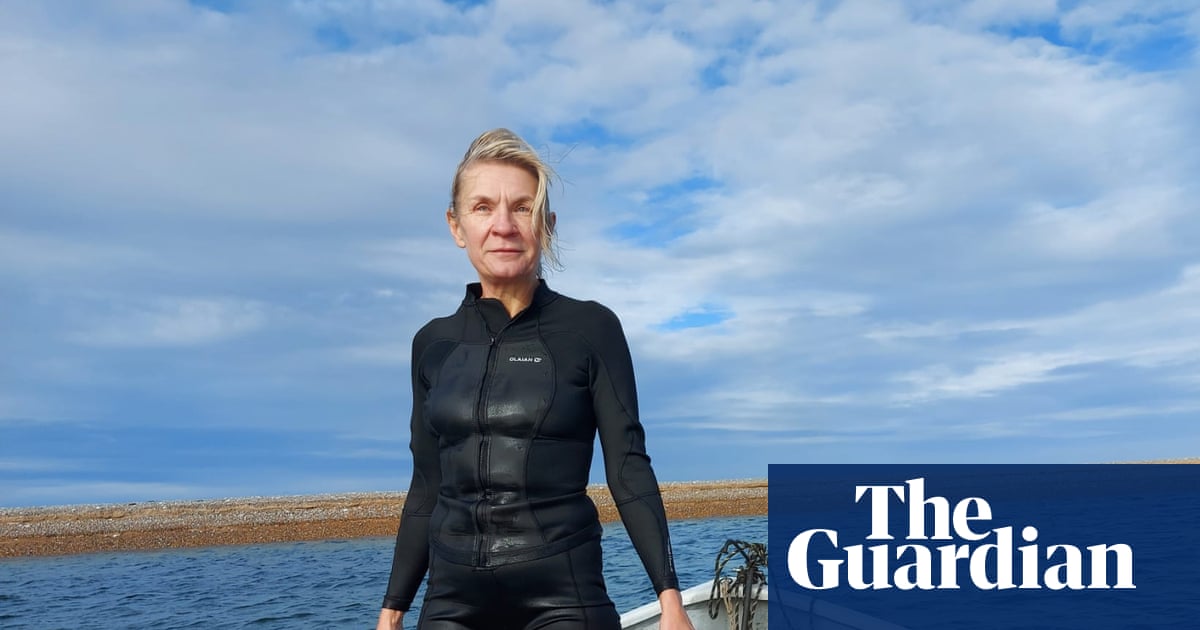
"Allie Wharf's career unfolded amid conflict. As a senior foreign producer for Newsnight, she reported on Iraq and Afghanistan. Just two years ago, she was filming mass graves in Ukraine. But burnt out by wars, and after a detour farming ducks in Tanzania, Wharf has now settled on the quiet north Norfolk coast. Here, alongside her life and business partner, Willie Athill, she has embarked on a different kind of mission: the creation of Europe's largest natural oyster reef."
"The Luna Oyster Project, a collaboration between Norfolk Seaweed and Oyster Heaven, aims to restore 4 million oysters to the North Sea, using the first-ever mass deployment of mother reef bricks. These fired clay structures provide the skeleton of a lost world. Centuries of bottom trawling and human impact have stripped historical oyster reefs bare, leaving only scattered fragments of what was once a teeming underwater landscape across Britain and Europe."
"Luna's new mother reefs have recently been installed 2 miles out to sea. In April, millions of baby oysters from Morecambe Bay will be rehoused in their nooks and crannies, slowly forming their own natural reefs that could one day connect with smaller restoration projects to the north and south, forming a living lattice of biodiversity along England's North Sea coastline. It's been very expensive and time-consuming, Wharf admitted. Our licence application was 280 pages and cost six figures. Securing the licence took more than three years."
Allie Wharf transitioned from reporting on conflicts to leading the Luna Oyster Project on the north Norfolk coast. The project, a collaboration between Norfolk Seaweed and Oyster Heaven, will restore four million oysters to the North Sea using the first mass deployment of fired-clay mother reef bricks. These structures recreate the physical skeleton for oyster reefs long destroyed by bottom trawling and human impact. Newly installed mother reefs sit two miles offshore, where millions of juvenile oysters from Morecambe Bay will be rehoused to form natural reefs that could connect with nearby restoration sites. The project required extensive licensing, high costs, and meticulous husbandry.
Read at www.theguardian.com
Unable to calculate read time
Collection
[
|
...
]