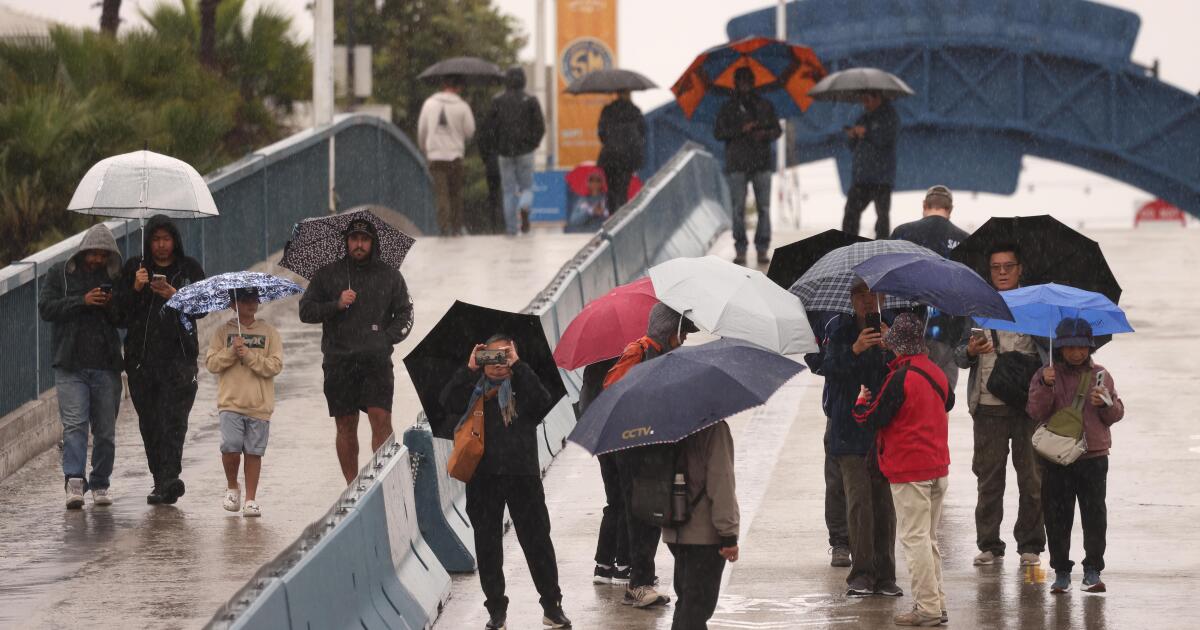
"Rainfall across much of California and the West has become more clustered in heavier storms, with longer dry spells in between. The net effect is a drying out, researchers found in a new study. It isn't just the western United States; the same is true in much of the rest of the world. The research is the first to reveal how this concentration of rainfall into fewer, heavier events dries out the landscape."
""The more concentrated rainfall you get, the drier you become," said Justin Mankin, an associate professor of geography at Dartmouth College who coauthored the study. The occasional heavy rain is just too much for the land, and the soil can only absorb so much at once. Mankin said it's like "asking the land to drink from a fire hose.""
""As you concentrate rainfall into heavier downpours, more of that water, it sits on top of the land to be easily evaporated," he said. The trend is less clear in Southern California and more pronounced in the North. The America West is one of the places where rainfall has become most clustered or concentrated."
"The scientists analyzed precipitation globally from 1980 to 2022. To determine which areas have grown drier or wetter, they used data from satellites that track shifts in water across the landscape. The researchers found precipitation in the Rocky Mountains has become about 20% more concentrated, affecting the Colorado River, a major water source for California."
Rainfall has become more clustered into heavier storms across much of California and the western United States, with longer dry spells between events. Stronger rainfall interspersed with extended dry periods leaves land drier overall. The net effect is drying out because soils can absorb only limited amounts at once. Concentrated downpours cause more water to sit on top of the land, making it easier to evaporate. The pattern is more pronounced in northern areas and less clear in southern California. Similar changes occur across much of the world. Satellite-based precipitation analysis from 1980 to 2022 links these shifts to climate warming, including about 20% greater concentration in the Rocky Mountains affecting the Colorado River.
Read at Los Angeles Times
Unable to calculate read time
Collection
[
|
...
]