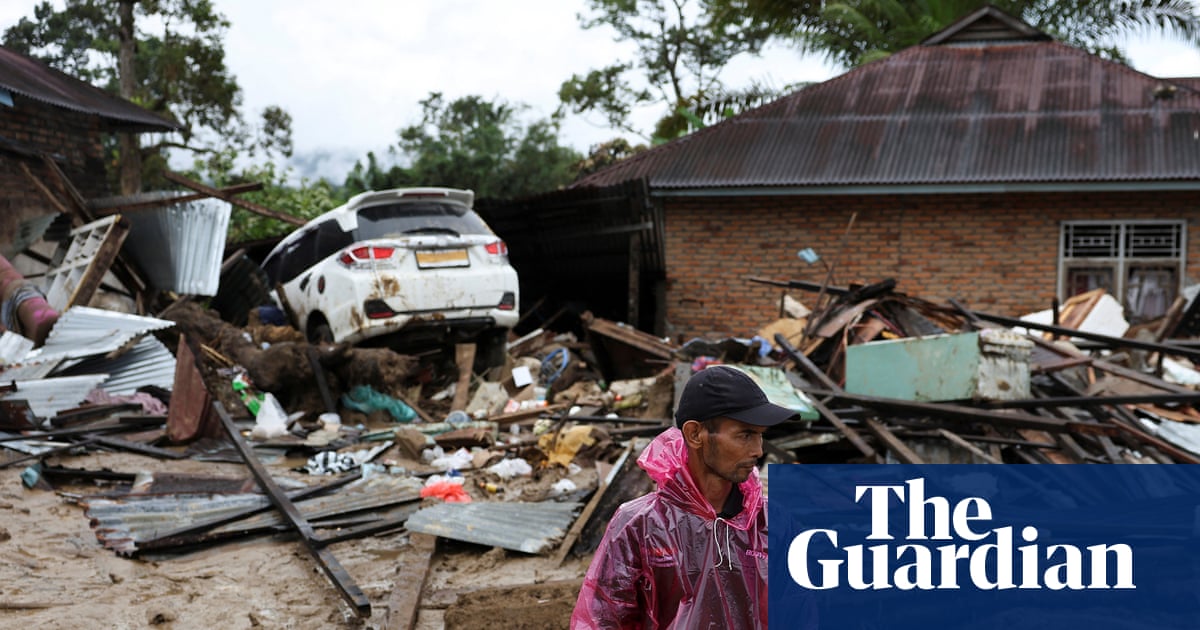
"Families stranded on their rooftops. Homes buried by fast-flowing mud. Jagged brown craters scarring lush green hillsides. The scenes are the result of a series of cyclones and storms in a heavy monsoon season that have struck Asia with torrential rains, gutting essential infrastructure and reshaping landscapes. The violent weather has killed at least 1,200 people in the past week and forced a million to flee without knowing whether their homes will still be standing when they go back."
"Roxy Koll, a climate scientist at the Indian Institute of Tropical Meteorology and coauthor of the latest IPCC report, said the cyclones' behaviour had changed more than their number this season. They are wetter and more destructive because the background climate has shifted, he said. Water, not wind, is now the main driver of disaster. Natural weather patterns including a La Nina cycle and a negative Indian Ocean dipole have helped to create conditions for the storms to form."
Heavy monsoon cyclones and storms have produced torrential rains that gutted infrastructure and reshaped landscapes across south and south-east Asia. The violent weather killed at least 1,200 people and forced about a million to flee, many uncertain if their homes remain. Carbon pollution heating the planet has increased atmospheric moisture and ocean energy, making storms wetter and more destructive. Natural variability including La Nina and a negative Indian Ocean dipole contributed to storm formation. Warmer air holds about 7% more moisture per degree Celsius, loading storms and enabling moderate cyclones to unleash rainfall that overwhelms rivers and destabilises terrain.
Read at www.theguardian.com
Unable to calculate read time
Collection
[
|
...
]