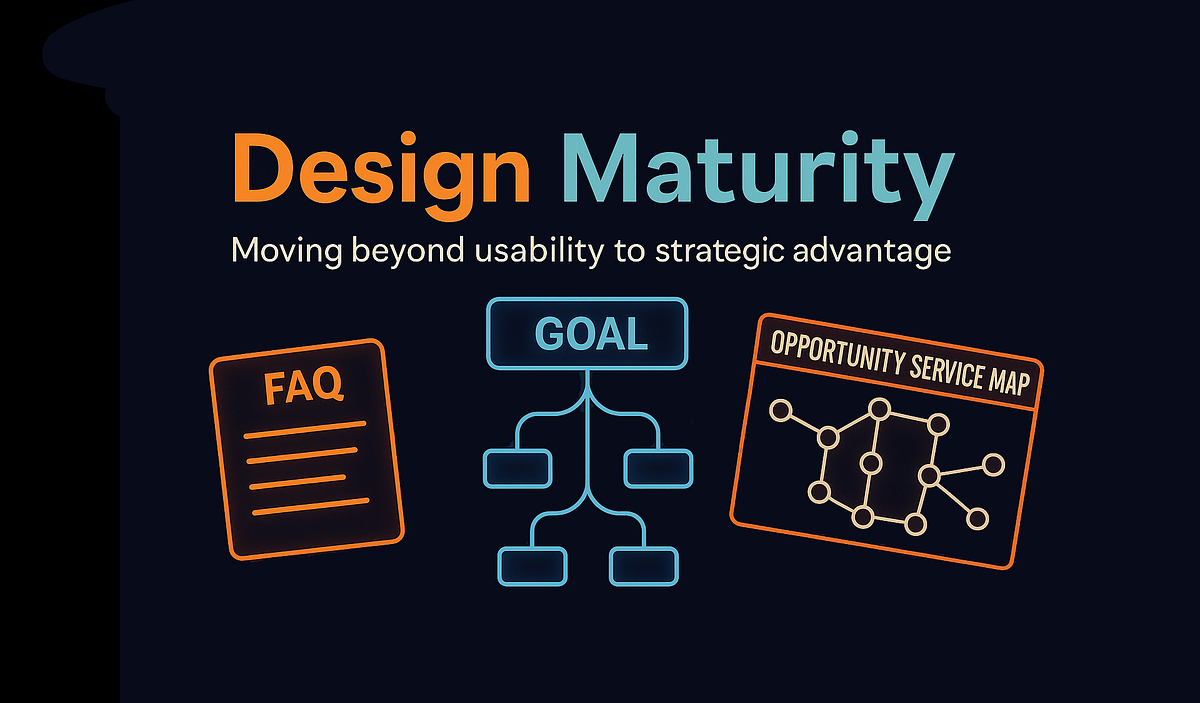
"High‑performing product organisations depend on maturity across all disciplines - design, product management, engineering, data, editorial, architecture. When one discipline is not being fully utilised, the whole organisation suffers, because maturity is systemic. But design maturity is sometimes misunderstood as a craft issue. Sometimes design is equated with usability. But true design maturity expands an organisation's capacity to work well in uncertainty. So if you want to create the future, rather than just predict it, you need to find ways to achieve design maturity."
"IDEO defines design as "sensemaking + imagination". It's the reason design is such a valuable partner to product management - design extends sense-making into difference-making. Product management excels at sense-making. It synthesises data and combines analytical skills with empathy to make decisions and provide direction - ultimately holding accountability for the success of the product. But without design maturity, an organisation can lose out on the creativity and divergent thinking strengths of design."
High-performing product organisations require maturity across design, product management, engineering, data, editorial and architecture because maturity is systemic. When one discipline is underutilised, the entire organisation suffers. Design maturity is often misunderstood as a craft or equated with usability, which narrows its perceived contribution. IDEO defines design as "sensemaking + imagination," enabling design to extend sense-making into difference-making alongside product management. Product management synthesises data and empathy for decision-making, but without design maturity organisations lose creativity and divergent thinking. Evidence shows design maturity correlates with stronger financial and product performance, while UX dominance can limit design's broader impact.
Read at Medium
Unable to calculate read time
Collection
[
|
...
]