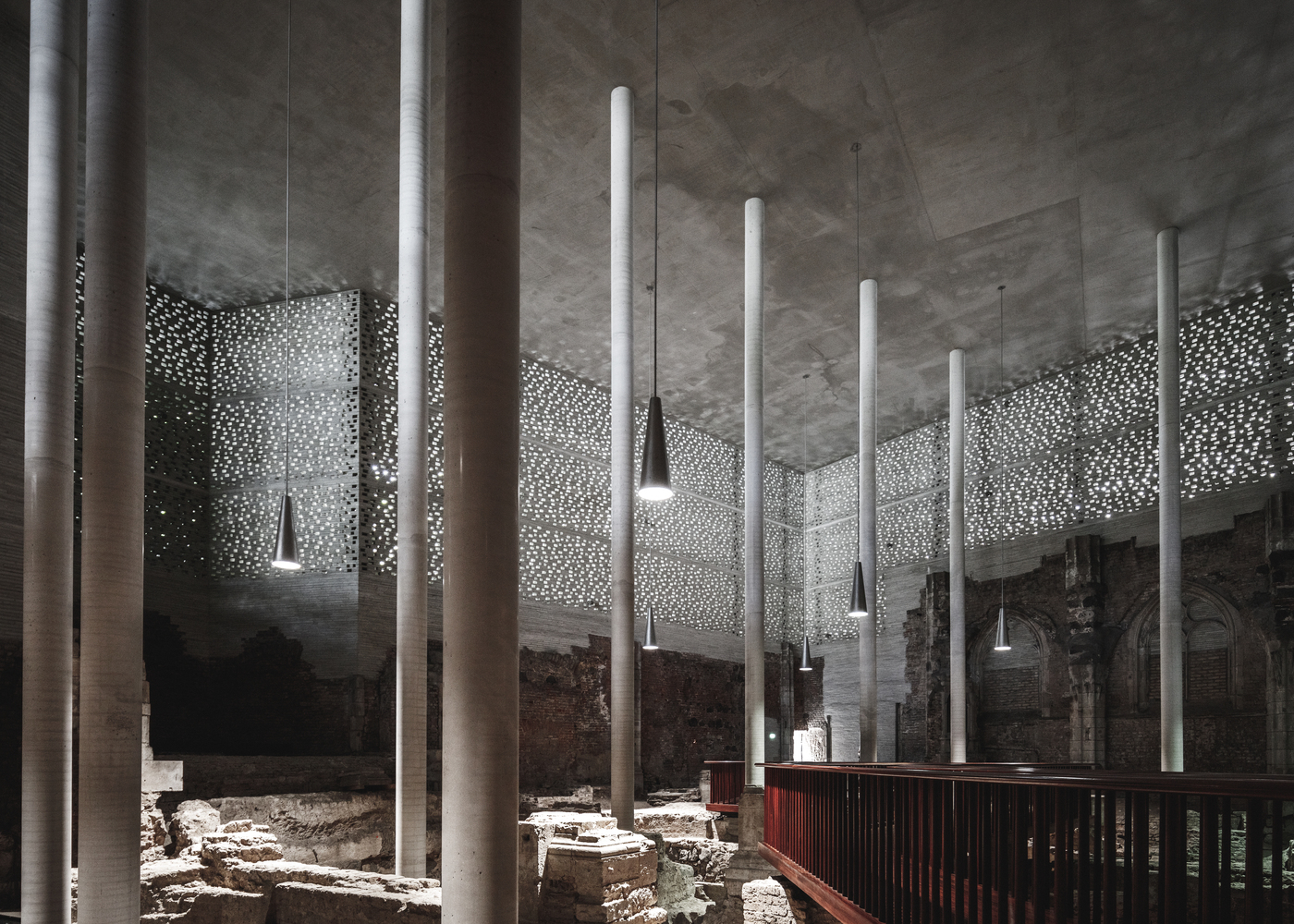
"Architecture begins as an encounter with gravity, the ancient act of placing weight upon the earth, persuading matter to stand, hold, and shelter. Within this fundamental condition of heaviness lies a quieter possibility: density itself can generate a sense of lightness—a perceptual condition in which the body begins to experience space as suspension."
"Much of contemporary architecture has pursued lightness through reduction: thinner structures, smoother surfaces, increasingly seamless transitions between interior and exterior. Yet there exists another register in which lightness is not the result of absence, but of intensification, emerging when material presence becomes so precise that it begins to alter perception itself."
"The body registers space before thought intervenes—through shifts in temperature, pressure, balance, and orientation that precede conscious interpretation. Thick walls cool the skin and slow perception, while enclosed volumes compress breath and draw attention inward, recalibrating balance and posture."
"At the threshold of material conviction, lightness becomes possible. When weight is fully asserted, light ceases to behave as pure absence and begins to operate as an event—an interruption capable of unsettling the visual logic of support."
Architecture fundamentally interacts with gravity, emphasizing the act of placing weight on the earth. While contemporary designs often pursue lightness through material reduction, an alternative approach focuses on intensifying material presence. This results in a perceptual shift where heavy mass alters the experience of space. The body perceives space through physical sensations before conscious thought, making the interaction with material a somatic experience. When weight is fully asserted, lightness transforms into an event that challenges conventional perceptions of support and structure.
Read at ArchDaily
Unable to calculate read time
Collection
[
|
...
]