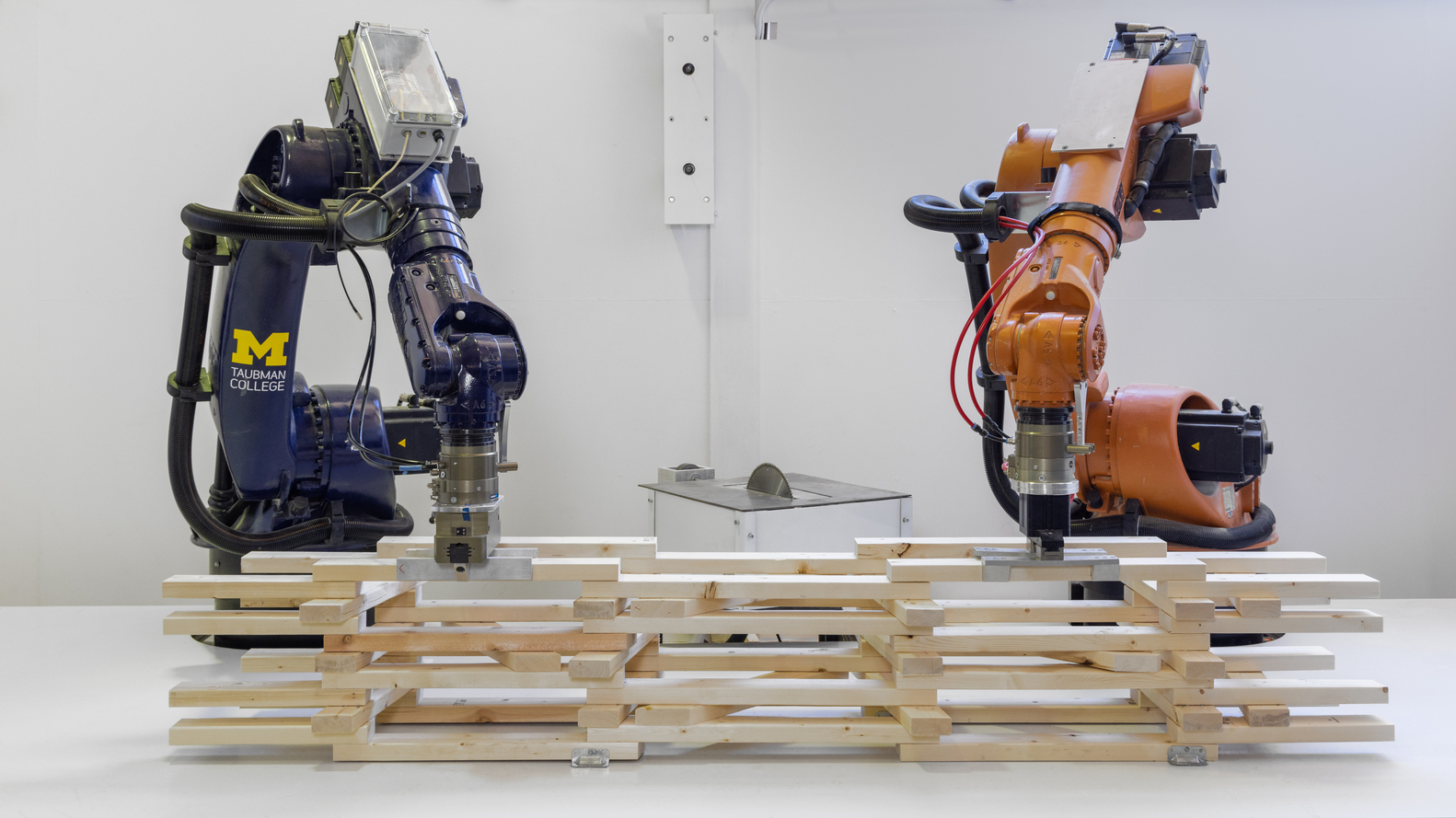
"From robotic arms and drones to robots that move across large surfaces and even 3D printing robots, their use in construction is accelerating research and the development of new working methods, as well as structural and material experimentation. In collaboration with multiple disciplines and spanning various facets of architecture, the role of robots in the contemporary landscape demonstrates a potential that extends beyond merely automating processes or reducing construction times and costs."
"In the field of architecture, many modern robots are designed to address challenges related to construction and on-site fabrication. By rethinking traditional construction methods and introducing new manufacturing techniques, robots can handle masonry and paving tasks that are highly repetitive. In addition, the use of robots can enhance operator safety by assisting with demolition work, operating underground in confined spaces, and performing other tasks."
Robotic technology is transforming construction and architecture through various applications including robotic arms, drones, surface-moving robots, and 3D printing systems. These technologies accelerate research into new working methods and enable structural and material experimentation across multiple disciplines. Beyond traditional automation benefits like reduced costs and timelines, robots address construction challenges through on-site fabrication, handling repetitive masonry and paving tasks, and enhancing worker safety in dangerous environments such as demolition work and confined spaces. The integration raises fundamental questions about whether architecture should serve technology or technology should serve architecture, suggesting robots represent a collaborative partnership between humans and machines rather than simple replacement of human labor.
#robotic-construction-technology #architectural-innovation #human-robot-collaboration #on-site-fabrication #construction-safety
Read at ArchDaily
Unable to calculate read time
Collection
[
|
...
]