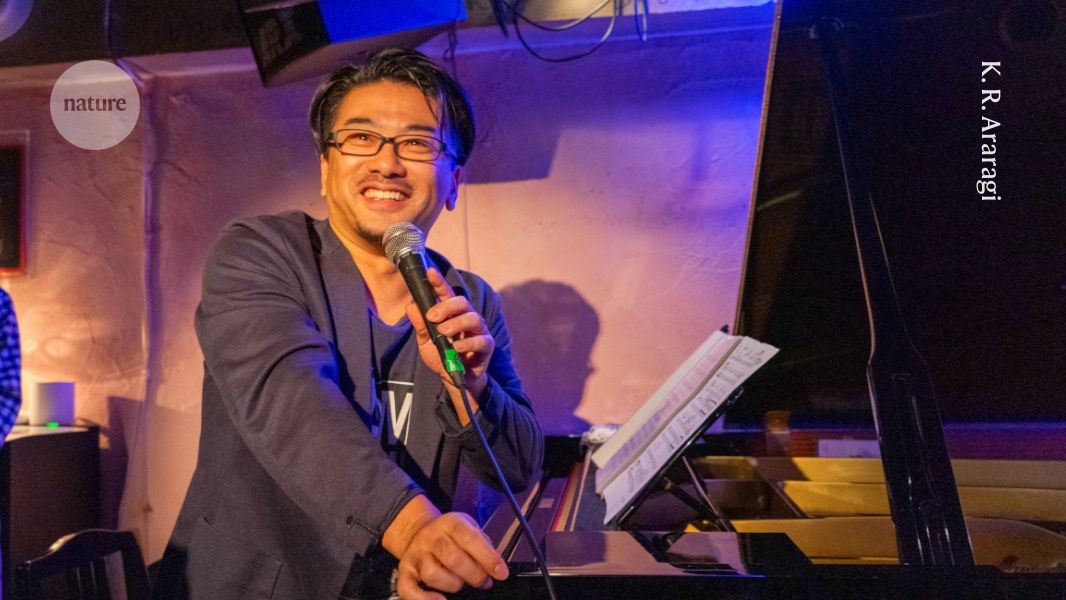
"When Colin Campbell stood before colleagues at a chemistry-department gathering last February at the University of Edinburgh, UK, it wasn't to talk science. It was to play science. On his bagpipes. With the tune crafted from the molecular structure of NANOG, the only protein with a name derived from Celtic mythology. Campbell, a spectroscopist, and a bagpiper in a community band, had started experimenting with translating scientific data into music years earlier - assigning RNA sequences to musical notes and converting spectral lines into melody."
"What began as a side project to merge his two passions, music and science, soon became a communal enterprise. While on a Fulbright scholarship at the University of Colorado Boulder in 2018, he formed a band with colleagues - the Rocky Canyon and the Flatiron Five - to perform data-driven compositions. Once back in Edinburgh, Campbell created several data-inspired pieces with colleagues, such as one based on the football-shaped buckminsterfullerene (or buckyball) molecule."
"For this collaborative, data- and music-based event, Hong and co-organizer Joshua Levinsky, a crystallographer also at the University of Edinburgh, invited anyone who wanted to create music about, or from, their science. Some graduate students, postdocs and professors had the coding skills to turn numbers into notes, others arrived with the music-arranging and production skills to turn a cacophony of notes into a coherent musical narrative."
Colin Campbell transformed molecular and spectral data into musical compositions, including a tune based on the protein NANOG played on bagpipes. He assigned RNA sequences to notes and converted spectral lines into melody, and formed bands such as the Rocky Canyon and the Flatiron Five to perform data-driven pieces. Campbell and colleagues created works inspired by structures like buckminsterfullerene. Chemist Cecilia Hong and crystallographer Joshua Levinsky organized a Data Jam Workshop to invite researchers to create music from their data. Participants combined coding, arranging, and production skills to translate numbers into coherent musical narratives, fostering interdisciplinary collaboration and broader accessibility.
Read at Nature
Unable to calculate read time
Collection
[
|
...
]