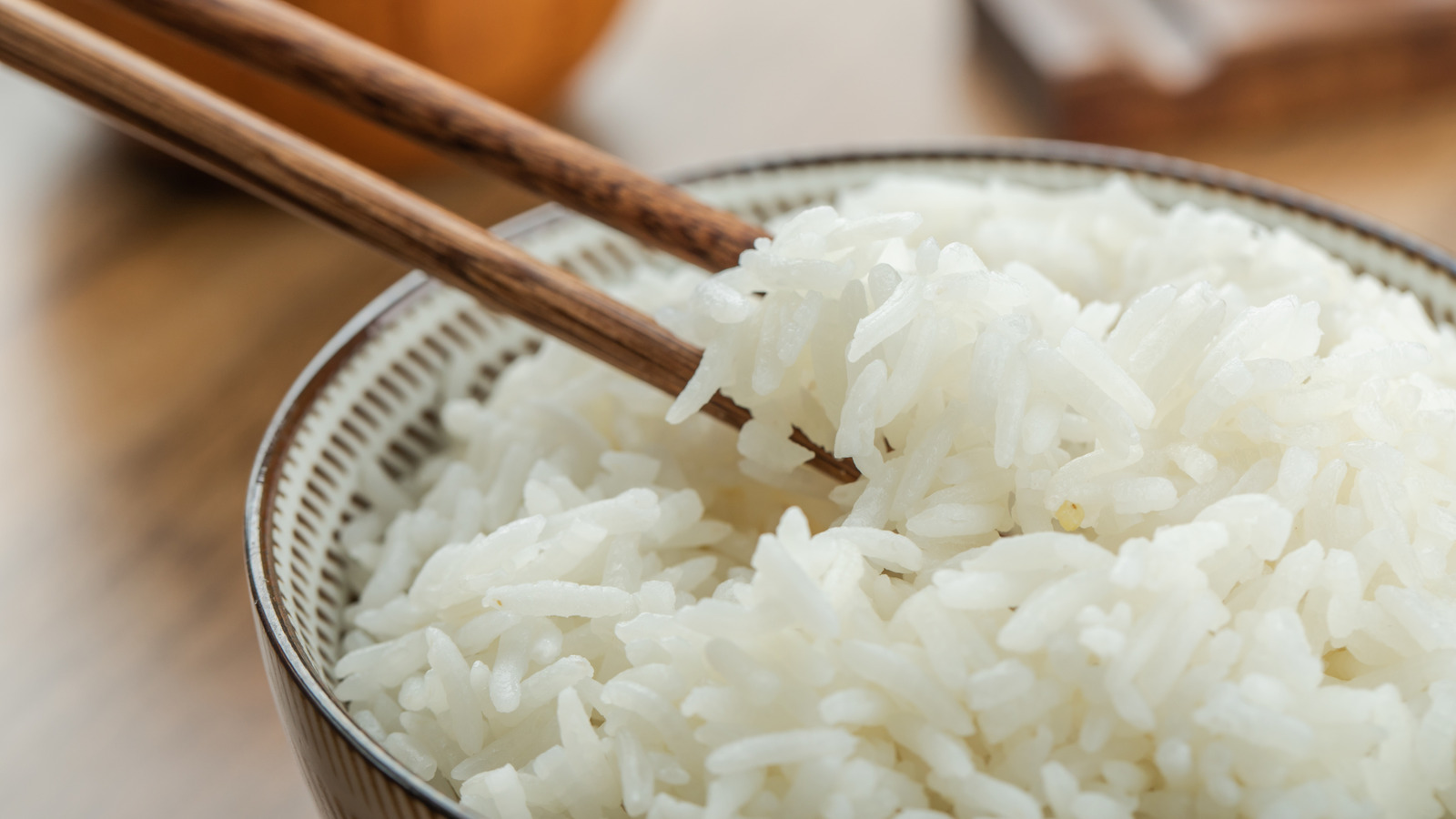
"But when making jasmine rice, you'll need to think twice since it doesn't follow the same 2:1 water-to-rice ratio as other white rice. Bagged jasmine rice usually calls for 1 ½ cups of water for every cup of rice, but it might be easy to overlook if you're used to more liquid. However, different types of rice have different cooking requirements."
"To experience the buttery, slightly nutty flavor and tender texture that the rice variety has to offer, it's key to cook it correctly - with the right amount of water. Since it's less starchy than other kinds of rice, including long-grain basmati, jasmine rice does not even need to be soaked to remove starch before cooking. Cook it in too much water, and it will absorb excess liquid and come out gummy. With jasmine rice, less water is typically more."
Jasmine rice is a long-grain Thai variety with a buttery, slightly nutty flavor and tender texture. It has lower starch content than other rices, making it intrinsically softer and chewier. Typical stovetop cooking uses about 1.5 cups of water per cup of rice. Jasmine rice does not need to be soaked to remove starch. Excess water causes the grains to absorb too much liquid and become gummy, so using less water yields a better texture. Pressure cookers or rice cookers release less steam and generally require an even lower water-to-rice ratio, sometimes as little as 1:1.
Read at Tasting Table
Unable to calculate read time
Collection
[
|
...
]