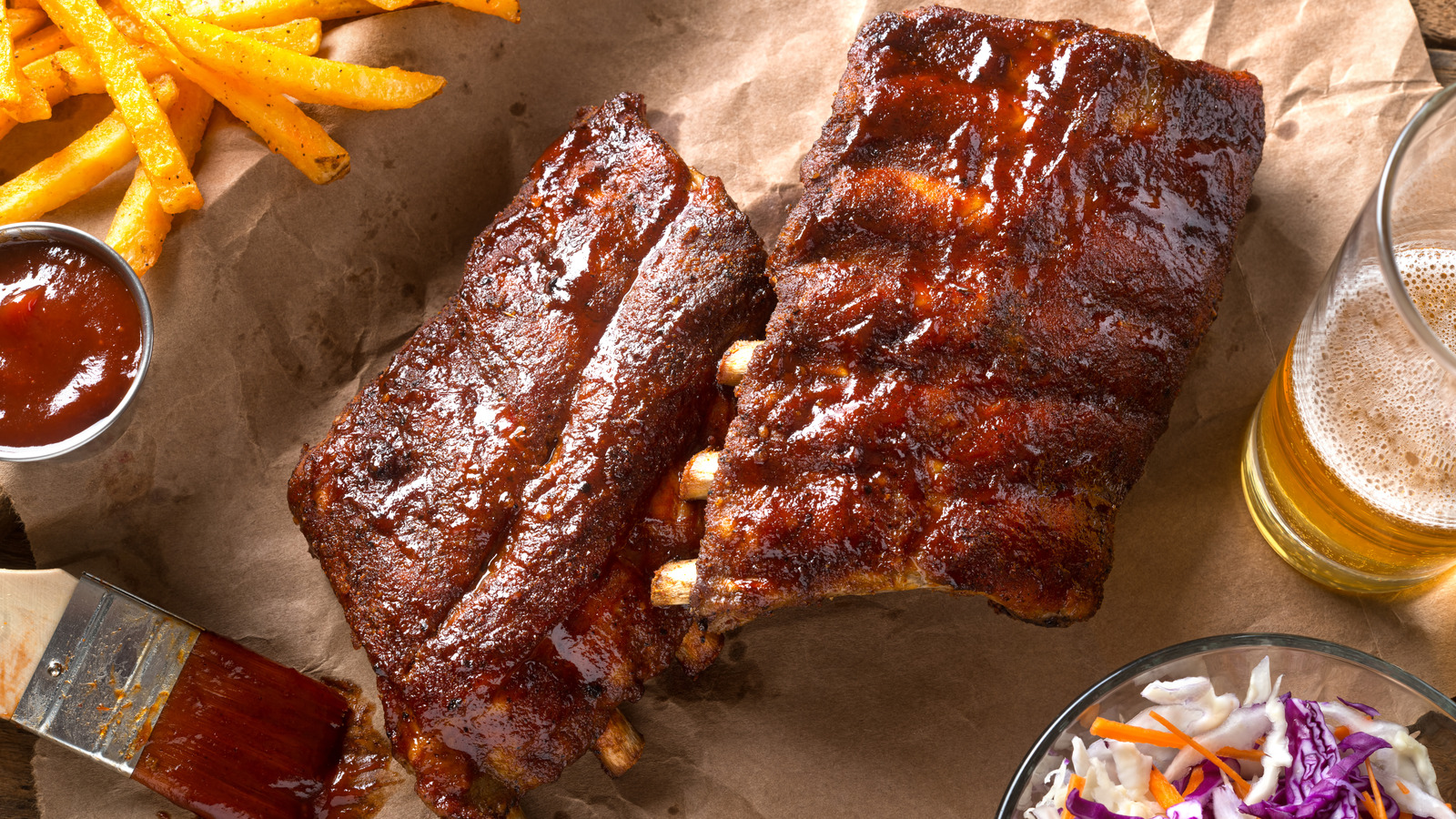
"“a mix of equipment, time, and a bit of technique” that are difficult for the home cook to pull off, according to pit boss Michael Conlon of Virgil's Real BBQ in New York City. Speaking exclusively to Tasting Table, Conlon emphasized the importance of a smoker - which regrettably, many won't have access to - with restaurants often using “large offset smokers or commercial pits that burn real wood for hours.”"
"Superlative ribs are also a matter of “practice and consistency.” Pitmasters like Conlon cook ribs daily, building enviable expertise over time, but “that kind of repetition is hard to match at home.” When asked what restaurant techniques a home cook might employ to amp up their ribs, Conlon says that restaurants will lightly mist their ribs every 30-60 minutes with a flavorful liquid such as apple cider vinegar and water, or apple juice (though if you're cooking at home, Conlon recommends spritzing every 45-60 minutes)."
"Use a light touch, Conlon advised, as the moisture will keep the meat from drying out, “but overdoing it can wash off your seasoning.” One of the most common mistakes when preparing barbecue ribs is leaving the membrane, the thin silver skin on the back of the ribs. “Always remove the membrane,” says Conlon, “no exceptions.” This is because a still-attached membrane on the ribs will turn chewy during the cooking process, as well as blocking your seasoning."
"Fortunately, removing it is easy: “Paper towel and a firm pull does the trick.” Other frequent errors Conlon highlighted are cooking too hot and to"
Restaurants often achieve tender, well-sauced ribs using large offset smokers or commercial pits that burn real wood for hours. Consistent results depend on practice, since pitmasters cook ribs daily and build repeatable technique. Home cooks can improve ribs by lightly misting or spritzing every 45–60 minutes with a flavorful liquid such as apple cider vinegar mixed with water or apple juice, using a light touch to avoid washing off seasoning. A key mistake is leaving the membrane on the back of the ribs; it can turn chewy and block seasoning. Removing the membrane can be done with a paper towel and a firm pull.
Read at Tasting Table
Unable to calculate read time
Collection
[
|
...
]