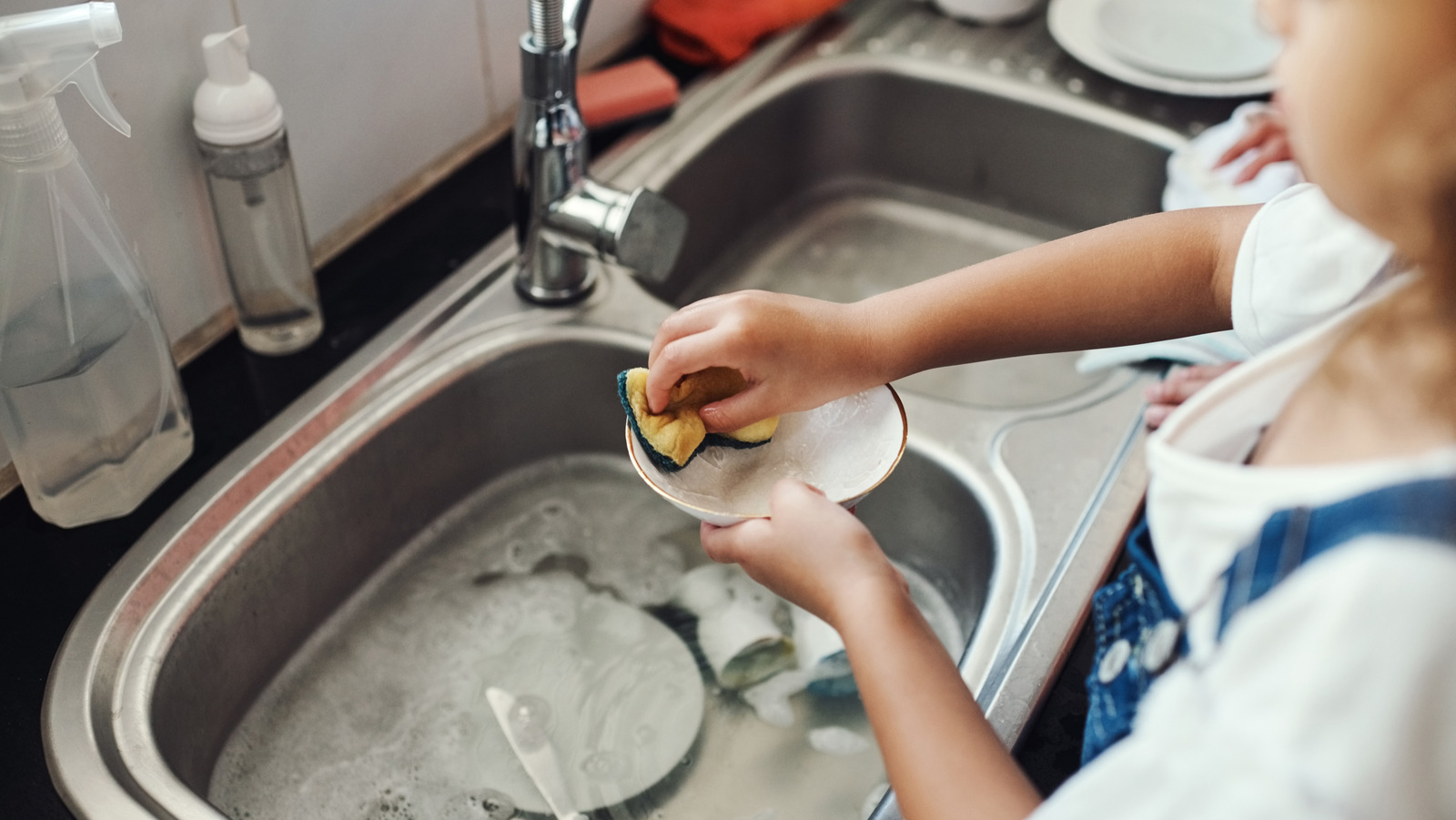
"Dish soap is both hydrophilic and hydrophobic, and is designed to break the bond between oil and water. Grease doesn't dissolve in water on its own, which is why a pan rinsed under the tap can look clean but still feel coated. Soap molecules surround oil and allow it to be lifted away when you rinse. For that to happen, the water needs to be hot enough to loosen the fat, which is what grease and oil are, and there needs to be enough soap present to grab onto it. If your sink water is lukewarm, or your soap barely produces suds, the oil stays put."
"Greasy dishes can also happen when soap doesn't get enough contact time. A quick swipe with a sponge followed by an immediate or haphazard rinse often just spreads the grease around. What's more, there are a number of kitchen items you should never put in the dishwasher, even if that seems easier in the moment. That's why many professional kitchens wash dishes in stages; it's also more efficient to repeat one movement (scrubbing with soap), then move on to the next movement (rinsing and placing in the rack)."
Dishwashing removes oil by convincing hydrophobic grease to release from surfaces using soap molecules that bridge oil and water. Hot water loosens fats and increases soap efficacy, while sufficient soap quantity and contact time allow micelles to form and lift grease during rinsing. Rushing or brief scrubbing can smear oil rather than remove it. Professional kitchens often wash in stages—scrubbing all items, stacking them soapy, then rinsing together—to give soap time to work. Plastics are more hospitable to oils because they are hydrophobic and non‑polar; heating can make grease absorb into plastic, so prolonged suds contact improves removal.
Read at Tasting Table
Unable to calculate read time
Collection
[
|
...
]