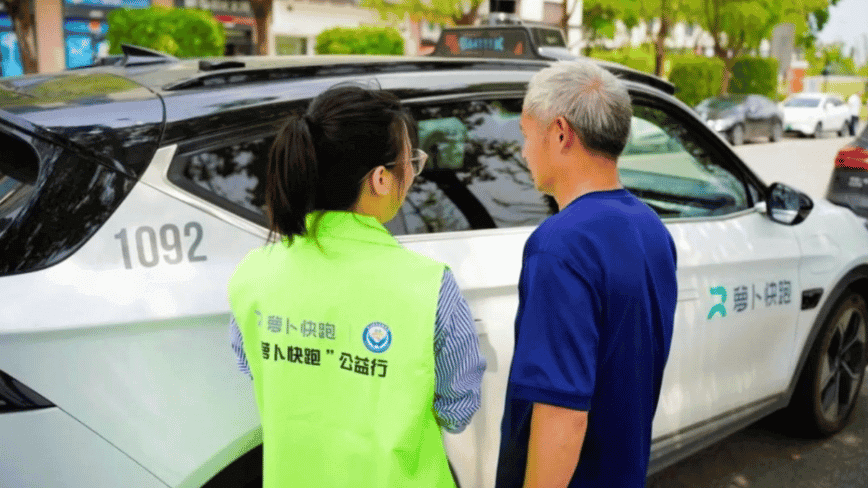
"On Tuesday evening in Wuhan, more than 100 of Baidu's Apollo Go robotaxis stopped moving. They did not pull over. They did not activate an emergency protocol. They simply froze, scattered across the city's roads and elevated highways, some in the middle lane of ring roads with traffic streaming past on both sides."
"Wuhan is not a small-scale test market. It is the largest deployment of Apollo Go's fleet in China, with more than 1,000 driverless vehicles operating across the city. This is not an experimental programme. It is a commercial operation running at genuine scale, which makes the simultaneous failure of more than 100 vehicles in a single city something qualitatively different from an isolated incident."
"Jack Stilgoe, professor of science and technology policy at University College London, told BBC News that while driverless technology may be safer on average than human drivers, this incident demonstrated it could still go wrong in completely new ways."
In Wuhan, over 100 Baidu Apollo Go robotaxis halted simultaneously due to a system malfunction, blocking traffic and trapping passengers. Videos showed vehicles stranded with hazard lights on. The Wuhan traffic police confirmed the malfunction and stated that investigations were ongoing. Apollo Go operates over 1,000 driverless vehicles in Wuhan, making this incident notable as it reflects a significant operational scale rather than an isolated test. Experts noted that while driverless technology is generally safer, incidents like this reveal new risks.
Read at TNW | China
Unable to calculate read time
Collection
[
|
...
]