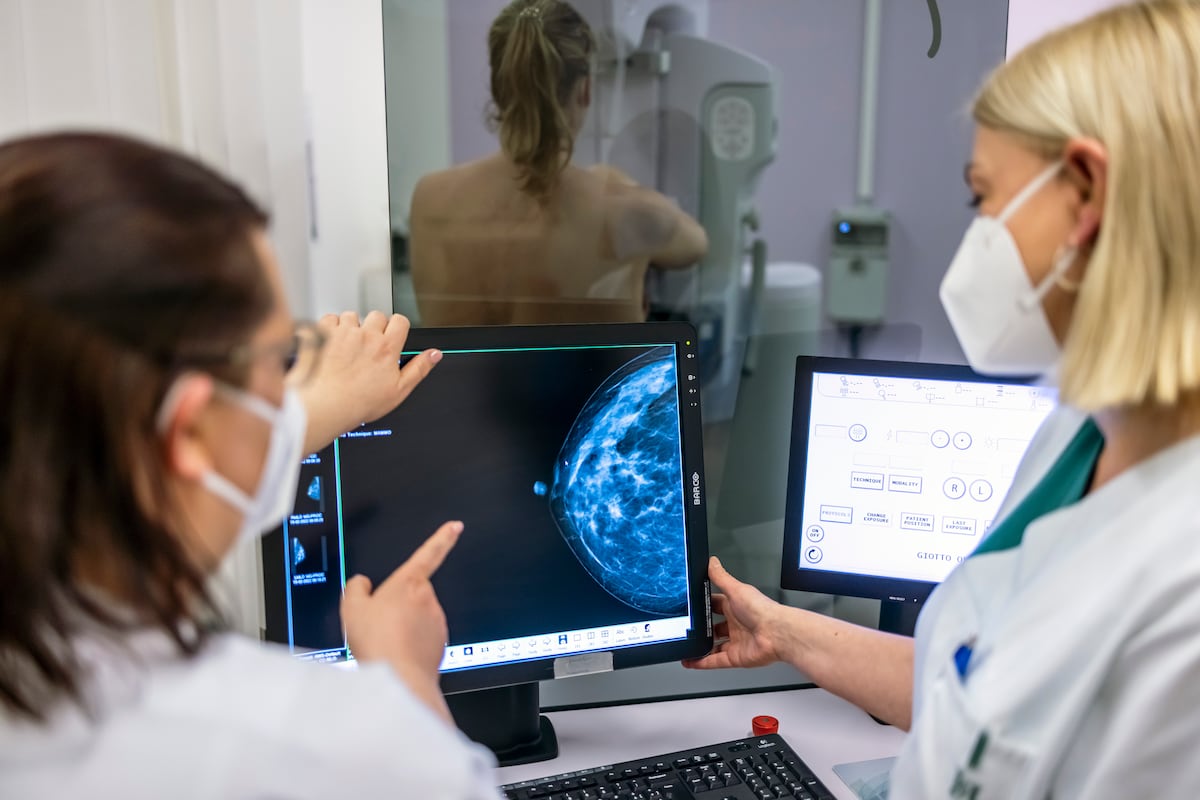
"While the rate of new diagnoses in older women has not changed substantially in the last three decades, in women between 20 and 54 years old it has increased by 29% since 1990. According to the research, which provides an overview of the breast cancer situation in more than 200 countries, 161 new cases per 100,000 women over 55 were diagnosed in 2023. This is three times higher than the number diagnosed among women aged 20 to 54 (50 new cases per 100,000)."
"The interpretation is that age remains a key factor in the risk of developing breast cancer, but by broadening the focus and observing the trend of recent decades, scientists have discovered that diagnoses among younger women, while far fewer, are increasing at a faster rate."
"The incidence is increasing in all age groups, but we are seeing a greater increase in young women. Isabel Echavarria, scientific secretary of the Spanish Society of Medical Oncology, agrees: There is evidence that the incidence is increasing in young women, and this is something that worries us oncologists."
Breast cancer remains the most common tumor in women, predominantly affecting those over 55, with 161 new cases per 100,000 women in this age group compared to 50 per 100,000 in women aged 20-54. However, a Lancet Oncology study analyzing data from over 200 countries reveals a significant shift: while diagnosis rates in older women have remained relatively stable over three decades, cases in premenopausal women have surged 29% since 1990. Although age continues as a primary risk factor, the accelerating incidence in younger women concerns oncologists. Researchers suggest reproductive factor changes—including earlier menstruation onset, delayed motherhood, and reduced breastfeeding—may contribute to this trend, though the underlying causes remain largely unexplained.
#breast-cancer-epidemiology #premenopausal-women #cancer-incidence-trends #reproductive-factors #age-related-cancer-risk
Read at english.elpais.com
Unable to calculate read time
Collection
[
|
...
]