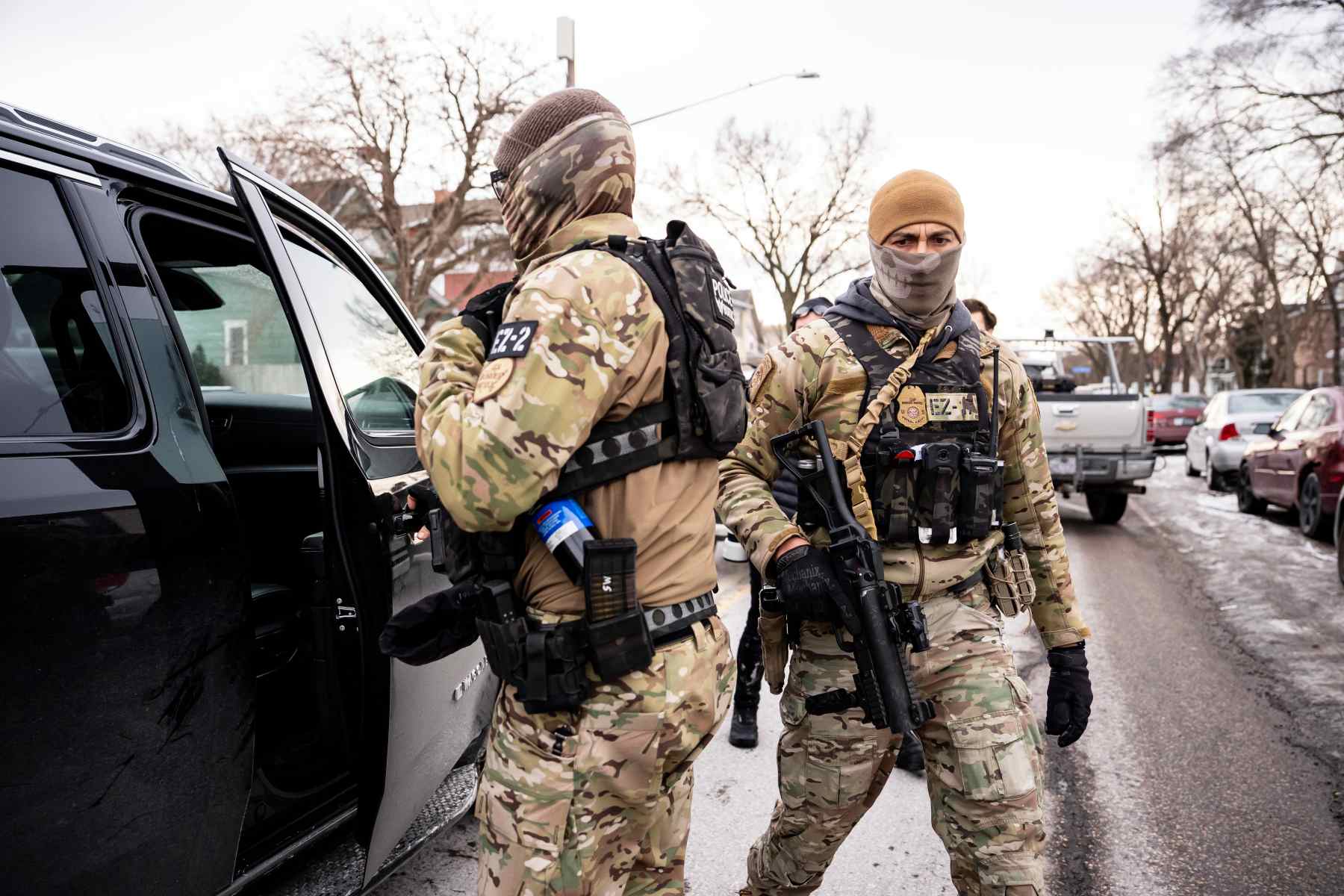
"Late last month, New Brunswick premier Susan Holt told media that American Immigration and Customs Enforcement (ICE) agents were at the Calais, Maine, border along New Brunswick. She described the situation as "very, very uncomfortable" for people with cross-border family and business ties, leaving the impression of a United States immigration crackdown spilling into neighbouring communities. Later the same day, Holt clarified her remarks, distancing herself from claims that ICE was operating near the Canada-US line."
"But the episode tapped into broader anxiety about the unrestrained and often brutal tactics the agency has used against immigrant communities in blue states-an unease sharpened by reports that ICE maintains field offices in five Canadian cities. ICE's presence in Canada is limited to Homeland Security Investigations (HSI) agents based at US embassies and consulates. ICE told the CBC that agents investigate transnational crime with Canadian partners but carry no firearms and have no authority to arrest, raid, or enforce US immigration law here."
"Here's a scenario: Minnesota shares a border with Canada. Let's say a stream of undocumented people decided to make a run for Sprague, Manitoba. Let's say they somehow end up on the other side. ICE isn't happy about it, and, on this day, agents decide to ignore the fact there's a border. It would be an invasion of Canadian sovereignty if they're coming onto our soil and snatching people. The other thing I think Canadians should know is something I have called American extra-legalism. It's what appears to have happened with Ryan Wedding,"
New Brunswick premier Susan Holt initially reported ICE agents at the Calais, Maine border adjacent to New Brunswick, then clarified her remarks. The incident raised fears of U.S. immigration enforcement spilling into Canadian communities. ICE activity in Canada is confined to Homeland Security Investigations agents stationed at U.S. embassies and consulates who investigate transnational crime with Canadian partners but do not carry firearms or possess authority to arrest or enforce U.S. immigration law. Public concern reflects anger over aggressive ICE tactics in the United States and worries about potential incursions that would violate Canadian sovereignty, described as "American extra-legalism."
Read at The Walrus
Unable to calculate read time
Collection
[
|
...
]