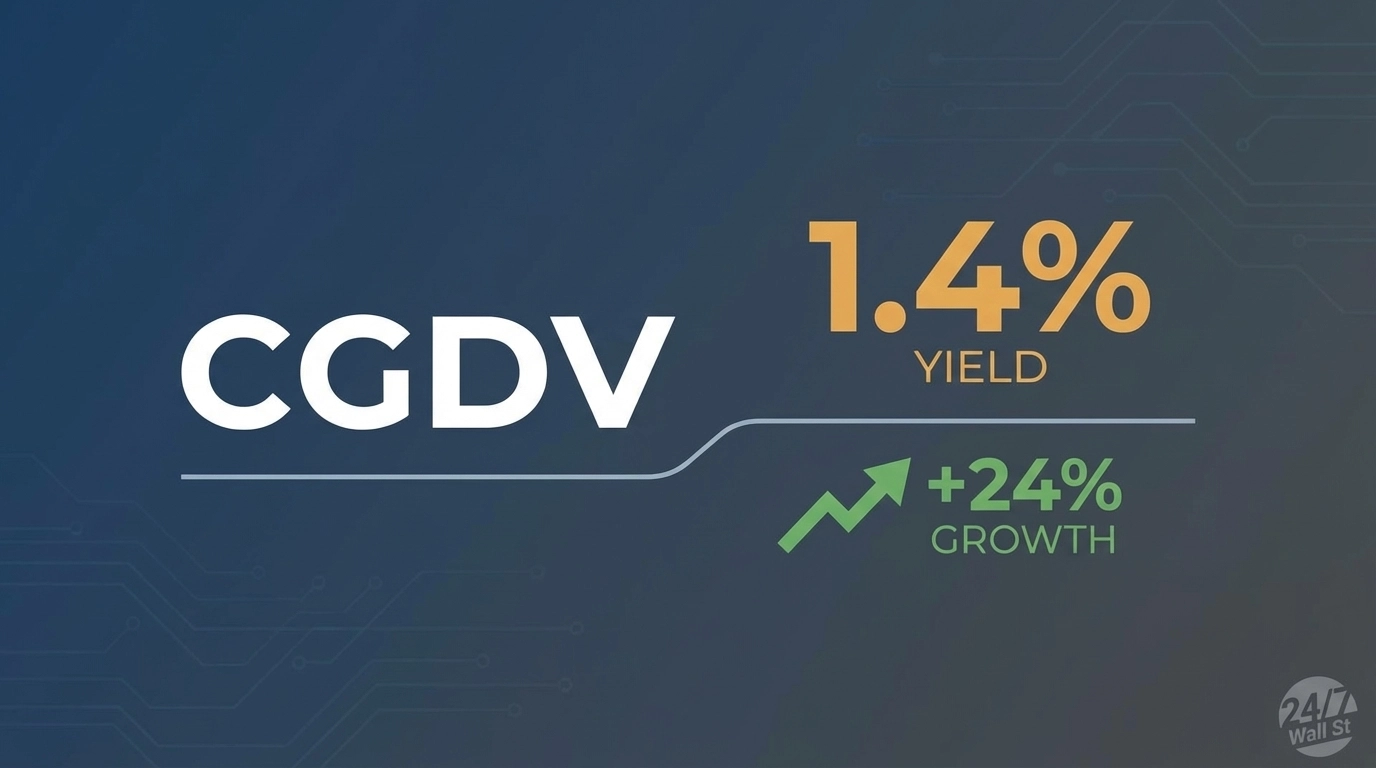
"CGDV aims to produce income exceeding average U.S. stock yields while providing growth through dividend-paying companies. Five veteran managers with over 24 years of experience each run individual sleeves using Capital Group's multi-manager approach. Information Technology represents 24.5% of holdings, with top positions including Microsoft (NASDAQ:MSFT) (5.7%), Broadcom (NASDAQ:AVGO) (5.6%), and NVIDIA (NASDAQ:NVDA) (5.5%). This tech concentration drives performance but introduces volatility uncommon in traditional dividend funds."
"The question isn't whether CGDV performs well, but whether its growth approach serves retiree income needs. CGDV outperformed the S&P 500 by nearly 10 percentage points in 2025. From October 2007 through August 2025, the underlying strategy generated 10.2% annualized returns gross of fees, outperforming the Russell 1000 Value Index by 2.7 percentage points annually. However, it lagged the S&P 500 by 29 basis points during that period."
"Retirees must accept three significant tradeoffs. First, the 1.4% yield generates minimal current income. A $100,000 investment produces roughly $1,400 annually, versus $3,800 from a 3.8% yielding alternative. Second, tech-heavy exposure creates volatility and downside risk during sector rotations. Third, the fund's 3.8-year track record provides limited evidence through complete market cycles. CGDV's 29% portfolio turnover generates taxable events."
Capital Group Dividend Value ETF targets income above average U.S. stock yields while seeking capital growth through dividend-paying companies. Five experienced managers run separate sleeves under a multi-manager structure. The fund holds a large Information Technology weight (24.5%), led by Microsoft, Broadcom, and NVIDIA, which fuels performance but increases volatility compared with traditional dividend funds. The fund yields 1.4%, carried a 0.33% expense ratio, and showed quarterly distribution growth from $0.49 in 2023 to $0.56 in 2025. Historical returns have outperformed some benchmarks, but limited track record, sector concentration, and 29% turnover create income, risk, and tax tradeoffs for retirees.
Read at 24/7 Wall St.
Unable to calculate read time
Collection
[
|
...
]