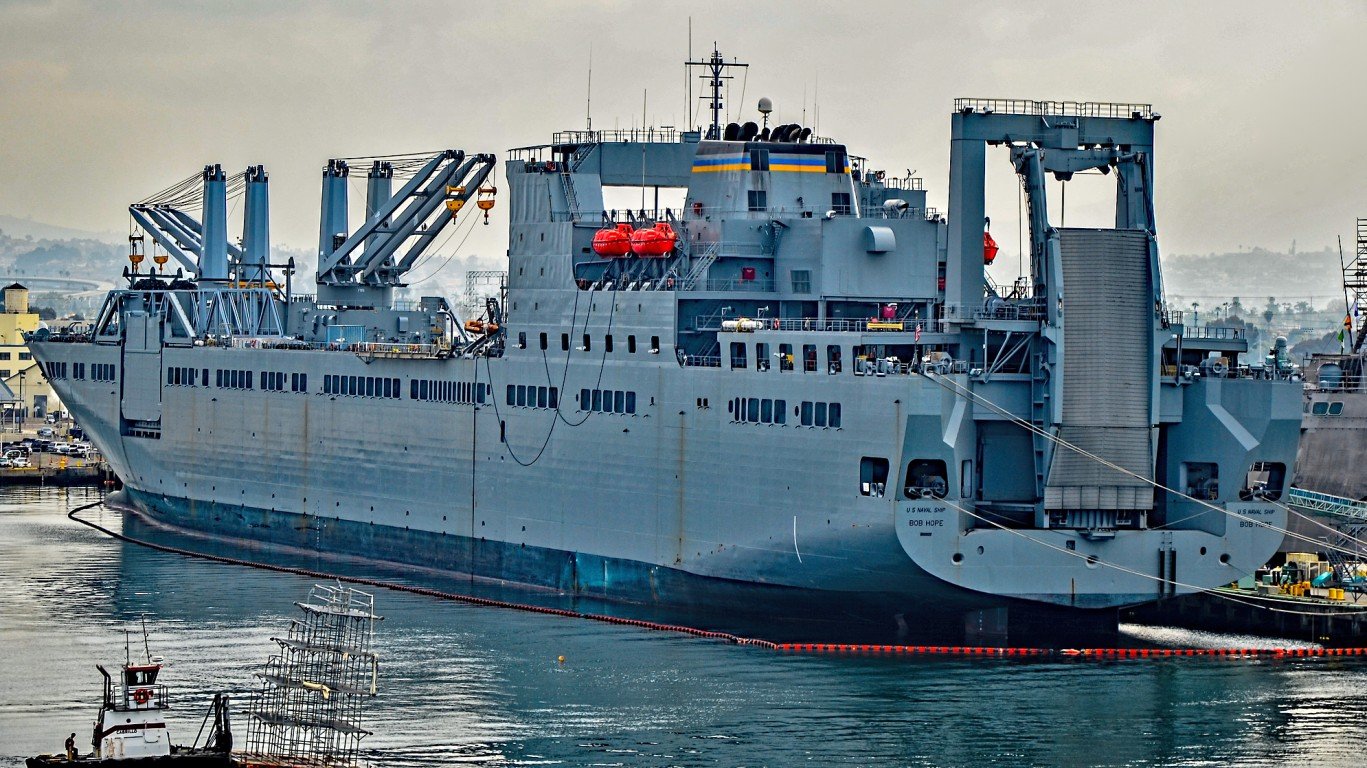
"BOAT is a passive fund tracking the Solactive Global Shipping Index, holding 52 maritime shipping companies including Frontline, Mitsui O.S.K. Lines, and Matson. It charges a 0.69% expense ratio and manages a slim $78.6 million in assets. The distribution is a pass-through of whatever cash its underlying tanker, dry-bulk, and container operators pay out each quarter. There is no options overlay and no leverage. When freight rates rip, the holdings earn outsized cash and most distribute it. When rates fall, the payout falls with them."
"That is the entire mechanism, and it is why BOAT's distributions read like a seismograph rather than a metronome. The variable distribution problem BOAT's payment history makes the income risk obvious. The latest quarterly distribution was $0.42834 on March 27, 2026, well below the prior quarter's $0.85116 paid in December 2025. Go back further and you see a $2.42 special-sized payment in December 2024 and a $2.447 payment in June 2023."
"The baseline regular payment has lived in the $0.31 to $0.77 range. A holder cannot budget around this. The headline yield reflects a trailing twelve months that captured one outsized quarter, well above any reasonable forward run rate. The underlying drivers are also moving against the operators. WTI crude sits near $110 per barrel, in the 98th percentile of the past year and well above the $69 trailing average. Bunker fuel is the single largest variable cost for these companies."
BOAT is a passive ETF tracking the Solactive Global Shipping Index and holding 52 maritime shipping companies. It charges a 0.69% expense ratio and distributes cash pass-through from quarterly payouts made by tanker, dry-bulk, and container operators. The fund has no options overlay and no leverage, so distributions move with underlying freight-rate performance. When freight rates rise, holdings generate outsized cash and most distribute it; when rates fall, payouts fall as well. Distribution history shows large swings, including a much lower March 27, 2026 payment compared with the prior quarter. Fuel costs are a key driver, with WTI crude elevated versus its trailing average, which can pressure operator profitability and future distributions.
Read at 24/7 Wall St.
Unable to calculate read time
Collection
[
|
...
]